
Peptide Stacking Therapy
Peptide Stacking Therapy – Combining Peptides for Greater Healing, Recovery, and Longevity
Peptide therapy is one of the most exciting advances in regenerative and functional medicine. As the science of therapeutic peptides evolves, physicians have discovered that combining peptides strategically can produce stronger therapeutic outcomes than using a single peptide alone.
This approach is known as peptide stacking.
Peptide stacking refers to the medical practice of using two or more peptides together to enhance biological effects such as healing, metabolic health, immune support, and cellular regeneration.
At Dr. Sobo’s clinic in Connecticut, peptide stacking protocols are carefully designed to support each patient’s health goals using medically supervised peptide therapies.
Patients often seek peptide stacking therapy for:
- injury recovery
- anti-aging and longevity
- metabolic optimization
- immune system support
- improved energy and mitochondrial health
- athletic recovery and performance
➡ Learn more about individual peptide treatments on the Peptide Therapy Overview page.
What Is Peptide Stacking?
Peptide stacking is the medical strategy of combining multiple peptides that work through different biological pathways to create a synergistic therapeutic effect.
Instead of relying on a single peptide, stacking allows physicians to influence several healing pathways simultaneously.
Examples of biological systems affected by peptide stacking include:
- tissue regeneration
- immune regulation
- mitochondrial energy production
- metabolic signaling
- hormone optimization
When used correctly under physician supervision, peptide stacking can provide more comprehensive therapeutic support than individual peptide therapy alone.
Why Peptide Stacking Works: The Science of Synergy
Peptides function as cellular signaling molecules that regulate communication between cells. Different peptides influence different systems within the body. When multiple peptides are used together, they may activate complementary pathways that support healing and recovery.
For example:
- one peptide may stimulate tissue regeneration
- another may reduce inflammation
- another may boost cellular energy production
Together, these peptides can produce synergistic biological effects.
Researchers studying peptide therapeutics have observed that combination therapies may improve outcomes in areas such as tissue repair, metabolic health, and cellular regeneration.
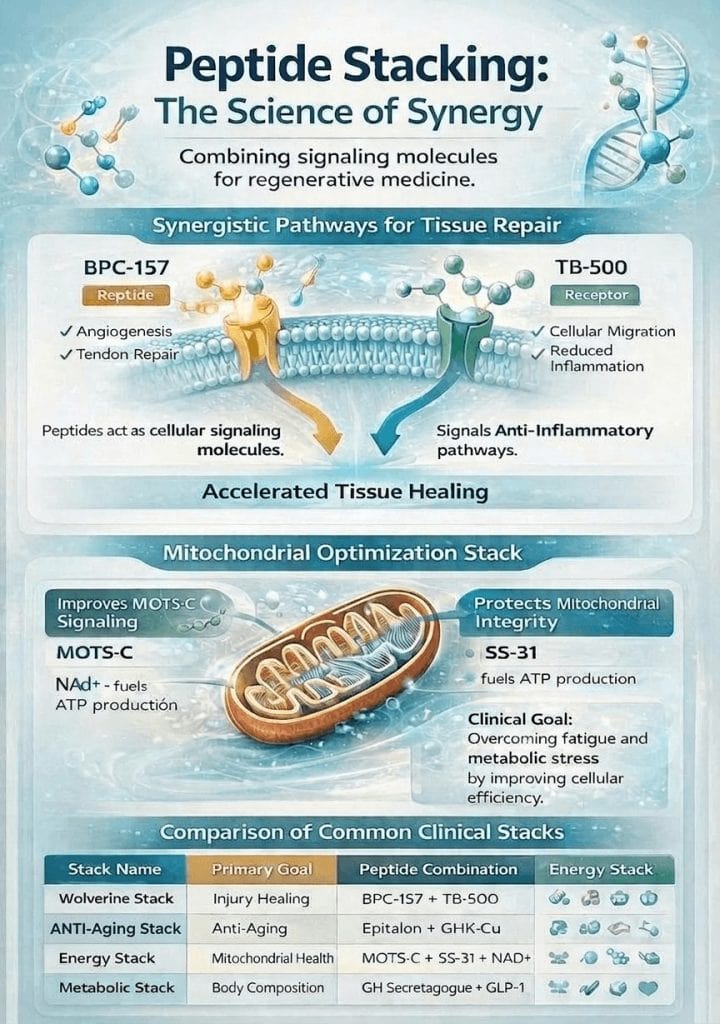
Common Peptide Stacks Used in Functional Medicine
Peptide Stack | Purpose | Peptides Used |
Wolverine Stack | Injury healing and recovery | BPC-157 + TB-500 |
Metabolic Optimization Stack | Body composition and metabolism | GH secretagogue + GLP-1 peptide |
Mitochondrial Energy Stack | Cellular energy and endurance | MOTS-C + SS-31 + NAD+ |
ANTI-Aging Stack | Longevity and Anti-aging support | Epitalon + GHK-Cu |
These stacks are examples of how physicians may combine peptides based on their biological effects.
Injury Healing and Repair Peptide Stacks
One of the most well-known peptide combinations for tissue repair is the pairing of BPC-157 and TB-500.
BPC-157  https://drsobo.com/peptides/bpc-157/
BPC-157 has been studied for its potential role in:
- tendon healing
- ligament repair
- gastrointestinal protection
- blood vessel formation (angiogenesis)
TB-500 (Thymosin Beta-4) https://drsobo.com/peptides/thymosin-beta-4/
TB-500 may support:
- cellular migration during healing
- tissue regeneration
- reduction of inflammation
Together, these peptides form the well-known Wolverine Peptide Stack, named after the fictional superhero, known for rapid healing.
Related article The Wolverine Peptide Stack – Faster Recovery, Less Pain, Better Healing
Additional peptides used for tissue repair may include:
- GHK-Cu peptide therapy for collagen formation
- Growth hormone secretagogues that support tissue regeneration
Growth Hormone Peptide Stacks for Strength and Muscle Maintenance
Growth hormone plays an essential role in muscle strength, metabolism, and tissue repair.
Several peptides stimulate the body’s natural production of growth hormone.
Examples include:
- Sermorelin peptide therapy
- CJC-1295 peptide therapy
- Ipamorelin peptide therapy
- Tesamorelin peptide therapy
Important Medical Safety Note
Physicians generally do not combine multiple growth hormone secretagogues together because they act through the same biological pathway.
Instead, doctors may combine one GH secretagogue with peptides from other categories.
Examples include stacking with:
Energy-support peptides
Recovery peptides
- BPC-157
- TB-500
Weight-management peptides
Mitochondrial Peptide Stacking for Energy and Cellular Health
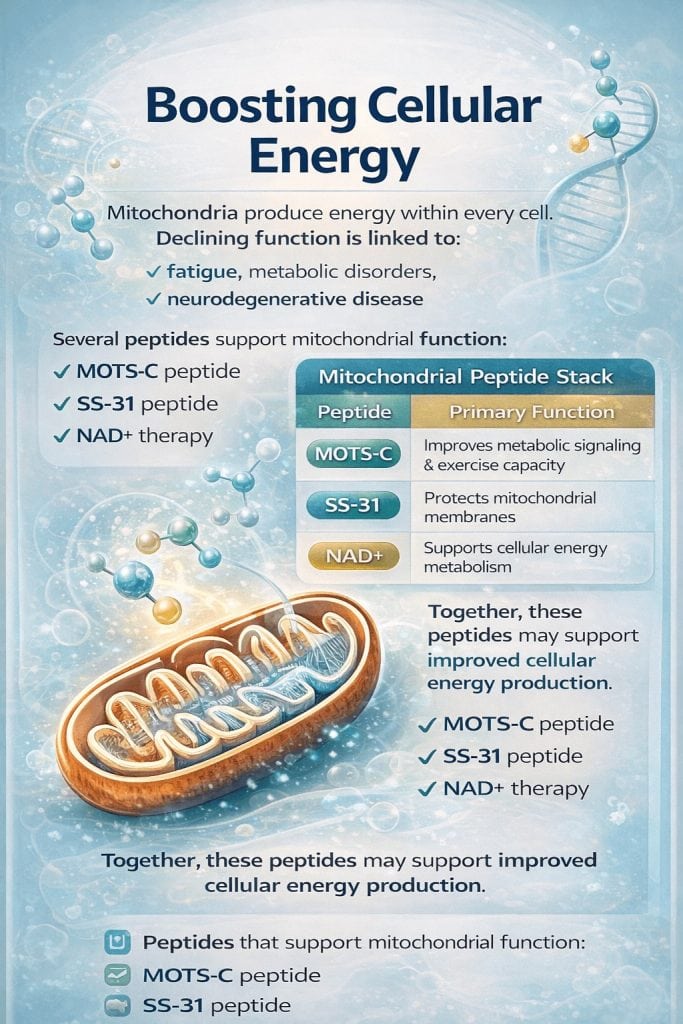
Mitochondria are the energy-producing structures inside every cell.
Declining mitochondrial function has been associated with fatigue, metabolic disorders, and neurodegenerative disease.
Several peptides support mitochondrial function through different mechanisms.
Examples include:
Mitochondrial Peptide Stack
Peptide | Primary Function |
MOTS-C | Improves metabolic signaling and exercise capacity |
SS-31 | Protects mitochondrial membranes |
NAD+ | Supports cellular energy metabolism |
Together these peptides may support improved cellular energy production.
Immune Support Peptide Stacks
Peptides can influence immune regulation and inflammatory signaling.
Examples include:
Thymosin Alpha-1 ➡ https://drsobo.com/peptides/thymosin-alpha-1/
Thymosin Alpha-1 has been studied for its immune-modulating properties and has been used in patients with immune deficiencies.
KPV Peptide ➡ https://drsobo.com/peptides/kpv/
KPV may help regulate inflammatory pathways such as NF-κB and MAPK, which are involved in inflammatory bowel disease.
Growth hormone secretagogues may also contribute to immune health through broader metabolic effects.
Peptide Stacks for Reducing Inflammation
Chronic inflammation contributes to many health conditions including autoimmune disease, cardiovascular disease, and metabolic disorders.
Peptides used in inflammation-support protocols include:
- VIP peptide therapy
- KPV peptide therapy
- TB-500 peptide therapy
- BPC-157 peptide therapy
- NAD+ peptide therapy
These peptides may influence inflammatory mediators such as TNF-alpha and IL-6 while supporting tissue repair.
Overcoming Fatigue with Peptide Stacking
Fatigue is often related to mitochondrial dysfunction or metabolic stress.
Peptides used to support cellular energy production include:
- NAD+
- MOTS-C
- Growth hormone secretagogues
These peptides may support improved endurance, recovery, and metabolic efficiency.
Anti-Aging Peptide Stacks
Peptides are increasingly explored in longevity medicine.
Examples include:
Epitalon ➡ https://drsobo.com/peptides/epitalon/
Epitalon has been studied for its potential influence on telomere health.
GHK-Cu ➡ https://drsobo.com/peptides/ghk-cu/
GHK-Cu may support collagen production and connective tissue repair.
Weight-Loss Peptides
Excess body fat contributes to metabolic disease and accelerated aging.
Weight-management peptides include:
- Semaglutide
- Tirzepatide
- Retatrutide
These medications may support improved metabolic health and body composition.
Neurological Peptide Stacks
Some peptides are used in protocols aimed at supporting neurological function.
Examples include:
Semax and Selank are often paired together because they influence different neurotransmitter pathways.
Cosmetic and Aesthetic Peptide Stacking
Peptides are increasingly used in aesthetic and skin health therapies.
Examples include:
Skin rejuvenation
- GHK-Cu
Body composition improvement
- Semaglutide
- Tirzepatide
- Retatrutide
Growth hormone peptides
- Sermorelin
- Tesamorelin
These peptides may support improved skin quality and metabolic health.
Peptide Stacking for Hormones and Libido
Some peptides influence reproductive hormones and sexual health.
Examples include:
These peptides may be combined with growth hormone secretagogues as part of hormone optimization protocols.
Enhancing Regenerative Medicine with Peptide Stacks
Peptides are increasingly used alongside regenerative procedures.
These procedures may include:
Peptides frequently used with regenerative procedures include:
- BPC-157
- TB-500
- GHK-Cu
- Sermorelin
These combinations may support improved healing and recovery following regenerative therapies.
Peptide Stacking Therapy in Connecticut
Patients searching for peptide stacking therapy in Connecticut often seek advanced treatment options for healing, metabolic health, or anti-aging.
Dr. Sobo provides physician-guided peptide therapy protocols designed to address individual health goals.
Patients from throughout Connecticut and surrounding regions visit the clinic for:
- regenerative medicine therapies
- peptide therapy protocols
- metabolic optimization programs
- longevity and anti-aging medicine
A consultation allows Dr. Sobo to evaluate medical history, health goals, and laboratory testing before designing a personalized peptide stacking plan.
Medical Expertise: Dr. Henry Sobo, MD
Peptide stacking protocols at this clinic are developed and supervised by Dr. Henry Sobo, MD, a physician experienced in regenerative medicine, peptide therapy, and metabolic optimization.
Dr. Sobo focuses on personalized treatment approaches that integrate:
- peptide therapeutics
- regenerative medicine
- metabolic health optimization
- longevity medicine strategies
Because peptide therapies influence complex biological systems, medical supervision is essential to ensure appropriate dosing, safety, and individualized protocols.
FAQs
What peptides can be stacked together?
Peptides that affect different biological pathways can often be stacked together under physician supervision. For example, a growth hormone peptide such as Sermorelin may be paired with healing peptides like BPC-157 or mitochondrial peptides like NAD+ to enhance recovery, energy, and tissue repair.
Is peptide stacking safe?
Peptide stacking can be safe when supervised by a qualified healthcare provider. Medical supervision ensures correct dosing, safe combinations, and monitoring for potential side effects.
What is the Wolverine peptide stack?
The Wolverine peptide stack refers to combining BPC-157 and TB-500 to support accelerated tissue healing and injury recovery.
Can peptide stacking improve recovery from exercise?
Some peptide stacks may support recovery by reducing inflammation, improving cellular energy production, and stimulating tissue repair.
What peptides help with mitochondrial health?
Mitochondrial support peptides include MOTS-C, SS-31, and NAD+. These peptides influence energy metabolism and cellular efficiency.
Can peptides help with anti-aging?
Certain peptides such as Epitalon, GHK-Cu, and growth hormone secretagogues are studied for their potential roles in cellular repair and longevity.
Are peptide stacks used in regenerative medicine?
Yes. Physicians may use peptides alongside regenerative procedures such as PRP or stem cell therapy to support healing.
Can peptides be combined with GLP-1 medications?
Some peptide protocols combine growth hormone secretagogues with GLP-1 medications such as semaglutide or tirzepatide for metabolic optimization.
How to Get Started with Peptide Stacking Therapy with Dr. Sobo?
Schedule a consultation at Dr. Sobo’s Stamford, CT office: discuss symptoms, labs, history; if suitable, get a Peptide Stack with follow-up monitoring.
Sources
- National Institutes of Health – Peptide Therapeutics Research
https://www.nih.gov - Journal of Translational Medicine – Peptide Therapy Research
https://translational-medicine.biomedcentral.com - Frontiers in Endocrinology – Peptide Signaling Pathways
https://www.frontiersin.org/journals/endocrinology - Peptide Therapeutics Foundation
https://www.peptidefoundations.org