
- Home
- Home
Hair Treatment & Restoration in Connecticut
PRP (Platelet Rich Plasma) Hair Treatment and Restoration
Non-Surgical Hair Restoration: Lasting Results with Modern Medicine
Hair thinning or loss can affect confidence, self-image, and quality of life at any age. Whether caused by genetics, hormones, medical conditions, or aging, up-to-date solutions exist far beyond outdated over-the-counter remedies. At Optimal Health Medical LLC, we provide a personalized, scientific approach to hair restoration—including cutting-edge regenerative therapies and proven non-surgical options—to help you achieve natural results and lasting confidence.

Why am i loosing hair?
Hair loss (alopecia) can be caused by a range of factors, most commonly:
- Genetics (androgenetic alopecia or “male/female pattern baldness”)
- Hormonal changes (including postpartum and menopause)
- Medical conditions such as thyroid disease, autoimmune disorders, or nutritional deficiencies
- Stress or medications
Early diagnosis is critical. If you notice rapid shedding, patchy hair loss, or changes in your scalp or general health, begin with a medical evaluation to identify correctable causes. Learn more about Dr. Sobo’s commitment to careful, personalized assessments.
The latest evidence-based hair restoration options
Platelet-Rich Plasma (PRP) for Hair Restoration
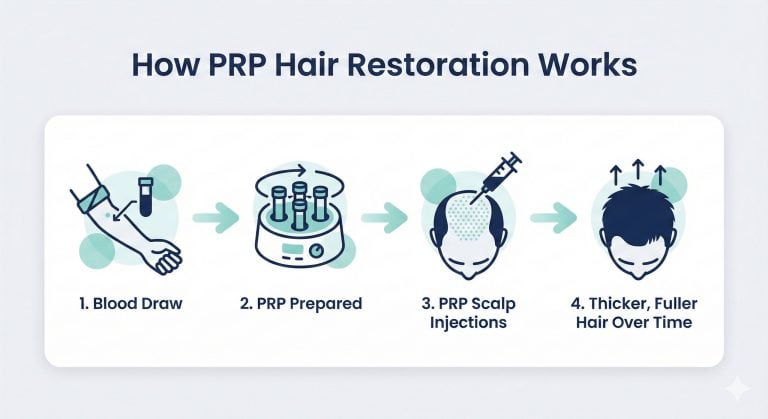
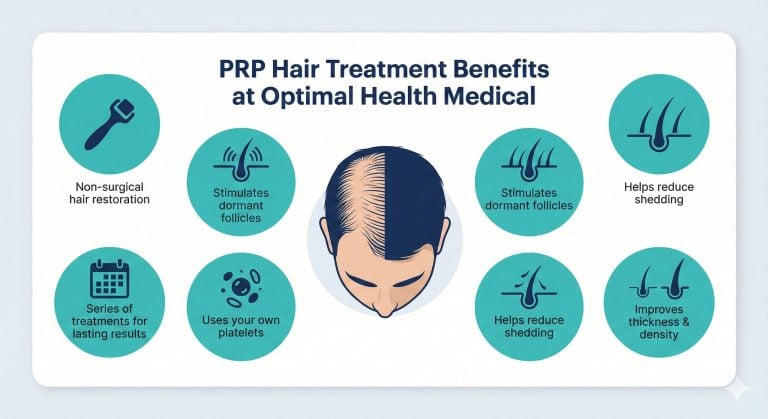
PRP therapy uses your own concentrated platelets, delivered directly to scalp follicles to stimulate growth. High-quality studies show:
- PRP improves hair density and thickness for male and female pattern hair loss, especially in early stages (NIH Review)
- Results are visible after 3–6 monthly sessions, with maintenance as needed
- Minimal downtime with very low risk: some notice mild scalp soreness or redness for a day or two
Learn more: Platelet-Rich Plasma (PRP): Science, Evidence & FAQs
Advanced topical and prescription therapies
Proven medical treatments for hair loss include:
- Topical minoxidil: FDA-approved, suitable for both men and women
- Oral medications: Finasteride and other options appropriate for men with genetic hair loss
- Adjunct therapies: Address underlying conditions (thyroid, anemia, nutrition), hormone balance
Evidence-based protocols maximize results and reduce side effects. All prescription therapies are offered with ongoing monitoring for safety and effectiveness (Mayo Clinic: Hair loss – Diagnosis and treatment).
regenerative & biologic solutions
Emerging research supports the use of regenerative or biologic therapies for certain forms of hair thinning:
- Microneedling: Creates controlled micro-injuries to the scalp, prompting a healing cascade and growth signaling. Often combined with PRP or growth-factor serums for enhanced effect (NIH).
- Nutraceuticals and targeted supplementation: Support scalp and follicle health (when dietary or micronutrient deficit is present)
For those considering hair transplant or surgical remedies, a candidacy evaluation including nonsurgical pathways is always provided first.
Integrated, personalized hair regrowth plans
At Dr. Sobo’s office, every patient receives:
- In-depth assessment: Scalp examination, detailed history, relevant laboratory testing as needed
- Customized treatment plan: Combinations of PRP, medical therapy, microneedling, and/or lifestyle optimization
- Progress monitoring: Digital imaging, measurements, and timeline adjustments based on your healing response
Results are natural focusing on density, coverage, and hair quality, not just quantity.
Want more on our expertise? Explore Regenerative Medicine Therapies.
who is a good candidate for hair restoration?
Hair restoration treatment is most effective for:
- Early or moderate hair thinning (not complete baldness)
- Individuals diagnosed with androgenetic alopecia, telogen effluvium, or certain medical causes
- Patients wanting to avoid or delay surgery
Severe or long-standing cases may also benefit, but success rates and strategies differ by pattern and underlying health. Both men and women, as well as select adolescents, can be appropriate candidates.
What to Expect During Your Hair Restoration Journey
How many PRP sessions are needed?
Yes; studies find PRP effective for androgenetic alopecia in women as well as men.
Is PRP safe? Are there side effects?
PRP is very safe. Possible mild discomfort, redness, or swelling may occur; infection or severe reactions are extremely rare.
When will I see results?
Visible improvement typically appears after 3–6 months, with full effects developing by 9–12 months.
Can women get PRP for hair restoration?
Yes; studies find PRP effective for androgenetic alopecia in women as well as men.
Consultation:
Detailed history, scalp and hair exam, and candidacy review.
Treatment:
Most PRP or microneedling procedures take 30–45 minutes in-office with minimal downtime. Medical or nutritional approaches may be started immediately.
Follow-Up:
Tracking with high-resolution scalp photography and density measurements. Maintenance plans are discussed for long-term success.
References & Authoritative Sources
- NIH Review: PRP in Androgenic Alopecia
- Mayo Clinic: Hair Loss Treatments
- Journal of Dermatology: Microneedling for Hair Loss
- American Academy of Dermatology: Hair Loss Info
- Cleveland Clinic: PRP Therapy
Find more information on our services and learn about Dr. Sobo’s experience.
Ready to Restore Your Hair and Confidence?
Natural-looking, fuller hair is possible without surgery.
Contact Dr. Sobo today for your private evaluation and a science-driven approach to hair restoration.