
Why Patients Are Turning to Peptide Treatment
Aging is no longer seen only as an inevitable decline. Patients today want more than just “adding years” – they want to age well, with the energy, clarity, and physical resilience to enjoy life fully. At Optimal Health Medical, Dr. Henry S. Sobo sees this shift daily in his Stamford office: patients ask about ways to stay strong, heal faster, and prevent the chronic conditions that often come with aging.
One of the most promising tools to meet these goals is peptide therapy in Connecticut. Peptides are small chains of amino acids that act as messengers in the body, guiding cells to repair, regulate hormones, and restore balance. Scientists and clinicians alike are recognizing their potential: a National Institutes of Health review highlights peptides as a cornerstone in modern regenerative medicine.
Patients often describe their concerns in simple terms:
- “I feel like I don’t bounce back the way I used to.”
- “My energy isn’t what it was, and I can’t keep up with my routine.”
- “I want to age well — not just longer.”
Dr. Sobo emphasizes that these concerns are valid: “The body naturally produces peptides, but levels decline with age. By restoring them in a targeted way, we can help patients support healing, improve vitality, and slow many of the changes we associate with aging.”
Unlike generic supplements or over-the-counter products, peptide therapy at Optimal Health Medical is carefully prescribed and monitored. Treatments are chosen based on lab testing, medical history, and patient goals, ensuring they are both safe and effective. This is an important distinction, as the FDA continues to evaluate the appropriate use of peptides and warns against unregulated sources.
For patients in Stamford, Greenwich, Norwalk, and across Connecticut, peptide therapy offers an evidence-based, physician-supervised path to healthier aging, faster recovery, and stronger performance. This guide will answer common questions, explain the categories of peptides available, and provide clarity on what patients can realistically expect.
What Is Peptide Therapy?
Peptide therapy is a form of modern regenerative medicine that uses short chains of amino acids to guide specific biological functions in the body. Because peptides act as cellular messengers, they can influence hormone release, tissue repair, metabolism, and even immune balance.
A simple way to think about peptides is this: they are instructions the body already understands. By restoring or boosting certain peptides, physicians can encourage the body to perform functions that naturally decline with age, such as repairing tissue, burning fat more efficiently, or restoring energy.
How Peptides Work in the Body
Peptides are naturally present in every cell. They help regulate communication between the brain, immune system, and organs. Over time, the levels of many peptides fall, which is one reason aging brings fatigue, slower healing, and changes in body composition.
“Think of peptides as the body’s text messages,” explains Dr. Henry S. Sobo. “When the messages don’t get through, systems slow down. Peptide therapy helps resend those messages so the body can respond the way it’s supposed to.”
Peptides are widely studied for their applications in anti-aging, metabolism, immune regulation, and recovery, as supported by research in journals like Frontiers in Pharmacology.
What Makes Peptide Treatment Different from Supplements
Many patients ask: “Can’t I just take supplements or vitamins instead?” While nutrients are important, peptide therapy works differently. Supplements provide building blocks, but peptides act as direct signals, telling the body what to do. This targeted action is why peptides often produce noticeable improvements more quickly than traditional over-the-counter options.
Injectable Peptides: Why Delivery Method Matters
Although peptides may be found in foods and topical products, therapeutic benefits are most effective with injectable peptides. Injections bypass digestion, ensuring the peptide reaches the bloodstream intact. This is why most treatments are prescribed as peptide injections, which patients can safely self-administer after instruction.
Why Physician Oversight Is Essential
Because peptides are biologically active, they should never be ordered from unregulated online sources. The FDA warns against this, noting risks of contamination and incorrect dosing.
“Patients sometimes come in with products they bought online, and they’re surprised when I explain the risks,” notes Dr. Sobo. “Peptide therapy can be very effective, but only when it’s dosed correctly, monitored carefully, and matched to the individual’s needs.”
At Optimal Health Medical, Dr. Sobo tailors each therapy based on lab testing, medical history, and patient goals. Regular monitoring ensures that peptides are used safely and effectively.
Types of Peptide Treatments and Their Benefits
Peptides can be grouped into categories based on their primary effects in the body. While each peptide has unique properties, understanding these broader categories makes it easier to see how peptide therapy can support health, aging, recovery, and overall performance.

Anti-Aging and Hormone Support
One of the most common reasons patients explore peptide therapy is to slow the effects of aging and maintain vitality. As natural hormone levels decline, people often experience fatigue, loss of muscle mass, slower metabolism, weaker bones, and changes in sleep and energy levels. Anti-aging peptides aim to restore balance by stimulating the body’s own hormone pathways, particularly growth hormone.
Patients who use these peptides often report:
- Improved muscle preservation and strength
- More restorative sleep
- Better energy throughout the day
- Support for fat metabolism
These therapies are especially relevant for adults who want to age well and stay active, rather than simply replace hormones with synthetic alternatives. Common examples in this category include Sermorelin, which stimulates natural growth hormone release, Tesamorelin, which helps reduce visceral fat and support metabolic health, Ipamorelin, and CJC-1295.
Healing and Regeneration
Injuries, surgery, and even chronic inflammation can slow down the body’s natural repair processes. Healing peptides are designed to speed recovery, reduce inflammation, and protect tissues from further damage. They are particularly useful for patients recovering from orthopedic injuries, dealing with joint or tendon pain, or managing inflammatory conditions such as gut disorders.
Patients who use peptides in this group may notice:
- Faster recovery after workouts or injuries
- Less soreness or stiffness
- Support for wound healing and scar reduction
- Improved resilience against reinjury
Well-known peptides in this category include BPC-157, often referred to as a “healing peptide”, Thymosin Beta 4, which supports wound repair and immune balance, and KPV. Together, they make up the foundation of peptide therapy for musculoskeletal healing, gut repair, and immune modulation.
Cellular Health and Energy
Aging begins at the cellular level, where mitochondria — the “power plants” of cells — gradually lose efficiency. This decline in energy production is linked to fatigue, cognitive changes, and slower recovery from daily stress. Cellular health peptides are designed to boost mitochondrial function, improve energy metabolism, and enhance resilience against age-related decline.
Patients often describe benefits such as:
- Sustained energy and stamina
- Sharper focus and mental clarity
- Better stress tolerance
- Support for longevity and healthy aging
Examples include NAD+, a coenzyme critical for energy and DNA repair, and MOTS-c, a mitochondrial peptide that improves metabolism and exercise capacity.
Sexual Health and Function
For many men and women, intimacy and sexual performance are important aspects of quality of life. Sexual health peptides act on brain pathways or reproductive hormone signaling to support libido, arousal, and reproductive balance.
Patients may notice:
- Increased desire and arousal
- Greater satisfaction in intimacy
- Improved reproductive hormone balance
Examples include PT-141, which works through brain receptors rather than hormones, and Kisspeptin, which helps regulate reproductive pathways. These treatments are often considered when traditional therapies are not effective or tolerated.
Skin and Cosmetic Health
Some peptides are used to improve appearance, skin quality, and hair health. By stimulating collagen, melanin, or other regenerative processes, cosmetic peptides can influence skin elasticity, tone, pigmentation, and even stimulate hair growth.
Patients often report:
- Smoother, firmer skin
- Fewer wrinkles or fine lines
- More even skin tone or pigmentation
- Support for hair regrowth
Examples include Melanotan II, which influences pigmentation, and GHK-Cu, a copper-binding peptide with extensive research on skin rejuvenation and hair health.
Advanced and Emerging Peptide Options
The field of peptide research is continually expanding. Some therapies are already available in clinical practice, while others are still considered experimental or cosmetic.
At Optimal Health Medical, additional advanced options include:
- GLP-1 analogs like semaglutide → Widely recognized for supporting weight loss, blood sugar control, and cardiovascular health.
- Thymosin Alpha 1 → Studied for immune resilience and chronic infections, with ongoing clinical use.
- Selank and Semax → Nootropic peptides developed for brain health, with evidence for stress reduction and improved focus.
Globally, other peptides remain experimental or cosmetic in nature. These include IGF-1 LR3 and Follistatin, studied for muscle growth but not FDA-approved, and cosmetic peptides such as Matrixyl and Argireline, commonly found in skincare products for wrinkle reduction and collagen support.
Because peptide therapy is a rapidly evolving field, it is important for patients to focus on options with the strongest safety data and physician oversight. This ensures that treatment is both effective and tailored to individual needs.
How Peptide Therapy Is Administered
For patients who are new to peptide therapy, one of the most common questions is: “What does the treatment process look like?” Unlike supplements you can pick up at a store, peptide therapy is prescribed, guided, and monitored in a clinical setting to ensure safety and effectiveness.

Consultation and Lab Testing
The process begins with a medical consultation, during which a patient’s history, symptoms, and goals are reviewed. Lab testing is often recommended to establish a baseline and rule out underlying issues. This step ensures that the therapy plan is personalized rather than generic, and that the chosen peptides align with the patient’s health status.
“Peptides are powerful tools, but they’re not one-size-fits-all,” explains Dr. Henry S. Sobo. “We start with testing and evaluation so we can select the right treatment and adjust it as the body responds.”
Injections and Delivery Methods
Most therapeutic peptides are given as small subcutaneous injections, similar to an insulin shot. The injection is usually placed just under the skin of the abdomen or thigh. Patients are trained on how to self-administer at home, and most describe the process as quick and virtually painless.
In some cases, peptides may be delivered in oral capsules, nasal sprays, or topical creams, but injections remain the most reliable way to ensure full absorption and consistent results.
Monitoring and Follow-Up
Peptide therapy does not end with the first prescription. Patients return for follow-up visits, where progress is measured and lab work may be repeated. Monitoring ensures that the treatment is working as intended and allows adjustments if needed. This step also adds a layer of safety, especially for therapies that influence hormones, metabolism, or immune balance.
What Patients Can Expect
Many patients notice changes within the first few weeks — such as improved sleep, more energy, or reduced soreness — while others may take several months to see significant results. The timing depends on the peptide chosen, the individual’s health, and the goals of therapy. Importantly, peptide therapy is typically designed as a long-term program rather than a “quick fix.”
What Patients Commonly Notice with Peptide Treatment
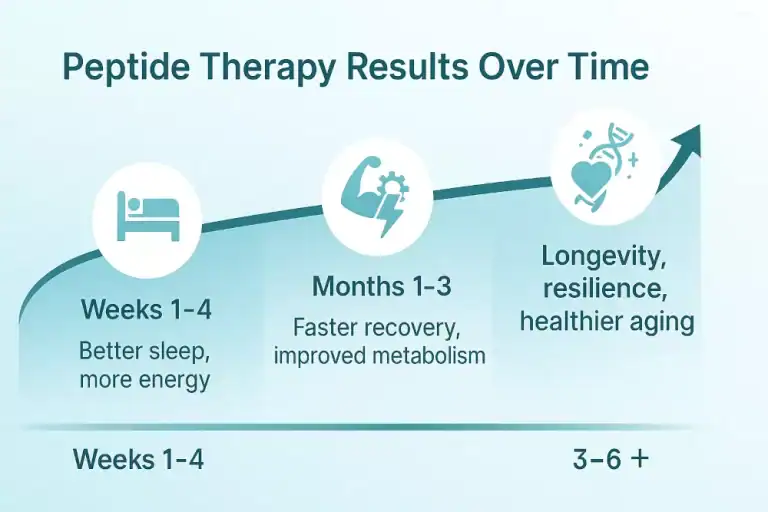
Patients often ask: “How soon will I notice results?” The answer depends on the specific peptide, overall health, and treatment goals. Some effects appear quickly, while others build gradually as the body adapts. Below is a general timeline of what many patients report.
Early Benefits (First Few Weeks)
Within the first 2–4 weeks, patients may begin noticing subtle but meaningful improvements:
- Better sleep quality and feeling more rested in the morning
- Increased energy and less afternoon fatigue
- Reduced inflammation or soreness, especially after exercise or activity
- Improved mood or mental clarity, particularly with brain-support peptides like Selank and NAD+
Mid-Term Benefits (1–3 Months)
As therapy continues, benefits often become more visible and consistent:
- Body composition changes, such as reduced abdominal fat or more toned muscle
- Faster recovery from workouts, injuries, or surgery
- Enhanced libido and intimacy with peptides like PT-141
- Improved stamina and performance during daily activities
Long-Term Benefits (3–6+ Months)
Peptide therapy is designed as a long-term program, not a quick fix. Over time, patients may notice broader and more lasting outcomes:
- Slower signs of aging, with stronger muscle, better energy, and resilience
- Healthier skin and hair, including more elasticity and reduced fine lines
- Improved metabolic markers, such as better insulin sensitivity and cardiovascular support
- Overall vitality, described by many patients as “feeling younger than my age”
“One of the most rewarding parts of using peptides in my practice is hearing patients say they feel like themselves again,” notes Dr. Henry S. Sobo. “The changes may start small, but over time they add up to a real improvement in quality of life.”
Safety, Risks, and What Patients Should Know
Like any medical treatment, peptide therapy works best when it is used appropriately and under physician guidance. While many peptides are well tolerated, patients should understand the safety considerations and potential risks before beginning treatment.
FDA Oversight and Clinical Use
The FDA regulates peptides in different ways depending on their type and purpose. Some peptides, such as GLP-1 analogs, are fully FDA-approved for conditions like diabetes and weight management. Others are prescribed off-label, meaning they are supported by research and clinical use but not formally approved for every application. This is common in functional and regenerative medicine.
Why Supervision Matters
Because peptides are biologically active, incorrect dosing or unverified products can pose risks. Online or unregulated sources may contain contaminants, inaccurate dosing, or mislabeled compounds. This is why supervision is essential.
“Patients sometimes assume peptides are like vitamins, but they’re not,” explains Dr. Henry S. Sobo. “They act as biological signals, so they need to be carefully matched to the individual and monitored over time.”
Possible Side Effects
Most patients tolerate peptide therapy well, especially when monitored. However, potential side effects may include:
- Mild irritation at the injection site
- Headache or nausea in some cases
- Fluid retention or joint stiffness with certain hormone-stimulating peptides
These effects are usually mild and temporary, but monitoring helps ensure that adjustments can be made quickly if needed.
Who May Not Be a Candidate
Peptide therapy is not suitable for everyone. Patients with certain cancers, uncontrolled metabolic conditions, or severe organ disease may not be candidates. A consultation and lab evaluation are necessary to determine safety on an individual basis.
The Bottom Line on Safety
When used responsibly, peptide therapy has a strong safety record and offers promising benefits for anti-aging, healing, and energy. The key is individualization and medical oversight — turning what could be a risky experiment into a safe, guided treatment.
Dr. Henry S. Sobo’s Approach to Peptide Therapy in Connecticut
Choosing a medical provider is just as important as choosing the right treatment. In Connecticut, many patients turn to Dr. Henry S. Sobo at Optimal Health Medical for his experience in functional and anti-aging medicine, and his ability to design therapies that fit the individual.
Functional Medicine Meets Peptide Therapy
Functional medicine emphasizes finding and addressing the root causes of aging and chronic symptoms. Dr. Sobo integrates peptide therapy into these broader care plans, often alongside nutrition, hormone support, and lifestyle changes.
“Peptides fit beautifully into functional medicine,” Dr. Sobo explains. “They don’t override the body — they work with it, supporting the systems that are already there. That’s why patients often feel results that are both powerful and natural.”
Personalized, Monitored Care
Every treatment plan begins with a careful review of health history and lab results. This ensures that peptide therapy is personalized, monitored, and safe. Adjustments are made as needed, helping patients get meaningful results without unnecessary risks.
Serving Patients Across Connecticut
Located in Stamford, Dr. Sobo also cares for patients from Greenwich, Norwalk, and communities throughout Connecticut. His office provides access to advanced anti-aging therapies under professional guidance, giving patients an alternative to unregulated or online products.
Key Takeaways About Peptide Therapy
- Peptide therapy is versatile → It can support anti-aging, healing, energy, sexual health, and cosmetic goals.
- Different categories serve different needs → From hormone balance (Sermorelin, Tesamorelin) to repair (BPC-157, Thymosin Beta 4) to cellular energy (NAD+).
- Treatment is personalized → The right peptides are chosen based on individual goals, health history, and lab results.
- Administration is simple → Most peptides are delivered as small injections, with guidance to ensure safe use at home.
- Results build over time → Some benefits appear within weeks (better sleep, energy), while others develop over months (improved body composition, skin, or resilience).
- Safety depends on medical oversight → Physician monitoring helps maximize benefits and minimize risks.
- Peptide therapy is evolving → New research continues to expand the field, but patients should focus on therapies with strong safety data and clinical guidance.
In Connecticut, Dr. Henry S. Sobo provides evidence-based peptide therapy through a functional medicine approach at Optimal Health Medical.
Conclusion: The Future of Anti-Aging with Peptide Treatment
Peptide treatment represents one of the most promising tools in modern functional medicine. By working with the body’s natural signaling systems, peptides can help restore balance, promote repair, and support healthier aging.
For patients in Connecticut, this therapy is no longer experimental or out of reach, it is available under careful medical guidance, with options tailored to individual needs. Whether the goal is maintaining vitality, accelerating recovery, boosting energy, or improving appearance, peptide therapy offers a science-backed path forward.
As research continues, new peptides will likely expand what is possible in anti-aging and regenerative medicine. For now, patients can take confidence in the fact that safe, physician-guided treatments are already helping people feel stronger, age better, and live more fully.
If you’re considering peptide therapy the team at Optimal Health Medical is available to guide you through options and design a program suited to your goals.
FAQs About Peptide Therapy
What is peptide therapy?
Peptide therapy uses short chains of amino acids to signal the body to heal, regenerate, or balance hormones. It supports anti-aging, recovery, metabolism, and overall wellness.
How are peptides given?
Most peptides are delivered as tiny subcutaneous injections, similar to an insulin shot. Some are also available as capsules, nasal sprays, or topical creams, depending on the peptide.
How soon will I see results from peptide treatment?
Some patients notice improvements in sleep, energy, or recovery within weeks. Other benefits, such as changes in body composition or skin quality, often take several months.
Is peptide therapy safe?
When prescribed and monitored by a physician, peptide therapy is generally safe and well tolerated. Risks are higher with unregulated or online sources, which may contain contaminants or incorrect dosing.
Who should not use peptide therapy?
Peptide therapy may not be appropriate for individuals with certain cancers, uncontrolled health conditions, or severe organ disease. A medical evaluation and lab testing are essential before starting treatment.
