
By Dr. Henry Sobo, MD – Peptide Stacking Connecticut
Part 7 Peptide Stacking for Cognitive Performance and Brain Health
If you have been following this series, you already know that effective peptide stacking is never about choosing the “most popular” combination. It is about identifying the patient’s specific bottleneck—whether that is fatigue, poor recovery, metabolic resistance, or age-related decline—and selecting the right therapies to address it. In Part 6: Peptide Stacking for Metabolic Health in Connecticut, the focus was on insulin sensitivity, energy stability, and central fat. In this guide, we turn our attention to the brain. For many patients, the most frustrating symptom is not fatigue or weight gain; it is the feeling of cognitive fog, poor focus, memory lapses, or an inability to sustain the mental clarity needed for professional and personal performance.
This is why neurocognitive peptide therapy has become one of the most important areas of discussion in our practice. Brain health is not just about “staying sharp.” It is about neuroprotection, neuroplasticity, reducing neuroinflammation, and supporting the metabolic pathways that keep the brain fueled and resilient. Patients often seek these therapies because they feel like they are not functioning at their true potential, or because they are concerned about the long-term impact of chronic inflammation, stress, or age-related cognitive decline on their overall well-being. A structured peptide stack can sometimes provide the support that traditional supplements or lifestyle changes alone cannot achieve.
The logic of a neurocognitive peptide stack
The brain is arguably the most metabolically demanding organ in the body. When cognitive function declines, it is rarely due to one single cause. It is usually the result of a combination of factors: chronic neuroinflammation, oxidative stress, impaired mitochondrial function, disrupted hormonal signaling, and poor blood-brain barrier integrity. Because these systems are so interconnected, a “brain stack” is only effective when it supports multiple pathways at once.
This is the core concept of neurocognitive peptide stacking. A good stack does not just attempt to stimulate the brain into being more active. It attempts to create an environment where the brain can function better, repair itself, and resist the damage that impairs cognitive performance. That is why combining therapies—when done under medical guidance—is so much more effective than relying on a single, isolated compound. Each peptide serves a distinct, complementary role in a larger strategy for brain optimization.
For Connecticut patients, this has become a key part of our Peptide Stacking discussions. Whether the goal is improving executive-level focus, managing stress-related cognitive fatigue, or providing long-term support for brain health, the focus remains on synergy. The goal is to build a plan that is personalized, evidence-based, and directed toward the specific cognitive roadblocks the patient is actually facing.
Key pathways for brain health and cognitive support
Before choosing peptides, it is helpful to understand the pathways we are trying to influence. In functional medicine, we look for ways to optimize neuroplasticity (the brain’s ability to create new connections), neuroprotection (shielding neurons from damage), and inflammatory modulation. Most neurocognitive peptides work by signaling these specific systems.
- Neuroplasticity and synaptic support: The brain’s ability to repair itself depends on neurotrophic factors, which act like growth signals for neurons. Peptides that boost these signals help with learning, memory, and cognitive flexibility.
- Reducing neuroinflammation: Chronic brain inflammation is a driver of focus issues, mood imbalances, and long-term decline. Reducing this inflammatory burden is essential for maintaining consistent mental clarity.
- Mitochondrial optimization: Like every other organ, the brain needs efficient energy. Improving mitochondrial function directly impacts focus, energy levels, and resistance to mental fatigue.
- Blood-brain barrier integrity: Keeping this barrier healthy prevents systemic inflammation from reaching sensitive brain tissue, which is a common problem in many chronic inflammatory conditions.
The best stacks are built by identifying which of these pathways is most compromised in the individual patient. If the primary problem is stress-induced burnout, the stack should prioritize inflammatory modulation and neurotransmitter stability. If the issue is age-related cognitive softening, the stack should prioritize neurotrophic support and mitochondrial health.
Semax: A cornerstone for cognitive performance
Semax is frequently discussed in neurocognitive circles because it is a synthetic neuropeptide known to influence the expression of brain-derived neurotrophic factor (BDNF). This is a vital signal that supports neuronal survival, growth, and synaptic plasticity. For a patient looking to improve memory, focus, and learning capacity, Semax is often a natural starting point because it effectively signals the brain to “build more connections”.
What makes Semax particularly useful for executive performance is its potential for creating both immediate and long-term improvements. Many patients report that it helps with mental clarity and focus during demanding tasks, but it is also viewed as a neuroprotective tool that may help guard against the stress and age-related damage that accumulates over time. For those interested in Peptide Therapy in Connecticut, Semax is often the “anchor” peptide in a brain stack, helping to set the stage for other regenerative therapies.
Selank: Support for stress, mood, and focus
Selank is often combined with Semax because it offers a different but highly complementary benefit. While Semax is more focused on neurotrophic support and cognitive activation, Selank is widely recognized for its potential to modulate the stress response, improve mood, and enhance emotional balance. When the brain is under chronic stress, focus and mental clarity are the first things to suffer. Selank helps mitigate that stress-induced decline.
The synergy between the two is why they are often used together in high-performance stacks. Semax improves the potential for cognitive function, while Selank ensures that the system is not compromised by inflammation, anxiety, or neurotransmitter imbalances caused by stress. This multi-pathway approach—enhancing neuroplasticity while simultaneously managing the stress response—is a cornerstone of the professional approach to neurocognitive optimization.
Dihexa: Advanced support for memory and neurogenesis
Dihexa is a more specialized peptide that has gained attention for its potential to significantly enhance synaptic connectivity. Research has indicated that Dihexa may be an order of magnitude more potent than other neurotrophic peptides in promoting the growth of new connections, which has generated significant interest in its use for addressing cognitive decline and enhancing memory-related performance.
In a neurocognitive stack, Dihexa is often considered for more advanced optimization goals. It is rarely the first step, but for patients focused on long-term brain health and the restoration of memory capacity, it can be a highly targeted tool. As with all advanced peptide therapies, its use requires careful, personalized evaluation to ensure that it aligns with the patient’s overall health profile and brain-function goals.
The role of mitochondrial support in brain health
We cannot talk about brain health without talking about energy. The brain consumes a massive amount of the body’s total energy, and any failure in mitochondrial function leads directly to mental fog, poor focus, and faster cognitive aging. This is why mitochondrial-supportive therapies—often discussed in the broader Peptide Stacking series—have a home here as well.
Therapies such as MOTS-c are primarily known for metabolic support, but they are also increasingly recognized for their role in the brain. By helping the brain better manage energy substrates and improve mitochondrial resilience, these peptides can act as a foundational support layer. If the “hardware” (the brain cells) is not being powered efficiently, the “software” (cognitive performance) will inevitably suffer. Pairing mitochondrial support with neurocognitive peptides is a strategic way to create a more resilient brain environment.
Why recovery and healing peptides matter for the brain
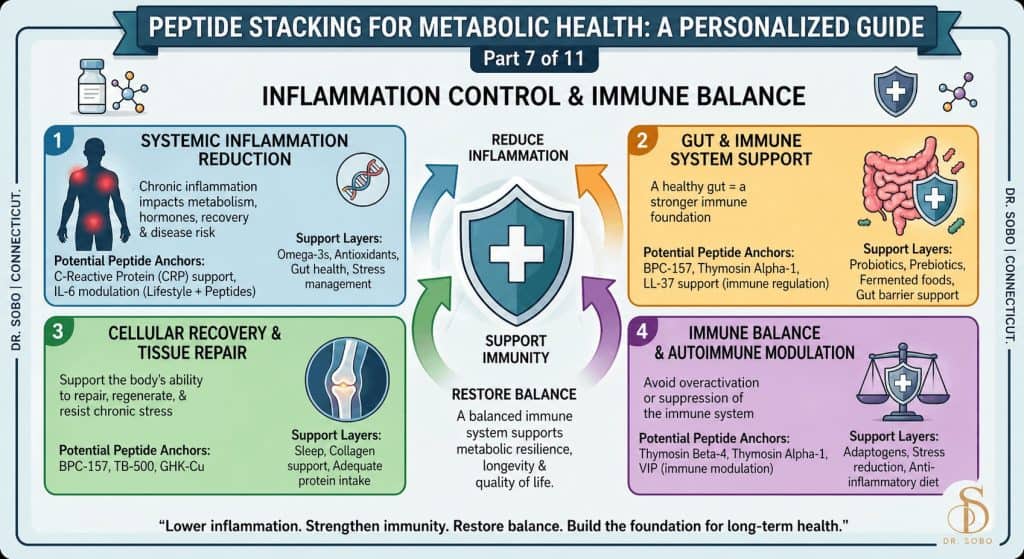
It may seem counterintuitive, but recovery-focused peptides like BPC-157 and TB-500 have legitimate uses in cognitive stacks. Chronic neuroinflammation, often exacerbated by systemic inflammation, is a major contributor to brain fog and cognitive decline. Because these recovery peptides have potent anti-inflammatory effects and may support vascular health, they are often used to reduce the inflammatory burden that interferes with cognitive function.
Think of it this way: if your brain is in a state of high inflammation, your “focus” is essentially being consumed by immune-system-related alerts. By using recovery-focused therapy to help reduce that systemic and neuro-level inflammation, you can often “clear the cache” of the brain, allowing for better mental clarity and improved cognitive throughput. This is another reason the Wolverine peptide stack is so frequently discussed in broader wellness conversations—it has benefits that extend well beyond the joints and tendons.
Building your neurocognitive peptide stack
The best stacks are built logically, starting with the primary goal and adding support where needed:
Type 1: Focus and performance-oriented
The anchor is usually a neurotrophic-focused peptide like Semax. Support is added to manage stress (like Selank) or provide mitochondrial energy (like MOTS-c). This is common for patients dealing with high-stress executive demands.Type 2: Long-term brain health and aging
The anchor might involve neurogenic support (like Dihexa or Semax). Support focuses on neuroprotection, mitochondrial efficiency, and managing systemic inflammation (using recovery-style peptides if needed).Type 3: Recovery-heavy approach
If the patient’s cognitive fog is clearly driven by past injury, ongoing inflammation, or poor systemic recovery, the anchor often begins with systemic anti-inflammatory and repair-supportive peptides, then adds neurocognitive tools once the inflammatory floor is raised.This is the standard approach at Dr. Sobo’s clinic. The stack is never chosen by guess-and-check. It is chosen by identifying what is actually preventing the patient from having the focus, memory, and energy they want.
Why personalization is the only way forward
The reason these stacks are so popular is that they promise a “mental edge,” but the edge is only as strong as the personalized evaluation behind it. If a patient is trying to boost cognitive function with a stack but has untreated sleep apnea, chronic gut inflammation, or a severe hormonal imbalance, the peptides will have a very hard time working. A personalized consultation is where we identify those hidden barriers and integrate the peptide stack into a broader strategy for brain health.

QUESTIONS ABOUT Peptide Stacking for Cognitive Performance and Brain Health ?
If you are researching peptides, and reside in Connecticut, Greenwich, or Norwalk area, contact us today for a Personalized Consultation. We focus on combining safe, effective medication with a realistic lifestyle plan.
For broader options, see our Conditions Treated page.
Final takeaway
Cognitive performance is one of the most rewarding areas of peptide therapy because the results can be so tangible. Improved focus, better memory, less anxiety, and sustained energy allow patients to perform better in every area of their lives. But achieving this requires more than just picking a “popular” brain peptide. It requires a stack that respects the complex, interconnected nature of the brain—addressing inflammation, neurotrophic support, mitochondrial energy, and stress resilience.
By using a personalized approach to stacking—anchoring the plan in what the patient needs most and layering in the right support—patients in Connecticut are finding new ways to protect their brain health and optimize their mental potential.
Frequently Asked Questions (FAQs)
What is a neurocognitive peptide stack?
A neurocognitive peptide stack is a personalized combination of peptides chosen to support brain health, improve mental focus, enhance memory, mitigate stress, and provide neuroprotection.
Which peptides are commonly used for cognitive support?
Peptides such as Semax, Selank, and Dihexa are frequently discussed for cognitive performance, while mitochondrial-supportive and anti-inflammatory peptides are often added as foundational support.
How do neurocognitive peptides work?
Many of these peptides work by upregulating neurotrophic factors (like BDNF) that support neuronal growth, modulating the stress response, reducing neuroinflammation, and improving mitochondrial energy production.
Can these peptides help with brain fog?
Yes. Brain fog is often a sign of neuroinflammation or metabolic inefficiency. By reducing that inflammation and supporting brain metabolism, cognitive function can often improve significantly.
Are these peptides safe?
Peptide therapy is a clinical tool that requires medical oversight to ensure correct dosing, suitability, and monitoring. Safety is the foundation of any personalized protocol.
Why does stress impact cognitive performance?
Chronic stress triggers inflammatory signaling in the brain and imbalances neurotransmitters, which directly degrades focus, memory encoding, and emotional stability.
What is the difference between Semax and Selank?
Semax is primarily focused on neurotrophic support and cognitive enhancement, while Selank is typically recognized for its role in stress modulation and emotional balance.
Is brain health just about memory?
No. It includes executive function, stress resilience, mood regulation, mental clarity, and the long-term protection of neural pathways.
Why is personalization important in a brain stack?
Because the underlying cause of cognitive decline or poor performance varies wildly. A stack that works for stress-induced burnout may not work for an age-related decline or post-injury fog.
Can these stacks be used long-term?
Some stacks are used for short-term “acute” performance enhancement, while others are used as part of a long-term brain health and neuroprotection strategy. This should be determined by your provider.
More Helpful Articles

REDEFINE 4 Results: CagriSema vs. Tirzepatide, Weight Loss, and FDA Status
Phase 3 head-to-head results and an anticipated late-2026 FDA decision create strong news and comparison intent. This article was evidence-checked on September 6, 2026. Regulatory status, labels, and trial publications
GLP-1 Medications and Vision Changes: NAION, Retinopathy, and Warning Signs
Regulatory safety updates and new observational research are driving urgent patient questions about vision loss. This article was evidence-checked on September 6, 2026. Regulatory status, labels, and trial publications can

GLP-1 Microdosing: Evidence, Risks, and What “Low Dose” Really Means
Evidence review date: September 6, 2026. GLP-1 microdosing has attracted substantial consumer and telehealth interest, but direct clinical-trial evidence remains limited. Medication approvals, prescribing information, safety communications, and clinical evidence
Sources
- Peptide Stacking for Fatigue in Connecticut | Dr. Sobo Guide #1
- Injury Healing Peptide Stacking in Connecticut | Dr. Sobo Guide #2
- Anti-Aging Peptide Stack Guide Part 3 of 11
- Peptide Stacking | Dr. Sobo
- Peptides | Dr. Sobo | Connecticut
- Peptide Stacking Therapy | Regenerative Medicine in Connecticut
- BPC-157 Peptide Therapy
- Wolverine Peptide Stack: BPC-157 + TB-500 for Faster Recovery
