
For patients researching MOTS-c peptide therapy, peptide therapy, personalized peptide stacking, or physician-supervised metabolic support, the most useful question is not simply, “Can MOTS-c boost my energy?” A better question is:
How can a physician evaluate whether mitochondrial function, metabolic health, hormones, inflammation, sleep, nutrition, activity, and peptide support should be addressed together?
This guide explains what MOTS-c is, why mitochondria matter, how metabolic aging may affect energy, what current research suggests, and why medical supervision is essential for patients considering mitochondrial peptide therapy.
Patients in Stamford, Greenwich, Fairfield County, and throughout Connecticut can call 203-348-8805 to discuss whether a medically supervised metabolic or peptide consultation may be appropriate.
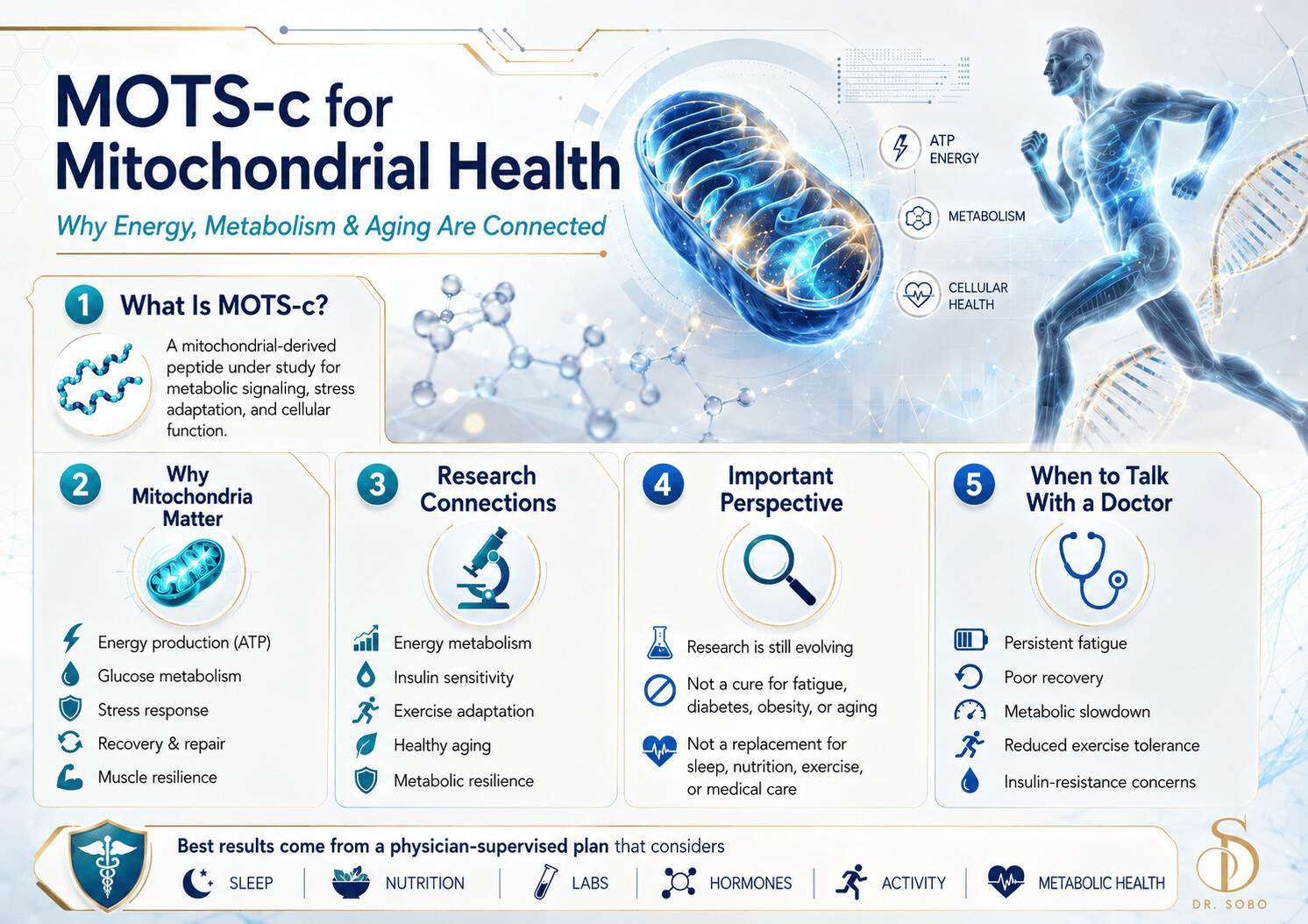
Quick Answer: What Is MOTS-c?
MOTS-c is a 16-amino-acid mitochondria-derived peptide encoded within mitochondrial DNA. Researchers are studying MOTS-c because it appears to participate in metabolic signaling, stress adaptation, insulin sensitivity, skeletal muscle metabolism, and age-related cellular function. It is part of a broader family of mitochondria-derived peptides that may help mitochondria communicate with the cell nucleus during metabolic stress.
In practical terms, MOTS-c is being discussed because mitochondria influence how the body uses energy, responds to exercise, manages glucose, adapts to stress, and maintains muscle and metabolic function over time. Research suggests MOTS-c may be relevant to these systems, but clinical evidence remains limited and evolving. It should not be presented as an established treatment for fatigue, obesity, diabetes, or aging.
Evidence and regulatory status as of July 27, 2026: MOTS-c is not an FDA-approved drug. FDA evaluated MOTS-c free base and MOTS-c acetate for possible inclusion on the Section 503A Bulks List during the July 23, 2026 Pharmacy Compounding Advisory Committee meeting. The committee’s recommendation is advisory and non-binding, and FDA stated that it would consider the committee’s input before finalizing its reviews. Inclusion on the 503A Bulks List would not constitute FDA approval or establish that MOTS-c is safe or effective for a particular medical condition.
Who Should Read This Guide?
This guide is for adults researching mitochondrial health, fatigue, metabolic slowdown, insulin resistance, weight gain after 40, reduced exercise tolerance, or peptide therapy who want a medically cautious explanation of MOTS-c. It may be particularly relevant for patients who feel that their energy, recovery, weight, or metabolism has changed despite reasonable efforts involving nutrition and physical activity.
It may also help patients researching peptide strategies for fatigue, body composition, strength, or muscle support understand where MOTS-c could fit within a broader medical plan. These symptoms can have numerous causes, so the appropriate starting point is a medical evaluation rather than selecting a peptide based on online claims.
Why Mitochondria Matter for Energy and Metabolism
Mitochondria help convert nutrients into ATP, the energy currency cells use to function. They also participate in oxidative-stress regulation, cellular signaling, repair, inflammation, fat and carbohydrate metabolism, muscle performance, and the body’s response to nutritional and physical stress.
Mitochondrial function is therefore connected with much more than the subjective feeling of energy. It affects how tissues use glucose and fat, how muscles respond to activity, how cells adapt to stress, and how the body recovers from exertion or illness.
Concerns that may overlap with mitochondrial and metabolic health include:
- Persistent fatigue despite adequate rest
- Reduced stamina or exercise tolerance
- Slower recovery after activity or illness
- Stubborn weight gain or difficulty losing fat
- Blood-sugar or insulin-resistance concerns
- Brain fog or reduced mental endurance
- Muscle weakness or reduced resilience with age
- Poor sleep quality or difficulty recovering from stress
These symptoms do not prove mitochondrial dysfunction. Thyroid conditions, anemia, sleep apnea, hormone changes, medication effects, nutrient deficiencies, chronic inflammation, insulin resistance, depression, autoimmune conditions, and lifestyle factors can produce similar concerns. A medical evaluation is important before assuming MOTS-c or another peptide is the answer.
Patients experiencing low energy can also review MOTS-c and persistent fatigue, including common medical, nutritional, hormonal, sleep-related, and metabolic factors that may need evaluation before peptide therapy is considered.
How MOTS-c for Mitochondrial Health Relates to Cellular Signaling
MOTS-c differs from many commonly discussed peptides because it is encoded within mitochondrial DNA and is being studied as part of mitochondrial-to-nuclear communication. Researchers are investigating how it may influence nuclear gene expression and help cells adapt when energy demand, metabolic stress, inflammation, or age-related pressure changes.
Reviews have examined MOTS-c in relation to stress metabolism, energy homeostasis, inflammation, skeletal muscle function, glucose regulation, and aging-related biological processes. These mechanisms make MOTS-c scientifically noteworthy, but a plausible mechanism is not the same as proven clinical benefit.
Current research does not establish that MOTS-c reverses aging, cures metabolic disease, or reliably improves symptoms in every patient. Its proposed effects require further human investigation, including controlled studies that clarify appropriate populations, dosing, safety, treatment duration, and clinically meaningful outcomes.
MOTS-c, Aging, and Metabolic Slowdown
Aging may affect muscle mass, hormones, sleep quality, inflammation, glucose handling, recovery, and mitochondrial efficiency. These changes can help explain why the same nutrition and exercise habits may produce different results in a person’s 40s, 50s, or 60s than they did earlier in life.
MOTS-c research is relevant to this discussion because the peptide sits at the intersection of mitochondrial signaling, insulin action, skeletal muscle metabolism, exercise response, and age-related physical decline. Research published in Nature Communications described MOTS-c as an exercise-induced, mitochondrial-encoded regulator associated with skeletal muscle metabolism and age-dependent physical decline in experimental models. The researchers also evaluated exercise-related MOTS-c expression in humans.
The practical conclusion is not that MOTS-c replaces exercise or reverses biological aging. Instead, the research helps illustrate how mitochondrial signaling, exercise tolerance, muscle resilience, and metabolic responses may be connected as people age.
How MOTS-c May Relate to Insulin Sensitivity and Glucose Metabolism
Insulin sensitivity connects mitochondrial and metabolic health. When the body responds effectively to insulin, glucose can move from the bloodstream into tissues that use or store it. When insulin resistance develops, the body may require higher insulin levels to regulate blood sugar. This can overlap with fatigue, cravings, abdominal weight gain, fatty-liver risk, and broader cardiometabolic concerns.
Foundational preclinical research connected MOTS-c with insulin sensitivity, metabolic homeostasis, skeletal muscle signaling, and AMPK activation. AMPK is an energy-sensing pathway that helps cells respond to changing energy demands. These findings are biologically meaningful, but animal and laboratory outcomes do not prove equivalent patient benefits.
ClinicalTrials.gov lists a human study designed to evaluate MOTS-c in adults with prediabetes and overweight or obesity. A registered or ongoing study does not establish clinical effectiveness. It indicates that researchers are formally investigating the question. Patients should interpret this emerging evidence with realistic expectations and physician guidance.
MOTS-c Is Not a Substitute for Foundational Metabolic Care
MOTS-c should not be treated as a shortcut around sleep, nutrition, exercise, blood-sugar management, hormone balance, medication review, inflammation management, or appropriate recovery. These factors help shape the environment in which mitochondria and the broader metabolic system function.
Before or alongside a peptide discussion, a physician may review:
- Sleep quality and possible sleep apnea
- Nutrition quality, total calorie intake, and protein intake
- A1C, fasting glucose, and other relevant metabolic markers
- Thyroid function and hormone status when clinically appropriate
- Inflammatory or autoimmune history
- Medications that may affect fatigue, glucose, or body weight
- Exercise tolerance and resistance-training habits
- Stress load and recovery capacity
- Iron, vitamin B12, vitamin D, magnesium, or other nutrient factors when indicated
A patient experiencing fatigue because of anemia, hypothyroidism, sleep apnea, under-eating, medication side effects, or uncontrolled blood sugar needs the underlying concern evaluated. MOTS-c may be part of a broader conversation, but it should not replace diagnosis or established care.
Where MOTS-c May Fit in a Physician-Supervised Plan
MOTS-c is most appropriately discussed within a broader mitochondrial and metabolic plan. Patients asking about it often have overlapping goals involving energy, recovery, insulin sensitivity, body composition, exercise tolerance, or healthy aging.
A physician may consider mitochondrial-focused support when a patient’s symptoms, history, and relevant testing suggest metabolic dysfunction, insulin-resistance risk, poor recovery, or age-related changes in physical capacity. The larger plan may also include individualized nutrition, gradual exercise progression, sleep support, hormone evaluation, medical weight loss, and management of underlying health conditions.
MOTS-c may be discussed alongside topics such as mitochondrial health optimization, NAD+ support, and medical weight loss. The purpose is not to combine therapies indiscriminately. It is to develop a coherent plan based on the individual patient’s needs and evidence-informed clinical judgment.
MOTS-c at a Glance
| Topic | What Patients Should Understand |
|---|---|
| What MOTS-c is | A mitochondria-derived peptide being studied for metabolic signaling, stress adaptation, insulin sensitivity, and age-related cellular function. |
| Why it matters | Mitochondria influence cellular energy, glucose metabolism, exercise tolerance, muscle resilience, and recovery. |
| Evidence level | Promising but developing. Much of the evidence remains preclinical, mechanistic, or early-stage. |
| FDA status | MOTS-c is not an FDA-approved drug. A 503A Bulks List recommendation would not constitute FDA approval. |
| What patients should avoid | Assuming MOTS-c is a cure for fatigue, aging, obesity, diabetes, or poor recovery. |
| Appropriate context | A physician-supervised discussion within a broader metabolic, mitochondrial, and functional-medicine plan. |
MOTS-c vs. NAD+: How Are They Different?
MOTS-c and NAD+ are both discussed in mitochondrial and healthy-aging medicine, but they are biologically different. NAD+ is a coenzyme involved in energy metabolism, redox reactions, cellular signaling, and DNA-repair pathways. MOTS-c is a mitochondria-derived peptide being studied for signaling roles involving metabolism, insulin sensitivity, cellular stress, and exercise-related adaptation.
One should not be treated as an automatic substitute for the other. A patient’s plan may emphasize nutrition, sleep, exercise, NAD+ support, MOTS-c, or another strategy depending on symptoms, medical history, laboratory findings, treatment goals, evidence limitations, and physician judgment.
For a focused comparison, read NAD+ versus MOTS-c for cellular energy.
MOTS-c, Exercise, and Muscle Resilience
Exercise remains one of the strongest established ways to support mitochondrial and metabolic health. Aerobic activity, resistance training, interval work, and regular movement can affect mitochondrial biogenesis, glucose utilization, cardiovascular fitness, muscle strength, and long-term physical function.
MOTS-c research overlaps with exercise biology because studies have examined it as an exercise-induced signaling peptide connected with skeletal muscle metabolism and metabolic adaptation. This does not mean MOTS-c can replace exercise. It suggests that mitochondrial signaling may be one reason movement has broad effects on energy, insulin sensitivity, physical resilience, and healthy aging.
Patients who feel too fatigued or deconditioned to exercise effectively may need evaluation and gradual activity progression rather than simply being told to push harder. Sleep, nutrition, thyroid function, hormone status, metabolic markers, inflammation, medications, and cardiovascular or musculoskeletal limitations may all affect exercise capacity.
What a Doctor May Check Before Considering MOTS-c
A medically responsible MOTS-c discussion should begin with evaluation. Patients seeking help for fatigue, metabolic slowdown, or poor recovery may require a broader review because many conditions can resemble or contribute to impaired metabolic function.
A physician may consider reviewing:
- Weight history and body-composition goals
- A1C, fasting glucose, and fasting insulin when appropriate
- Cholesterol, triglycerides, and cardiovascular-risk markers
- Thyroid function
- Hormone status based on age, symptoms, and medical history
- Liver and kidney markers
- Inflammatory markers when clinically indicated
- CBC, iron, ferritin, vitamin B12, and vitamin D when appropriate
- Sleep quality and possible sleep apnea
- Exercise tolerance and recovery patterns
- Current medications and supplements
- Nutrition quality, protein intake, hydration, and alcohol use
This evaluation helps determine whether MOTS-c belongs in the discussion or whether another health issue should be addressed first.
Patient Checklist: Is Mitochondrial Support Worth Discussing?
Patients may want to ask about mitochondrial support when low energy, metabolic slowdown, exercise intolerance, poor recovery, or body-composition changes persist despite reasonable effort. This checklist does not diagnose mitochondrial dysfunction. It is a starting point for a physician-supervised conversation.
- Low energy that does not improve with rest
- Loss of stamina or reduced exercise tolerance
- Slower recovery after workouts, illness, or stress
- Metabolic slowdown despite reasonable nutrition and activity
- Weight or body-composition changes around midlife
- Prediabetes, insulin resistance, or blood-sugar concerns
- Brain fog or reduced mental endurance
- Muscle loss or weakness with aging
- Difficulty maintaining body composition
- High stress load with poor recovery
- Interest in medically supervised peptide therapy rather than self-treatment
Why Medical Supervision Matters With MOTS-c
MOTS-c is not a supplement that patients should approach casually. It should be discussed in the context of medical history, symptoms, laboratory findings, medications, treatment goals, evidence limitations, safety considerations, and realistic expectations.
Patients should avoid purchasing peptides from online laboratories, research-only vendors, direct-to-consumer sellers without appropriate prescribing oversight, or sources that do not provide clear prescription and pharmacy information. Product identity, formulation, purity, sterility, storage, labeling, dosing, patient selection, and follow-up all matter.
Physician-prescribed treatment obtained through an appropriately licensed pharmacy should not be treated as equivalent to buying an unverified “research use only” product online. However, compounded preparations are not FDA-approved. Patients should receive clear information about the proposed treatment, uncertainties, sourcing, alternatives, monitoring, and follow-up.
Medical supervision also helps prevent patients from misattributing fatigue or metabolic symptoms to “low mitochondria” when the actual concern may be thyroid dysfunction, sleep apnea, anemia, insulin resistance, medication effects, undernutrition, depression, inflammatory disease, or another condition requiring evaluation.
What Patients Should Not Expect From MOTS-c
MOTS-c should not be marketed as a guaranteed anti-aging treatment, replacement for exercise, cure for diabetes, established weight-loss medication, or universal answer for fatigue. Patients should be cautious with sources that promise dramatic results, precise outcome percentages, or guaranteed timelines without adequate human evidence.
Some patients may be better served by foundational metabolic care, thyroid or hormone evaluation, sleep treatment, medical weight management, nutrition changes, resistance training, or another intervention before peptide therapy is considered.
How MOTS-c Fits the Bigger Metabolic-Medicine Conversation
MOTS-c belongs within a broader discussion about how energy, blood sugar, muscle, hormones, inflammation, liver health, cardiovascular risk, sleep, and aging interact. This same clinical perspective explains why medical weight loss involves more than appetite control and why persistent fatigue requires more than additional caffeine.
For some patients, a comprehensive plan may consider medical weight loss, GLP-1 therapy, strength preservation, mitochondrial support, nutrition, hormone balance, and inflammation management. For others, the appropriate priority may be diagnosing and treating a foundational medical or lifestyle issue first.
Optimal Health Medical’s goal is to identify the patterns contributing to each patient’s symptoms and build a personalized, physician-guided plan that supports energy, metabolic function, and long-term health.
Final Thoughts
MOTS-c is scientifically interesting because it connects mitochondrial biology with metabolism, insulin sensitivity, exercise signaling, muscle function, and age-related cellular stress. The research is promising, but much of the evidence remains preclinical or early-stage and should be interpreted carefully.
Patients experiencing fatigue, metabolic slowdown, poor recovery, insulin-resistance concerns, or age-related changes in stamina and body composition should begin with a medical evaluation. The plan should consider sleep, nutrition, exercise, hormones, laboratory findings, medications, inflammation, mitochondrial health, and long-term goals together.
Patients in Stamford, Greenwich, Fairfield County, and throughout Connecticut can call 203-348-8805 to discuss whether MOTS-c peptide therapy, mitochondrial support, or another medically supervised metabolic-health strategy may be appropriate.
Considering MOTS-c or Mitochondrial Support?
Schedule a physician-supervised consultation to discuss fatigue, metabolic slowdown, mitochondrial health, peptide therapy, and personalized metabolic support. Call 203-348-8805 or visit the contact page.
FAQs About MOTS-c and Mitochondrial Health
What is MOTS-c?
MOTS-c is a 16-amino-acid mitochondria-derived peptide encoded within mitochondrial DNA. Researchers are studying it because it appears to participate in metabolic signaling, stress adaptation, insulin sensitivity, skeletal muscle metabolism, and age-related cellular function. It is not a cure for fatigue, aging, obesity, or diabetes, but it is an important research topic in mitochondrial and metabolic health.
How does MOTS-c relate to mitochondrial health?
MOTS-c is linked to mitochondrial signaling because it is encoded by mitochondrial DNA and appears to help regulate cellular responses to metabolic stress. Mitochondria influence energy production, glucose use, oxidative stress, inflammation, exercise tolerance, and recovery. MOTS-c research is relevant because it may help explain how mitochondria communicate with the nucleus and influence broader metabolic function.
Can MOTS-c improve energy?
Research suggests MOTS-c may be relevant to energy metabolism and cellular stress adaptation, but patients should not expect it to act like caffeine or a stimulant. Low energy can come from sleep disorders, thyroid dysfunction, anemia, hormone changes, medication effects, nutrient deficiencies, insulin resistance, inflammation, or other medical issues. A physician should evaluate the cause of fatigue before considering MOTS-c or any peptide therapy.
Is MOTS-c an anti-aging peptide?
MOTS-c is often discussed in healthy-aging research because mitochondrial function, insulin sensitivity, muscle resilience, and metabolic balance can change with age. Some research suggests MOTS-c signaling may be connected to age-related metabolic processes. However, it should not be described as a proven anti-aging treatment. It is better understood as a mitochondria-derived peptide being studied for metabolic and aging-related biology.
Does MOTS-c help with insulin resistance?
MOTS-c has been studied in relation to insulin sensitivity and metabolic homeostasis. Preclinical research suggests it may influence glucose metabolism and skeletal muscle signaling, while human research remains limited and developing. Patients with insulin resistance should not self-treat with MOTS-c. A physician should evaluate relevant metabolic markers, medications, body composition, liver health, nutrition, activity, and other risk factors.
Is MOTS-c the same as NAD+?
No. NAD+ and MOTS-c are both discussed in mitochondrial and longevity medicine, but they are different. NAD+ is a coenzyme involved in cellular energy and repair pathways. MOTS-c is a mitochondria-derived peptide being studied for signaling roles involving metabolism, stress adaptation, insulin sensitivity, and aging-related function. A physician can help determine which approach, if either, fits the patient’s needs.
Can MOTS-c replace exercise?
No. MOTS-c should not be viewed as a replacement for exercise. Exercise is one of the strongest established ways to support mitochondrial health, insulin sensitivity, cardiovascular fitness, muscle function, and healthy aging. MOTS-c research overlaps with exercise biology, but a peptide should not replace movement, resistance training, sleep, appropriate nutrition, and recovery.
Who might ask a doctor about MOTS-c?
Patients may ask about MOTS-c if they experience persistent fatigue, reduced exercise tolerance, metabolic slowdown, insulin-resistance concerns, age-related changes in muscle or stamina, or difficulty improving body composition despite reasonable effort. The appropriate first step is medical evaluation because many treatable conditions can cause similar symptoms.
Is MOTS-c safe for everyone?
No therapy is appropriate for everyone. Safety depends on the patient’s medical history, medications, symptoms, laboratory findings, goals, product source, and overall health. MOTS-c research and long-term human safety evidence remain limited. Patients should discuss uncertainties, potential risks, alternatives, sourcing, monitoring, and follow-up with a qualified physician before considering treatment.
Where can I discuss MOTS-c peptide therapy in Connecticut?
Patients in Stamford, Greenwich, Fairfield County, and throughout Connecticut can schedule a consultation with Dr. Sobo to discuss MOTS-c, mitochondrial health, fatigue, metabolic function, and physician-supervised peptide therapy. Treatment decisions should be based on a personalized medical evaluation rather than online trends or general wellness claims. Call 203-348-8805 to discuss whether a consultation may be appropriate.
Sources
- The Mitochondrial-Derived Peptide MOTS-c Promotes Metabolic Homeostasis and Reduces Obesity and Insulin Resistance — PubMed
- MOTS-c, the Most Recent Mitochondrial-Derived Peptide in Human Aging and Age-Related Diseases — PMC
- Mitochondria-Derived Peptide MOTS-c: Effects and Mechanisms Related to Stress, Metabolism, and Aging — Journal of Translational Medicine
- MOTS-c Is an Exercise-Induced Mitochondrial-Encoded Regulator of Age-Dependent Physical Decline and Muscle Homeostasis — Nature Communications
- MOTS-c for Improving Insulin Sensitivity in Adults With Prediabetes and Overweight or Obesity — ClinicalTrials.gov
- July 23–24, 2026 Pharmacy Compounding Advisory Committee Meeting — FDA
- FDA Evaluation of MOTS-c-Related Bulk Drug Substances — July 2026
- Dr. Sobo — MOTS-c Peptide Therapy
- Dr. Sobo — Peptide Therapy
- Dr. Sobo — How Peptide Stacking Therapy Is Personalized
- Dr. Sobo — Optimizing Mitochondrial Health for Peak Energy

Medical Review
Medically reviewed by Dr. Henry C. Sobo, M.D.
Founder of Optimal Health Medical and physician specializing in holistic, integrative, peptide therapy, and medical weight loss care.