
MOTS-c and Fatigue: Could Mitochondrial Support Help Patients Who Feel Metabolically Stuck?
For some patients, the problem is not simply motivation. Fatigue can reflect sleep disruption, insulin resistance, inflammation, nutrient gaps, thyroid changes, hormonal shifts, medication effects, chronic stress, pain, under-eating, overtraining, or a medical condition that has not been fully evaluated. It can also reflect how efficiently the body is producing, using, and recovering cellular energy.
This is where mitochondrial health has become an important topic. Mitochondria help cells convert nutrients into usable energy, support metabolic flexibility, regulate oxidative stress, and influence how muscles, the brain, the heart, and other tissues respond to demand. When patients feel metabolically stuck, mitochondrial function is one piece of the larger clinical picture.
MOTS-c is a mitochondria-derived peptide being studied for its relationship to metabolism, insulin sensitivity, stress adaptation, skeletal muscle signaling, and age-related metabolic function. It is not a magic energy shot, and it should not be treated as a replacement for diagnosis, nutrition, sleep, resistance training, or physician-guided care. However, for appropriate patients, it may be part of a broader conversation about metabolic support and cellular-energy optimization.
Patients interested in physician-guided peptide therapy can learn more about MOTS-c peptide therapy, medical weight loss, and Dr. Sobo’s broader approach to peptide therapy at Optimal Health Medical. Patients in Stamford, Greenwich, Fairfield County, and throughout Connecticut can call 203-348-8805 to discuss whether a personalized metabolic evaluation may be appropriate.
Quick Answer: Can MOTS-c Help With Fatigue?
MOTS-c may be relevant to fatigue because it is a mitochondria-derived peptide involved in cellular stress response, energy metabolism, AMPK-related signaling, and skeletal muscle metabolic function. Early research suggests MOTS-c may influence insulin sensitivity, metabolic flexibility, and exercise-like pathways, but human clinical evidence is still developing.
Patients should not view MOTS-c as a stand-alone cure for fatigue. A safer medical approach begins by identifying why fatigue is occurring. That may include evaluating sleep quality, thyroid function, blood sugar control, nutrient status, inflammation, hormone balance, medications, body composition, exercise tolerance, and lifestyle stress. MOTS-c may be considered only after the bigger clinical picture is understood.
Who Should Read This Guide?
This guide is for adults who feel metabolically stuck, fatigued, slow to recover, resistant to weight loss, or unable to regain energy despite lifestyle effort. It may be especially relevant for patients who are researching mitochondrial support, peptide therapy, MOTS-c, medical weight loss, metabolic health, insulin resistance, aging, or fatigue that does not improve with simple rest.
It is also useful for patients who want to understand the difference between true medical evaluation and wellness marketing. Fatigue is common, but it should not be dismissed or oversimplified. The right plan depends on why the patient feels tired, what the labs show, what the body composition trend shows, and whether the patient is eating, sleeping, moving, and recovering in a way that supports metabolic function.
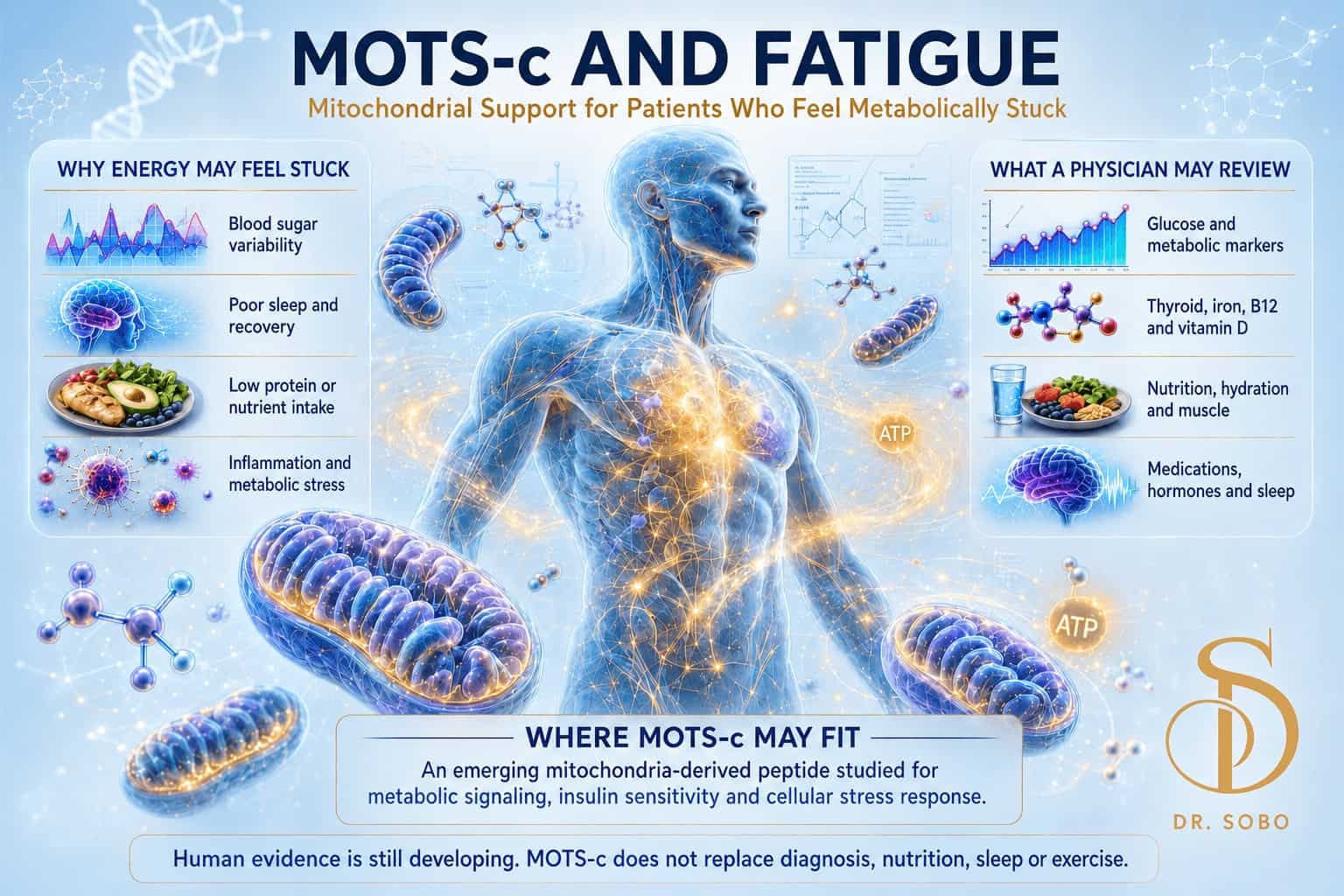
Why Fatigue Is Often More Than Being Tired
Fatigue is different from ordinary tiredness. Normal tiredness improves after sleep, food, hydration, and rest. Persistent fatigue often feels deeper. Patients may describe it as heavy limbs, low stamina, poor concentration, weakness, low motivation, afternoon crashes, slow workout recovery, or the sense that the body is running on a low battery.
A medical visit should look for common and correctable causes before assuming the issue is mitochondrial. These may include anemia, thyroid dysfunction, low vitamin B12, low vitamin D, blood sugar dysregulation, sleep apnea, chronic inflammation, depression, medication side effects, under-eating, dehydration, alcohol use, menopause-related symptoms, testosterone changes, autoimmune conditions, infections, or overtraining.
That broader evaluation matters because the same symptom can come from different causes. A patient with undiagnosed sleep apnea needs a different plan than a patient who is under-eating during weight loss. A patient with insulin resistance needs a different plan than someone with low iron, thyroid imbalance, or medication-related fatigue.
What Mitochondria Have to Do With Energy
Mitochondria are often described as the energy centers of the cell. That description is simple, but the biology is complex. Mitochondria help produce ATP, the energy currency used by cells. They also help regulate metabolism, oxidative stress, cell signaling, and the way tissues respond to nutritional and physical stress.
The National Institute on Aging describes mitochondria as major energy creators of the cell and notes their involvement in ATP production, metabolism, and cellular processes such as apoptosis. Mitochondrial function is also studied in aging and age-related disease because energy production, oxidative stress, and cellular resilience can change over time.
For patients, the practical point is this: the body does not experience energy only as calories consumed. It experiences energy through how nutrients are processed, how muscles use glucose and fat, how inflammation is controlled, how sleep restores the nervous system, and how well the body adapts to stress. Mitochondrial health sits at the center of many of those processes.
What Is MOTS-c?
MOTS-c stands for mitochondrial open reading frame of the 12S rRNA-c. It is a small peptide encoded within mitochondrial DNA. In scientific literature, MOTS-c is described as a mitochondria-derived peptide that appears to participate in metabolic regulation, cellular stress response, and communication between mitochondria and the nucleus.
Foundational research published in Cell Metabolism reported that MOTS-c regulates insulin sensitivity and metabolic homeostasis in preclinical models, with skeletal muscle described as an important target tissue. Other reviews have discussed MOTS-c in the context of aging, metabolic disease, AMPK signaling, exercise-related pathways, and mitochondrial stress adaptation.
This does not mean MOTS-c should be presented as proven treatment for every patient with fatigue. Much of the evidence is preclinical or early-stage. A responsible clinical discussion should explain that MOTS-c is an emerging peptide topic, not a substitute for approved therapies, diagnostic workup, or foundational metabolic care.
Why MOTS-c Is Discussed for Patients Who Feel Metabolically Stuck
Patients often use the phrase metabolically stuck when they feel that effort is no longer producing results. They may be walking, dieting, exercising, and sleeping more, yet still feel tired, hungry, inflamed, weak, or unable to lose weight. Sometimes the issue is behavioral consistency. Sometimes the issue is physiology.
MOTS-c is discussed in this context because research links it to pathways that overlap with metabolic flexibility, insulin sensitivity, skeletal muscle function, AMPK activation, and stress-response signaling. AMPK is sometimes described as a cellular energy sensor because it helps cells respond when energy demand changes. Exercise activates many energy-sensing pathways, which is one reason MOTS-c is sometimes discussed as exercise-related or exercise-mimetic in preclinical literature.
That phrase should be used carefully. No peptide replaces exercise. Resistance training, walking, protein intake, sleep quality, and glucose control remain foundational. The better clinical question is whether mitochondrial support could complement a physician-guided plan for a patient whose fatigue is tied to metabolic dysfunction, poor recovery, insulin resistance, or aging-related energy changes.
MOTS-c and Fatigue: Potential Clinical Questions
A patient asking about MOTS-c should not start with the question, “Can this make me feel more energetic?” The better starting point is, “Why am I fatigued, and what does my metabolic picture show?”
| Clinical Question | Why It Matters | What a Physician May Review |
|---|---|---|
| Is fatigue related to blood sugar swings? | Insulin resistance and glucose variability can contribute to energy crashes and cravings. | Fasting glucose, A1C, insulin resistance risk, meal timing, protein intake, and activity. |
| Is the patient under-eating? | Low appetite, dieting, or GLP-1 therapy can reduce protein, calories, hydration, and micronutrients. | Food intake, protein targets, hydration, electrolytes, weight-loss pace, and symptoms. |
| Is recovery poor? | Slow recovery may reflect sleep, overtraining, inflammation, nutrient gaps, or low strength capacity. | Sleep quality, training load, soreness, inflammation markers, iron, B12, vitamin D, and thyroid status. |
| Is there weight-loss resistance? | Metabolic adaptation, hormonal changes, sleep apnea, medications, or insulin resistance may slow progress. | Medication list, sleep, thyroid, menopause/testosterone considerations, stress, and body composition. |
| Is mitochondrial support appropriate? | MOTS-c may be considered only within a broader plan, not as a stand-alone answer. | Medical history, goals, contraindications, treatment expectations, and monitoring plan. |
The Difference Between Normal Fatigue and Metabolic Fatigue
Normal fatigue often has an obvious explanation: a poor night of sleep, a stressful day, a hard workout, travel, or a missed meal. Metabolic fatigue is different. It tends to repeat, linger, or appear out of proportion to the activity performed. Patients may feel depleted even after rest or notice that energy drops after meals, during exercise, or late in the day.
Metabolic fatigue can overlap with insulin resistance, inflammation, obesity, poor sleep, chronic stress, low muscle mass, nutrient deficiencies, and hormone changes. It may also appear during weight loss if the patient is eating too little, losing muscle, or pushing too hard without enough recovery.
Because fatigue has many causes, a physician-guided plan should avoid quick assumptions. The first goal is not to sell a peptide. The first goal is to understand the patient.
Where MOTS-c May Fit in a Doctor-Supervised Plan
MOTS-c may fit best as part of a larger metabolic-health strategy. That strategy may include nutrition, resistance training, sleep support, hydration, stress management, weight-loss planning, insulin-resistance evaluation, hormone review, and lab monitoring. In some patients, peptide therapy may be considered as an adjunct to support the larger plan.
A doctor-supervised approach is important because patients who feel fatigued often try many disconnected solutions. They may add supplements, increase caffeine, restrict food, push harder in the gym, or buy peptides from unreliable sources. That can make fatigue worse if the real issue is under-fueling, poor sleep, thyroid imbalance, blood sugar swings, dehydration, or excessive stress.
Dr. Sobo’s approach is to evaluate the patient’s health history, symptoms, labs, body composition goals, medications, and lifestyle before deciding whether a peptide discussion is appropriate.
Why Insulin Sensitivity Matters for Energy
Insulin sensitivity describes how well the body responds to insulin and moves glucose into cells. When insulin resistance is present, patients may experience cravings, weight gain, abdominal fat accumulation, fatigue after meals, difficulty losing weight, and higher long-term cardiometabolic risk.
MOTS-c research is often discussed because foundational studies connected it with insulin sensitivity and metabolic homeostasis. This is relevant for patients who feel metabolically stuck because energy problems and weight-loss resistance often overlap with blood sugar regulation.
Still, insulin resistance should be measured and managed carefully. Nutrition quality, protein intake, fiber, resistance training, sleep, weight trend, liver markers, triglycerides, waist circumference, and medication history may all matter. MOTS-c should not be used as a shortcut around the fundamentals that improve insulin sensitivity.
MOTS-c Is Not a Replacement for Exercise
Some online discussions describe MOTS-c as an exercise-mimetic peptide. That language can be misleading if patients interpret it to mean they can skip movement. Exercise does far more than activate energy pathways. It builds muscle, improves balance, supports cardiovascular health, lowers insulin resistance, improves mood, supports sleep, and helps maintain weight loss.
The more accurate patient-friendly explanation is that MOTS-c is being studied because it appears to interact with pathways that also matter during metabolic stress and exercise adaptation. That makes it scientifically interesting, but not a replacement for strength training, walking, mobility work, or medically appropriate conditioning.
For fatigued patients, exercise may need to be dosed carefully. Some need to start with walking, light resistance training, physical therapy-style progression, or recovery-focused routines rather than intense workouts. The correct plan depends on the patient’s baseline.
What a Metabolic Evaluation May Include
A good metabolic evaluation looks for reasons fatigue and weight-loss resistance may be occurring. It may include a detailed history, medication review, sleep review, nutrition review, body composition discussion, physical activity assessment, and targeted labs. The exact workup depends on the patient.
Common areas to review include A1C, fasting glucose, insulin resistance risk, cholesterol, triglycerides, liver enzymes, kidney function, thyroid markers, inflammatory markers when appropriate, vitamin B12, vitamin D, iron status, hormone patterns, blood pressure, waist circumference, and symptoms of sleep apnea.
This broader approach matters because fatigue is rarely solved by one intervention. It is often improved by layering the right interventions in the right order.
MOTS-c Fatigue Checklist: What to Review First
| Area to Review | Why It Matters for Fatigue | Questions to Ask |
|---|---|---|
| Sleep | Poor sleep can drive fatigue, cravings, insulin resistance, and poor recovery. | Do I snore? Wake unrefreshed? Need caffeine to function? |
| Nutrition | Under-eating or low protein can worsen fatigue and muscle loss. | Am I eating enough protein, fiber, calories, and micronutrients? |
| Blood sugar | Glucose swings can create energy crashes and food cravings. | Do I crash after meals or crave sugar in the afternoon? |
| Muscle | Low muscle mass reduces metabolic resilience and exercise tolerance. | Am I doing strength training consistently and safely? |
| Hormones and thyroid | Hormonal changes can affect energy, mood, muscle, and weight. | Have thyroid, menopause, testosterone, or other factors been evaluated? |
| Inflammation and recovery | Inflammation, pain, illness, or overtraining can keep the body in a depleted state. | Am I recovering between workouts and sleeping well? |
| Peptide fit | MOTS-c should be considered only after a thoughtful clinical review. | What outcome are we tracking, and how will we know if the plan is working? |
Safety: Why Medical Supervision Matters With MOTS-c
Patients should be cautious about peptides purchased without a clear prescription, pharmacy source, clinician oversight, dose instructions, and follow-up plan. Peptide quality, storage, labeling, dosing, sterility, and patient selection all matter. A patient should not use an unlabeled product or guess at dosing based on an online forum.
Medical supervision is especially important for patients with diabetes, prediabetes, cardiovascular risk, kidney disease, liver disease, autoimmune conditions, active cancer history, pregnancy considerations, complex medication regimens, or unexplained fatigue. In these cases, fatigue may be a clue to something that deserves evaluation before any peptide is considered.
A responsible plan should explain what MOTS-c is being considered for, what is known, what is still being studied, what alternatives exist, what side effects or uncertainty should be discussed, and what follow-up will be used to monitor progress.
Who May Be a Better Candidate for a MOTS-c Discussion?
A patient may be a better candidate for a MOTS-c discussion if they have persistent fatigue with signs of metabolic dysfunction, poor recovery, insulin-resistance risk, age-related energy decline, reduced exercise tolerance, or weight-loss resistance after a proper medical evaluation. This does not guarantee that MOTS-c is appropriate. It means the topic may be worth discussing in context.
A patient may not be an ideal candidate if fatigue is unexplained and severe, if there are red-flag symptoms, if basic medical evaluation has not been completed, if the patient is pregnant or trying to conceive, if medication interactions or health risks are unclear, or if the patient expects a peptide to replace sleep, nutrition, exercise, or medical care.
The best candidate is not simply the person who wants more energy. It is the person with a clear clinical picture, realistic expectations, and willingness to build the foundations that support metabolic health.
Red Flags: When Fatigue Should Be Evaluated Promptly
Fatigue should be evaluated promptly when it is severe, sudden, worsening, or associated with chest pain, shortness of breath, fainting, confusion, unexplained weight loss, persistent fever, severe weakness, blood in stool, new neurological symptoms, severe depression, or inability to function normally.
Patients should also seek medical evaluation when fatigue occurs with rapid heart rate, dehydration, persistent vomiting, severe dizziness, low blood sugar symptoms, severe abdominal pain, or signs of infection. These are not situations for self-directed peptide use.
Even when symptoms are less urgent, persistent fatigue deserves attention. A physician can help distinguish lifestyle fatigue from metabolic fatigue, medication-related fatigue, endocrine problems, nutrient deficiencies, sleep disorders, and other medical conditions.
How MOTS-c Connects With Other Dr. Sobo Topics
MOTS-c fits naturally within a broader metabolic-health strategy. Patients researching GLP-1 therapy may also be thinking about fatigue, muscle preservation, plateaus, cravings, and long-term weight maintenance. These topics are connected because weight, energy, insulin resistance, inflammation, sleep, appetite, and muscle function influence one another.
Patients who are using GLP-1 therapy and feel tired should not assume MOTS-c is automatically the answer. Fatigue during weight loss may come from low protein intake, low total calories, constipation, dehydration, low electrolytes, poor sleep, rapid weight loss, muscle loss, or medication side effects. Those issues should be reviewed first.
For patients who are not using GLP-1 therapy, mitochondrial support may still be relevant when fatigue overlaps with metabolic dysfunction, poor recovery, and aging-related energy concerns. The common thread is physician-guided evaluation rather than guessing.
Final Thoughts
MOTS-c is an emerging peptide topic because it sits at the intersection of mitochondrial biology, metabolism, insulin sensitivity, skeletal muscle signaling, and aging-related energy research. That makes it highly relevant for patients who feel metabolically stuck, but it also requires careful positioning.
Fatigue is not one diagnosis. It is a symptom with many possible causes. The safest and most effective approach is to evaluate the patient first, identify correctable issues, strengthen the foundations of metabolic health, and then consider whether MOTS-c or another therapy fits the clinical picture.
Patients in Stamford, Greenwich, Fairfield County, and throughout Connecticut can call 203-348-8805 to discuss fatigue, metabolic health, MOTS-c, peptide therapy, and physician-supervised options at Optimal Health Medical.
FAQs About MOTS-c and Fatigue
What is MOTS-c?
MOTS-c is a mitochondria-derived peptide encoded within mitochondrial DNA. It is being studied for its relationship to metabolic regulation, cellular stress response, insulin sensitivity, AMPK-related signaling, skeletal muscle function, and aging biology. It should be viewed as an emerging peptide therapy topic, not as a guaranteed treatment for fatigue or a substitute for medical evaluation.
Can MOTS-c help with fatigue?
MOTS-c may be relevant to fatigue when fatigue overlaps with metabolic dysfunction, poor recovery, insulin-resistance risk, or mitochondrial stress. However, human clinical evidence is still developing, and fatigue has many possible causes. A physician should first evaluate sleep, nutrition, thyroid function, blood sugar, inflammation, medications, hormones, and nutrient status before deciding whether MOTS-c is appropriate.
Is MOTS-c an energy booster?
MOTS-c should not be treated as a simple energy booster. It is discussed because of its relationship to mitochondrial signaling and metabolic pathways, not because it works like caffeine or a stimulant. Patients who feel depleted need a medical evaluation to identify why energy is low. The goal is better metabolic function, not temporary stimulation.
Why are mitochondria important for fatigue?
Mitochondria help cells produce ATP, regulate metabolism, respond to stress, and support tissues with high energy demands such as muscle, brain, and heart tissue. When patients have poor sleep, insulin resistance, inflammation, nutrient gaps, or chronic stress, energy production and recovery may feel impaired. Mitochondrial health is one part of the fatigue discussion.
Does MOTS-c replace exercise?
No. MOTS-c does not replace exercise. Exercise improves muscle, cardiovascular health, insulin sensitivity, mood, sleep, balance, and long-term weight maintenance. MOTS-c is sometimes discussed in relation to exercise-like signaling pathways, but that does not mean patients can skip movement. A physician-guided plan should still include safe, appropriate physical activity.
Who should consider discussing MOTS-c with a doctor?
Adults with persistent fatigue, poor recovery, weight-loss resistance, insulin-resistance risk, or age-related metabolic concerns may consider discussing MOTS-c with a qualified clinician. The discussion should happen after a broader evaluation of common fatigue drivers such as sleep quality, blood sugar, thyroid status, nutrient levels, inflammation, medications, hormones, and nutrition.
What labs might be reviewed before MOTS-c therapy?
Lab needs vary, but a physician may review A1C, fasting glucose, insulin-resistance risk, cholesterol, triglycerides, liver enzymes, kidney function, thyroid markers, inflammatory markers, vitamin B12, vitamin D, iron status, hormone patterns, and other markers based on symptoms and medical history. The goal is to understand why fatigue is happening before choosing a treatment plan.
Is MOTS-c safe?
Safety depends on patient selection, dose, source, monitoring, and the patient’s medical history. Patients should not use unlabeled peptides or products without a clear prescription, pharmacy source, dose instructions, and follow-up care. Anyone with complex medical conditions, diabetes medications, cardiovascular risk, kidney or liver disease, pregnancy considerations, or unexplained severe fatigue should be evaluated by a clinician before considering peptide therapy.
Can GLP-1 patients use MOTS-c for fatigue?
Some GLP-1 patients may ask about MOTS-c if they feel tired during weight loss, but fatigue during GLP-1 therapy can come from low food intake, low protein, dehydration, constipation, rapid weight loss, poor sleep, or side effects. Those issues should be evaluated first. MOTS-c may be discussed only if it fits the patient’s broader medical and metabolic picture.
Where can I discuss MOTS-c and fatigue in Connecticut?
Patients in Stamford, Greenwich, Fairfield County, and throughout Connecticut can schedule a consultation with Dr. Sobo at Optimal Health Medical to discuss fatigue, metabolic health, mitochondrial support, MOTS-c, and physician-guided peptide therapy. Treatment decisions should be personalized and based on medical history, symptoms, labs, goals, and safety considerations.
Sources
- MOTS-c: An Equal Opportunity Insulin Sensitizer — PMC
- The Mitochondrial-Derived Peptide MOTS-c Promotes Metabolic Homeostasis — PubMed
- MOTS-c, the Most Recent Mitochondrial-Derived Peptide in Human Aging and Age-Related Diseases — PMC
- Mitochondrial Dysfunction: Mechanisms and Advances in Therapy — Signal Transduction and Targeted Therapy
- Mitochondrial Connection to Aging and AD/ADRD — National Institute on Aging
- MOTS-c for Improving Insulin Sensitivity in Adults With Prediabetes and Overweight/Obesity — ClinicalTrials.gov
- Dr. Sobo — MOTS-c Peptide Therapy
- Dr. Sobo — Peptide Therapy
- Dr. Sobo — Medical Weight Loss
- Dr. Sobo — GLP-1 Weight Loss

Medical Review
Medically reviewed by Dr. Henry C. Sobo, M.D.
Founder of Optimal Health Medical and physician specializing in holistic, integrative, peptide therapy, and medical weight loss care.