
By Dr. Henry Sobo, MD – Medical Weight Loss, Functional & Hormone Therapy, Connecticut
Optimizing Mitochondria for Peak Energy and Longevity
Feeling like your “tank” is always low, even when labs look “normal,” is one of the most common complaints I hear in my Stamford functional medicine practice. Many patients have been told they are “fine” because standard bloodwork is unremarkable—yet they struggle with fatigue, brain fog, slow recovery, and accelerated aging.
A key reason: conventional testing rarely looks deeply at mitochondrial health, even though these tiny “power plants” inside your cells drive energy, metabolism, and resilience against disease. In functional medicine, we focus on identifying and correcting mitochondrial dysfunction as a root cause of low energy, chronic disease, and reduced lifespan. In this article, I’ll explain what your mitochondria do, how they get damaged, and which lifestyle, nutritional, and advanced therapies—like NAD+ IV, CoQ10, and PQQ—can help optimize them for peak energy and healthy longevity.
What Are Mitochondria and Why Do They Matter?
Mitochondria are small organelles found in almost every cell in your body. They generate adenosine triphosphate (ATP), the molecule your cells use for fuel. When your mitochondria are functioning well, ATP production is efficient, and you experience:
- Steady physical and mental energy
- Better memory, focus, and mood
- Healthy metabolism and weight control
- Faster recovery after exercise or illness
- Greater resilience to stress and aging
When mitochondrial function declines, ATP output drops, and you can feel tired, inflamed, and “older than your years.” Low mitochondrial capacity has been linked to chronic fatigue, fibromyalgia, cognitive decline, diabetes, cardiovascular disease, and many age-related conditions.
Functional medicine does not treat “just fatigue”—we evaluate how well your mitochondria are producing energy and what might be damaging them, then build a targeted plan to restore their function.
How Mitochondria Decline with Age and Stress
Mitochondria are especially vulnerable to damage because they sit at the center of energy production, where reactive oxygen species (ROS) are generated. Over time, several factors can impair mitochondrial health:
- Oxidative stress: Excess ROS from poor diet, pollution, smoking, alcohol, and chronic inflammation can damage mitochondrial membranes and DNA.
- Nutrient deficiencies: CoQ10, B-vitamins, magnesium, carnitine, alpha-lipoic acid, and other nutrients are critical co-factors in energy production pathways.
- Toxins: Heavy metals, mold toxins (mycotoxins), pesticides, and certain medications can interfere with mitochondrial enzymes.
- Hormonal imbalances: Low thyroid, low testosterone/estrogen, and cortisol dysregulation can all reduce mitochondrial output.
- Sedentary lifestyle: Lack of exercise leads to fewer and weaker mitochondria, especially in muscle and brain tissue.
- Sleep disruption and chronic stress: Poor sleep and high stress increase oxidative damage and impair mitochondrial repair processes.
In my Connecticut practice, we often see mitochondrial impairment as a final common pathway in patients who have “tried everything” for fatigue, brain fog, or poor exercise tolerance without success. That’s why we use advanced functional testing to look at mitochondrial markers, nutrient status, toxins, and inflammation, then design an individualized program to rebuild mitochondrial health step by step.
Key Signs Your Mitochondria May Need Support
You don’t need to be a biochemist to suspect mitochondrial issues. Common clues include:
- Persistent fatigue that doesn’t improve with rest
- Exercise intolerance (you “hit a wall” quickly or need days to recover)
- Brain fog, poor concentration, and memory lapses
- Muscle weakness or soreness out of proportion to activity
- Headaches or migraines, especially with exertion
- Sensitivity to cold, slow metabolism, or difficulty losing weight
- History of toxin exposure (mold, chemicals, heavy metals)
- Long COVID or post-viral fatigue symptoms
These symptoms don’t prove mitochondrial dysfunction by themselves, but they often prompt us to perform more detailed functional assessments. In a functional medicine evaluation, we may look at markers of oxidative stress, organic acids (which reflect mitochondrial pathways), and nutrient levels to build a clear picture of how your mitochondria are functioning.
Functional Medicine Testing for Mitochondrial Health
In a conventional setting, fatigue is usually evaluated with basic labs: CBC, thyroid, iron, B12, and sometimes cortisol. These are helpful but often incomplete. Functional medicine goes further with tests that can reveal how well mitochondrial energy pathways are working.
Examples of assessments we may use in our Stamford office include:
- Organic acids panels: These urine tests assess intermediate metabolites from the Krebs cycle and electron transport chain, giving indirect insight into mitochondrial efficiency and nutrient cofactor needs.
- Nutrient status testing: We can measure levels of CoQ10, carnitine, B-vitamins, magnesium, and other nutrients critical for ATP production.
- Oxidative stress and antioxidant capacity: Certain tests evaluate lipid peroxides, glutathione status, and other markers of oxidative damage.
- Toxin screenings: For patients with known exposures or unexplained symptoms, we may check for heavy metals, mycotoxins (mold), and environmental chemicals that can impair mitochondrial enzymes.
The goal is not to collect tests for their own sake, but to use them to guide a targeted plan: which nutrients to replace, which toxins to remove, how to adjust diet and lifestyle, and whether advanced therapies like NAD+ or IV antioxidants would be appropriate.
Top Mitochondrial Support Strategies at a Glance
Strategy | What It Does | How We Use It in CT Practice |
Anti-inflammatory nutrition | Lowers oxidative stress, fuels ATP | Personalized meal plans and elimination protocols |
Smart exercise (aerobic + strength) | Increases number and efficiency of mitochondria | Graded programs from deconditioned to athletic patients |
Restorative sleep & stress care | Supports repair and detox processes | Sleep hygiene, breathing, HRV and stress coaching |
CoQ10 & PQQ supplementation | Enhances ATP production, biogenesis | Titrated dosing with lab-guided mitochondrial support |
NAD+ IV therapy | Boosts cellular energy and longevity pathways | In-office IV protocols plus oral NAD+ precursors |
Foundational Lifestyle Strategies to Support Mitochondria
Before supplements and IV therapies, the foundation of mitochondrial health is built on daily habits. The good news: the same lifestyle choices that improve longevity also support mitochondrial function. Here are core strategies I emphasize with patients in Connecticut who want to improve energy and age gracefully.
- Anti-Inflammatory, Mitochondria-Friendly Nutrition
A nutrient-dense, anti-inflammatory diet is one of the most powerful tools to protect and repair mitochondria. Key principles include:
- Focus on whole foods: Emphasize vegetables, fruits, high-quality proteins, healthy fats, and minimally processed carbohydrates.
- Prioritize color and diversity: Deeply colored plant foods (berries, leafy greens, cruciferous vegetables, herbs, spices) are rich in antioxidants and polyphenols that protect mitochondrial membranes and DNA.
- Choose healthy fats: Omega-3 fats (from salmon, sardines, flax, chia) and monounsaturated fats (olive oil, avocado) help reduce inflammation and support cell membranes.
- Avoid ultra-processed foods and added sugars: These drive blood sugar spikes, inflammation, and oxidative stress that damage mitochondria.
- Support gut health: Fiber-rich foods and fermented foods (sauerkraut, kimchi, kefir, yogurt) support microbiomes, which influences inflammation and energy metabolism.
Some patients benefit from lower-carbohydrate or time-restricted eating patterns, which can promote metabolic flexibility and stimulate mitochondrial biogenesis (the creation of new mitochondria). The right approach depends on your unique health profile, lab results, and lifestyle.
- Exercise to Stimulate Mitochondrial Biogenesis
Movement is one of the most reliable ways to increase both the number and efficiency of mitochondria, especially in muscle and brain tissue. This doesn’t mean extreme training; it means regular, appropriately dosed exercise
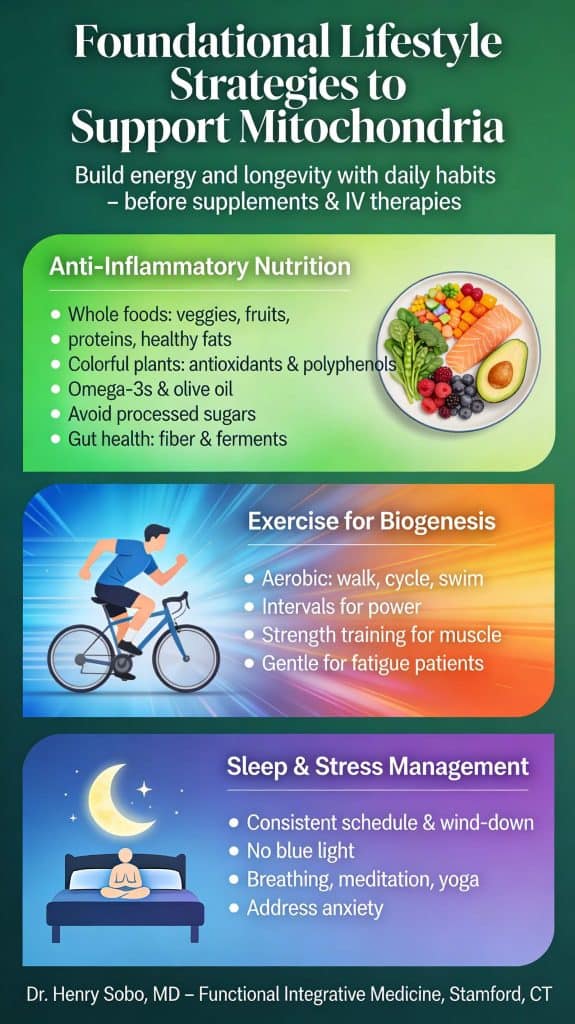
- Aerobic activity: Walking, cycling, swimming, or jogging most days of the week improves oxygen delivery and mitochondrial capacity.
- Interval training: Short bursts of higher-intensity effort, alternated with recovery, can powerfully stimulate mitochondrial biogenesis when tolerated.
- Strength training: Resistance exercises preserve muscle mass, which is crucial for metabolic health and healthy aging. Muscle tissue is rich in mitochondria and helps regulate blood sugar and insulin sensitivity.
For patients with chronic fatigue, fibromyalgia, or long COVID, we adjust intensity and use graded, gentle exercise to avoid crashes. The goal is to build capacity gradually without provoking symptom flare-ups.
- Prioritizing Sleep and Stress Management
Mitochondria repair and cellular cleanup processes are most active during deep sleep. Chronic sleep deprivation and unrelenting stress flood the body with stress hormones and nervous system activation that impair mitochondrial function. Tools we use with patients include:
- Setting a consistent sleep schedule with a wind-down routine.
- Limiting blue light exposure (screens) before bedtime.
- Using relaxation practices—such as breathing exercises, meditation, or gentle yoga—to calm the nervous system.
- Addressing underlying anxiety, depression, or trauma when present, often in collaboration with mental health professionals.
These lifestyle strategies may sound simple, but they form the essential base for any mitochondrial optimization protocol. Supplements and IV therapies work best on top of this foundation—not as substitutes for it.
Targeted Nutritional Supplements for Mitochondrial Health
Once foundations are in place, certain supplements can provide focused support for mitochondrial function. Here are some of the most commonly used and best-studied options in a functional medicine setting.
CoQ10: Supporting the Electron Transport Chain
Coenzyme Q10 (CoQ10) is a key component of the electron transport chain, the final stage of mitochondrial ATP production. It also acts as a powerful antioxidant in cell membranes. CoQ10 levels decline with age and can be reduced by certain medications, such as statins.
Potential benefits of CoQ10 supplementation include:
- Improved cellular energy production and reduced fatigue
- Support for cardiovascular health and blood pressure
- Protection against oxidative stress in tissues with high energy demand, like heart, brain, and muscles
In my practice, we often use CoQ10 as part of a broader mitochondrial and cardiovascular support program, especially for patients on statins or those with fatigue and muscle complaints.
PQQ: Stimulating the Creation of New Mitochondria
Pyrroloquinoline quinone (PQQ) is a compound that has been shown to support mitochondrial biogenesis—the process by which cells produce new mitochondria. Early research suggests that PQQ may:
- Enhance cellular energy production
- Support cognitive function and neuroprotection
- Work synergistically with CoQ10 to improve mitochondrial efficiency
Many patients benefit from a combined CoQ10 & PQQ supplement protocol, particularly those interested in longevity and age-related cognitive support. This is one of the areas we highlight on our CoQ10 & PQQ Supplements resource so patients can understand how these nutrients fit into their overall longevity plan.
Other Helpful Nutrients
Depending on individual testing and symptoms, a mitochondrial support plan may also include:
- B-complex vitamins (especially B1, B2, B3, B6, B12, folate)
- Magnesium
- L-carnitine
- Alpha-lipoic acid
- N-acetyl cysteine (NAC) and glutathione support
The specific combination is tailored to your needs and is best guided by functional lab assessments and clinical judgment.
NAD+ Therapy: Advanced Support for Energy and Longevity
Nicotinamide adenine dinucleotide (NAD+) is a critical coenzyme involved in hundreds of cellular reactions, including energy production, DNA repair, and the regulation of sirtuins—proteins that influence aging and longevity pathways. NAD+ levels naturally decline with age, contributing to reduced energy, slower repair, and increased vulnerability to disease.
In functional medicine, NAD+ therapy has become a powerful tool to support mitochondrial function, especially in:
- Chronic fatigue and “burnout”
- Recovery from long COVID and post-viral syndromes
- Healthy aging and longevity protocols
- Support for cognitive performance and brain health
At our Stamford clinic, we offer IV Therapy (NAD+) in carefully monitored protocols, as well as oral precursors such as nicotinamide riboside (NR) or nicotinamide mononucleotide (NMN) when appropriate.
Potential benefits patients report with NAD+ IV therapy include:
- Enhanced physical and mental energy
- Improved focus and mental clarity
- Better recovery from stress or intense training
- Support for mood and resilience
As with any advanced therapy, NAD+ IV should be personalized, medically supervised, and integrated into a broader plan that includes diet, sleep, and stress management.
Putting It All Together: A Functional Medicine Roadmap in Connecticut
Mitochondrial optimization is not a single pill or infusion; it is a process that combines careful assessment, foundational lifestyle changes, targeted nutrition, and—where appropriate—advanced therapies like NAD+ IV and peptide protocols.
A typical roadmap for patients at our Stamford Connecticut practice might look like this:
- Comprehensive evaluation: Medical history, symptom review, physical exam, and targeted lab testing (including nutrient status, oxidative stress, and, when indicated, organic acids and toxin panels).
- Foundations first: Anti-inflammatory, mitochondria-friendly nutrition; personalized movement plan; sleep and stress strategies.
- Targeted supplementation: Evidence-guided use of CoQ10, PQQ, B-vitamins, magnesium, and other nutrients based on testing.
- Advanced therapies: NAD+ IV therapy, IV antioxidants, and, in some cases, peptide therapies, tailored to your energy and longevity goals.
- Ongoing monitoring and adjustment: Regular follow-up to track symptoms, labs, and functional capacity, and to fine-tune your plan over time.
This integrative approach allows us to move beyond “normal labs” and address the deeper cellular drivers of energy and aging.
When to Consider a Mitochondrial Evaluation
You might consider a functional mitochondrial assessment if you:
- Feel persistently fatigued despite “normal” conventional tests
- Have been diagnosed with chronic fatigue, fibromyalgia, or long COVID
- Experience brain fog, memory changes, or cognitive slowing
- Have a strong family history of metabolic or neurodegenerative disease
- Are interested in proactive longevity and want to maintain peak energy and function as you age
If you are in Stamford or the greater Fairfield County area and would like to explore a personalized plan for mitochondrial health and peak energy, our practice offers a range of Anti-Aging Protocols, IV Therapy (including NAD+), and individualized supplement and lifestyle programs designed to support long-term vitality.

HAVE QUESTIONS ABOUT YOUR at mitochondrial health?
If you have questions about Nutrient deficiencies, Hormonal imbalances, Sleep disruption or and chronic stress and reside in Connecticut, Greenwich, or Norwalk area, contact us today for a Personalized Consultation. We focus on combining safe, effective medication with a realistic lifestyle plan.
For broader options, see our Conditions Treated page.
Frequently Asked Questions
What exactly are mitochondria, and why do they matter for energy?
Mitochria are tiny structures inside your cells that produce ATP, the primary “energy currency” of the body. They are especially dense in organs with high energy demand, such as the brain, heart, and muscles. When mitochondria are damaged or inefficient, ATP production drops and you can experience fatigue, brain fog, muscle weakness, and slower recovery. Optimizing mitochondrial function helps restore steady physical and mental energy and supports healthy aging.
How do I know if my fatigue is related to mitochondrial dysfunction?
Mitochondrial-related fatigue often shows up as a low energy “ceiling”—you tire easily with physical or mental effort, need extended recovery after activity, or feel unrefreshed even after sleep. You may also have brain fog, exercise intolerance, headaches, or sensitivity to stress. Functional testing can look at markers related to mitochondrial pathways, nutrient status, and oxidative stress to help determine whether mitochondrial support should be part of your treatment plan.
Can diet alone improve mitochondrial health, or do I need supplements?
Diet is always the foundation. An anti-inflammatory, nutrient-dense eating pattern rich in colorful vegetables, fruits, quality proteins, and healthy fats can significantly reduce oxidative stress and supply the raw materials mitochondria need. For many people, diet plus sleep, stress management, and exercise produce meaningful improvements. That said, some patients benefit from targeted supplementation with CoQ10, PQQ, B-vitamins, magnesium, and other nutrients, especially when testing shows specific deficiencies or when symptoms are severe or long-standing.
What are CoQ10 and PQQ, and how might they help my mitochondria?
CoQ10 is a key molecule in the mitochondrial electron transport chain that helps generate ATP and protects cell membranes from oxidative damage. PQQ is a compound that appears to support mitochondrial biogenesis—the creation of new mitochondria. Together, CoQ10 and PQQ may help improve energy production, support brain and cardiovascular health, and contribute to healthy aging. In a functional medicine plan, we often use them alongside diet, lifestyle changes, and other therapies for a more complete mitochondrial support strategy.
What is NAD+ therapy, and who might benefit from it?
NAD+ is a coenzyme involved in energy production, DNA repair, and cellular signaling pathways linked to longevity. NAD+ therapy—often delivered through carefully monitored IV infusions or oral precursors—aims to replenish declining NAD+ levels to support mitochondrial function and resilience. People who may benefit include those with chronic fatigue, long COVID, age-related energy decline, or those pursuing advanced longevity programs. It is not a stand-alone cure but can be a powerful adjunct in a comprehensive functional medicine plan.
Are there risks or side effects associated with mitochondrial supplements and NAD+ IV therapy?
Most mitochondrial-supportive supplements, when used appropriately and under medical guidance, are well tolerated. However, responses are individual; some people may experience digestive upset or other mild effects. NAD+ IV therapy can occasionally cause temporary flushing, chest tightness, or nausea if infused too rapidly, which is why it should be administered and monitored in a medical setting. The key is personalization: we review your history, medications, and test results to design a protocol that is both safe and appropriate for your goals.
How long does it take to notice improvements in energy after starting a mitochondrial program?
Timelines vary depending on the severity and underlying causes of your symptoms, as well as how consistently you can implement recommendations. Some patients notice improvements in clarity and stamina within a few weeks once nutrition, sleep, and basic supplements are in place. Deeper changes—such as increased exercise tolerance, more resilient mood, and measurable changes in lab markers—often evolve over several months as mitochondria repair and adapt. We monitor your progress and adjust the plan to keep you moving in the right direction.
Is mitochondrial optimization only for people with fatigue, or can healthy individuals benefit too?
While many patients seek mitochondrial support because of fatigue or chronic illness, healthy individuals who want to maintain performance and delay age-related decline can also benefit. Supporting mitochondrial health through nutrition, exercise, sleep, and stress management—and adding targeted therapies when appropriate—is a key pillar of longevity medicine. In our Connecticut practice, we see athletes, high-performing professionals, and health-conscious adults who want to preserve their energy and cognitive function for decades to come.
How is a functional medicine approach different from a standard evaluation for low energy?
A standard evaluation often stops when basic labs (thyroid, anemia, blood sugar) are normal. A functional medicine approach goes further by asking why mitochondria might not be producing enough energy, and what upstream factors—nutrient deficiencies, toxins, gut issues, hormonal imbalances, chronic infections, or lifestyle stressors—are involved. We use more detailed testing and a personalized plan that addresses these root causes, rather than simply trying to mask symptoms.
How can I start a personalized mitochondrial health program with Dr. Sobo in Stamford, CT?
If you’re interested in assessing and improving your mitochondrial function, the first step is a comprehensive consultation. During your visit, we’ll review your history, current symptoms, and previous labs, and discuss whether additional functional testing would be helpful. From there, we build a tailored plan including nutrition, lifestyle, targeted supplements, and, when appropriate, advanced therapies such as NAD+ IV. To learn more or schedule as a new patient, please visit our New Patient Information page or explore our Anti-Aging Protocols and IV Therapy services.
More Helpful Articles
REDEFINE 4 Results: CagriSema vs. Tirzepatide, Weight Loss, and FDA Status
Phase 3 head-to-head results and an anticipated late-2026 FDA decision create strong news and comparison intent. This article was evidence-checked on September 6, 2026. Regulatory status, labels, and trial publications
GLP-1 Medications and Vision Changes: NAION, Retinopathy, and Warning Signs
Regulatory safety updates and new observational research are driving urgent patient questions about vision loss. This article was evidence-checked on September 6, 2026. Regulatory status, labels, and trial publications can

GLP-1 Microdosing: Evidence, Risks, and What “Low Dose” Really Means
Evidence review date: September 6, 2026. GLP-1 microdosing has attracted substantial consumer and telehealth interest, but direct clinical-trial evidence remains limited. Medication approvals, prescribing information, safety communications, and clinical evidence
Sources List
- Organic Acids Testing for Mitochondrial Function – Comprehensive evaluation of Krebs cycle markers and energy pathway intermediates.
- NAD+ IV Therapy Benefits and Mechanisms – Clinical applications for cellular energy, cognitive support, and mitochondrial health.
- CoQ10 & PQQ for Mitochondrial Biogenesis – Human studies showing increased mitochondrial count and VO2 max with PQQ supplementation.
- Antioxidants Targeting Mitochondrial Oxidative Stress – Review of CoQ10, PQQ, and other mitochondrial protectants in chronic disease.
- PQQ Stimulates New Mitochondria Growth – Research on PQQ’s role in mitochondrial biogenesis and energy production.
- MitoSwab: Non-Invasive Mitochondrial Testing – Innovative cellular assessment for mitochondrial dysfunction markers.
- Academy of Nutritional Medicine: Mitochondrial Tests – Overview of functional lab panels including MHI for clinical tracking.
