By Dr. Henry Sobo, MD – Medical Weight Loss, Functional & Hormone Therapy, Connecticut
A Deep Dive into Semaglutide: Beyond Weight Loss to Metabolic Health
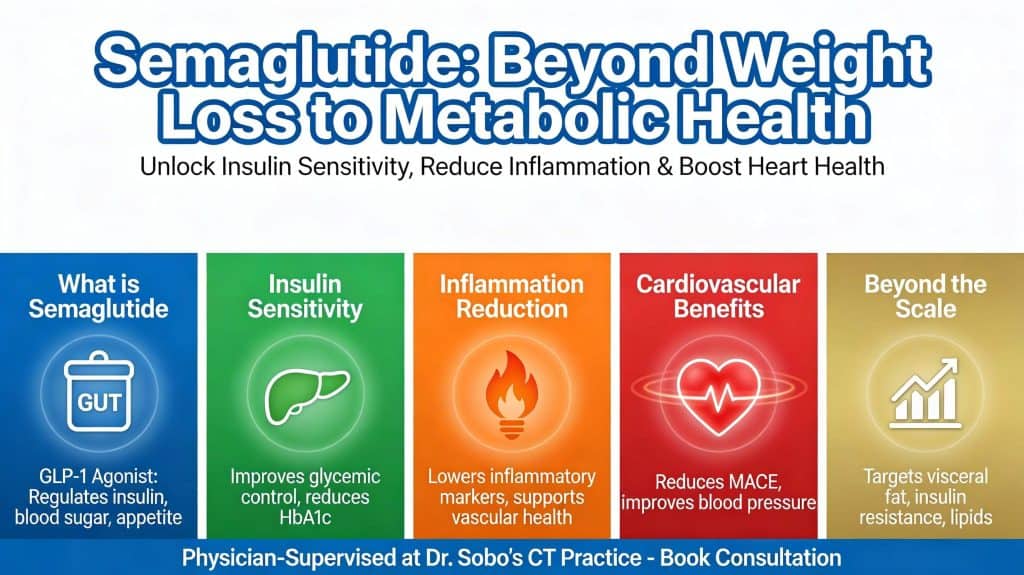
Semaglutide is widely known as a weight loss medication. But its impact extends far beyond fat reduction. As a GLP-1 receptor agonist, semaglutide influences insulin regulation, inflammation pathways, cardiovascular markers, and metabolic resilience.
For patients searching “semaglutide metabolic health CT,” the real question is not just how much weight it can help you lose — but how it changes systemic metabolic function.
At Dr. Sobo’s Connecticut practice, semaglutide may be incorporated into a physician-supervised medical weight loss program designed to address underlying metabolic dysfunction, not just scale numbers.
What Is Semaglutide?
Why Growth Hormone Declines With Age
Semaglutide is a GLP-1 receptor agonist (glucagon-like peptide-1). GLP-1 is a naturally occurring hormone released in the gut after eating.
It helps regulate:
- Insulin secretion
- Blood sugar levels
- Appetite signaling
- Gastric emptying
- Satiety
Semaglutide mimics the GLP-1 hormone, enhancing insulin release when blood sugar rises and reducing glucagon output. It slows gastric emptying and increases satiety signals in the brain. This dual metabolic and neurological effect explains both its weight loss benefits and its broader impact on metabolic health.
Semaglutide and Insulin Sensitivity
One of semaglutide’s most clinically significant effects is improved glycemic control.
Research shows GLP-1 receptor agonists:
- Improve insulin response
- Reduce post-meal glucose spikes
- Decrease HbA1c levels
- Support pancreatic beta-cell function
By improving insulin efficiency, semaglutide may reduce metabolic strain on pancreatic cells. Improved glycemic control is associated with lower risk of complications related to metabolic syndrome. These systemic effects make semaglutide relevant not only for obesity but also for broader metabolic optimization strategies.
| Metric | Semaglutide Benefit | Placebo Comparison | Source Trial |
|---|---|---|---|
| Weight Loss (68-104 weeks) | 14.9-17.4% mean reduction | ~3-5% | STEP 1/2 (Obesity Trials) |
| HbA1c Reduction | 1.5-1.6% decrease | 0.4% | STEP 2 (T2D + Obesity) |
| CV Risk (MACE) Reduction | 20% relative risk drop | None | SELECT (Obesity + CVD) |
| ≥15% Weight Loss Achieved | 50-52% of patients | 4-7% | STEP Trials |
For patients exploring physician-guided weight management, see our GLP-1s for Weight Loss program.
Inflammation and Metabolic Dysfunction
Chronic low-grade inflammation contributes to insulin resistance and cardiovascular risk.
Emerging evidence suggests GLP-1 receptor activation may:
- Reduce inflammatory markers
- Improve endothelial function
- Support vascular health
While not classified as an anti-inflammatory drug, semaglutide’s metabolic effects may indirectly reduce systemic inflammatory burden through improved glycemic regulation and fat mass reduction.
Cardiovascular Benefits of Semaglutide
Large-scale clinical trials have demonstrated cardiovascular risk reduction in patients with obesity and type 2 diabetes.
Documented findings include:
- Reduced major adverse cardiovascular events (MACE)
- Improved blood pressure parameters
- Reduction in cardiovascular mortality risk
These findings position semaglutide as more than a cosmetic intervention — it is a metabolic risk-modifying therapy.
Weight Loss Peptides: Where Semaglutide Fits
Semaglutide belongs to a class of medications sometimes discussed alongside other weight loss peptides. However, it is important to distinguish between:
- FDA-approved GLP-1 receptor agonists
- Compounded peptides
- Investigational metabolic agents
Semaglutide has undergone extensive clinical evaluation compared to many alternative peptides marketed online.
At Dr. Sobo’s clinic, semaglutide therapy is integrated into a comprehensive Medical Weight Loss Page framework that includes metabolic assessment, nutritional strategy, and physician monitoring.
GLP-1 Side Effects Management
Like all medications, semaglutide has potential side effects.
Common side effects may include:
- Nausea
- Vomiting
- Diarrhea
- Constipation
- Temporary appetite suppression
Side effects are often dose-dependent and most common during titration phases. Gradual dose escalation and physician supervision significantly reduce intolerance. Proper hydration, protein intake, and individualized scheduling can improve patient experience. Serious adverse events are rare but require medical evaluation.
Effective GLP-1 side effects management is essential for treatment adherence.
Beyond the Scale: Metabolic Health Outcomes
Weight loss alone does not define metabolic health.
Semaglutide may positively influence:
- Visceral fat reduction
- Insulin resistance
- Lipid profile markers
- Blood pressure
- Cardiovascular risk stratification
These changes collectively support systemic metabolic improvement rather than superficial weight reduction.
For patients seeking a root-cause approach, explore Functional Medicine for Weight Loss, where hormonal, metabolic, and inflammatory drivers are assessed comprehensively.
Who Is a Candidate for Semaglutide in Connecticut?
Potential candidates may include:
- Adults with obesity (BMI criteria per FDA guidelines)
- Patients with metabolic syndrome
- Individuals with insulin resistance
- Patients seeking physician-supervised medical weight loss
Eligibility requires consultation and screening.
For patients serious about weight loss, fat reduction, metabolic assessment, nutritional strategy, and physician monitoring.
Learn more here: https://drsobo.com/medical-weight-loss/

Semaglutide vs Other GLP-1 Medications
Semaglutide differs from earlier GLP-1 medications in:
- Longer half-life
- Weekly dosing
- Greater weight loss efficacy in trials
- Documented cardiovascular outcome data
Medication selection must be individualized based on patient health history.
What to Expect During Treatment
- Comprehensive metabolic evaluation
- Baseline labs
- Dose titration plan
- Ongoing monitoring
- Nutritional and behavioral support
Treatment is most effective when integrated into a structured, physician-guided program rather than used in isolation.
Ready to Start a Medical Weight Loss Plan That Works?
If you have questions about Semaglutide metabolic health — including GLP-1, Tesamorelin Ipamorelin, or CJC-1295 and reside in Connecticut, Greenwich, or Norwalk area, contact us today. We focus on combining safe, effective medication with a realistic lifestyle plan.
For broader options, see our Conditions Treated page.
Frequently Asked Questions
Does semaglutide improve metabolic health?
Yes, clinical research suggests it improves insulin sensitivity, glycemic control, and may reduce cardiovascular risk.
Is semaglutide only for weight loss?
No. It also influences insulin regulation, inflammation markers, and cardiometabolic risk factors.
What are the common side effects?
Nausea and gastrointestinal discomfort are most common during dose titration.
How long does treatment last?
Duration depends on individual goals and physician guidance.
Is semaglutide safe?
When prescribed and monitored by a physician, it has an established safety profile based on large clinical trials.
Can semaglutide reduce cardiovascular risk?
Large outcome trials suggest reduced major cardiovascular events in certain populations.
Who should not take semaglutide?
Individuals with certain thyroid cancer histories or pancreatitis risk require evaluation.
Where can I receive semaglutide treatment in Connecticut?
Dr. Sobo offers physician-supervised metabolic programs tailored to individual health profiles. Schedule your consultation today.
More Helpful Articles
REDEFINE 4 Results: CagriSema vs. Tirzepatide, Weight Loss, and FDA Status
Phase 3 head-to-head results and an anticipated late-2026 FDA decision create strong news and comparison intent. This article was evidence-checked on September 6, 2026. Regulatory status, labels, and trial publications

GLP-1 Medications and Vision Changes: NAION, Retinopathy, and Warning Signs
Regulatory safety updates and new observational research are driving urgent patient questions about vision loss. This article was evidence-checked on September 6, 2026. Regulatory status, labels, and trial publications can
GLP-1 Microdosing: Evidence, Risks, and What “Low Dose” Really Means
Evidence review date: September 6, 2026. GLP-1 microdosing has attracted substantial consumer and telehealth interest, but direct clinical-trial evidence remains limited. Medication approvals, prescribing information, safety communications, and clinical evidence
Schedule Your Semaglutide therapy Today
Don’t let chronic fatigue, obesity, or metabolic syndrome issues undermine your vitality. Dr. Sobo’s comprehensive Semaglutide in Connecticut and Medical Weight loss Treatments includes:
✅ Custom Peptide Treatment Plans
✅ Administered by licensed medical professionals
✅ Body composition analysis
✅ Personalized treatment protocol
✅ Monthly follow-up monitoring
📞 (203) 348-8805
🌐 Book Your Consultation
Stamford Location: 111 High Ridge Rd. Stamford, CT 06905
Sources
- Semaglutide and Cardiovascular Outcomes in Patients with Type 2 Diabetes – New England Journal of Medicine
- GLP-1 Receptor Agonists and Cardiovascular Risk Reduction – The Lancet
- Mechanisms of GLP-1 in Glucose Regulation – Nature Reviews Endocrinology
- Semaglutide Treatment Effect in People with Obesity (STEP Trials) – New England Journal of Medicine
- Inflammation and Insulin Resistance – Cell Metabolism