
Quercetin, Histamine, and MCAS: Can Natural Support Help Calm Mast Cell Symptoms?
Patients with mast cell activation symptoms, histamine intolerance concerns, food-triggered flushing, rashes, digestive upset, headaches, congestion, fatigue, or unexplained reactivity often search for natural ways to calm the immune system. Quercetin is one of the most commonly discussed supplements in this space because it is a plant flavonoid with antioxidant and anti-inflammatory properties and laboratory evidence suggesting effects on mast cell signaling and histamine release.
That does not mean quercetin is a cure for mast cell activation syndrome, histamine intolerance, allergies, or chronic inflammation. It also does not mean every patient with flushing, itching, stomach upset, brain fog, or food reactions should start supplements without a medical review. Symptoms that look like histamine or mast cell problems can overlap with gastrointestinal disorders, thyroid issues, medication reactions, infections, autoimmune disease, anxiety physiology, hormone changes, food intolerance, and true allergic disease.
At Optimal Health Medical, Dr. Sobo provides a whole-person evaluation for patients who are trying to understand complex symptoms instead of simply masking them. For some patients, natural support may be part of a broader plan. For others, the priority is diagnostic clarification, trigger tracking, medication review, gut health evaluation, nutritional support, or referral when severe allergic-type symptoms are present.
This article explains what patients should know about quercetin and MCAS, histamine, and natural mast-cell support, including where the research is promising, where it is limited, and why medical supervision still matters.
Quercetin, Histamine, and MCAS at a Glance
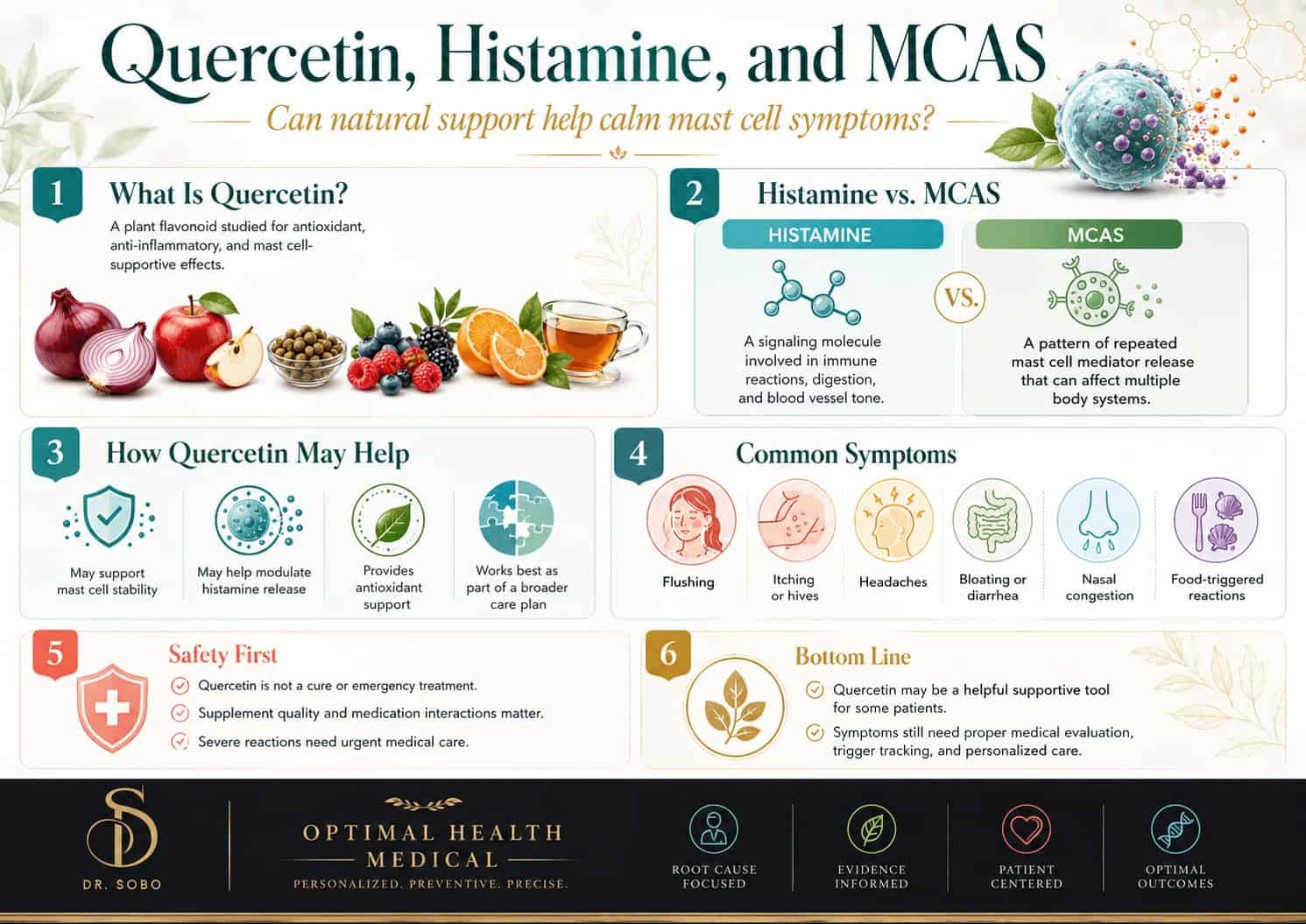
Quercetin is a flavonoid found in foods such as onions, apples, capers, berries, citrus, tea, and certain leafy greens. It is often discussed for histamine and mast-cell concerns because preclinical and mechanistic research suggests it may influence mast cell degranulation, inflammatory signaling, oxidative stress, and immune mediator release. However, most of the evidence does not prove that quercetin alone can treat MCAS or histamine intolerance in every patient.
MCAS is a medical syndrome involving repeated episodes of mast cell mediator release that can affect multiple organ systems. Histamine intolerance is a less clearly defined condition in which symptoms are thought to occur when histamine intake, release, or breakdown exceeds the body’s ability to manage it. The two conditions can overlap in symptom pattern, but they are not identical.
Quercetin vs. Antihistamines vs. Medical Evaluation
| Topic | Quercetin | Antihistamines / Medical Therapies | Why Evaluation Matters |
|---|---|---|---|
| Primary role | Natural flavonoid; studied for anti-inflammatory and mast-cell-related mechanisms | Medications may block histamine receptors or stabilize mast cells depending on the case | Symptoms may have multiple causes and need proper classification |
| Evidence level | Promising mechanistic and preclinical data; human evidence varies by condition | More established for allergic and mast-cell-mediated symptom management when prescribed appropriately | The right treatment depends on symptom pattern, severity, labs, and diagnosis |
| Use case | May be considered as supportive care under guidance | May be used when symptoms warrant medication-based management | Self-treatment can delay diagnosis or miss urgent warning signs |
| Risk considerations | Supplement quality, interactions, dosing uncertainty, kidney or medication concerns | Medication side effects, interactions, and individualized contraindications | A full medication and supplement review is important |
What Is Histamine?
Histamine is a signaling molecule involved in immune defense, allergic reactions, stomach acid regulation, blood vessel tone, and communication between cells. Most people think of histamine only in relation to seasonal allergies, but histamine has effects throughout the body.
When histamine is released in the wrong amount, at the wrong time, or in a person who is unusually reactive, symptoms can occur in several systems. A patient may experience flushing, itching, hives, nasal congestion, headaches, diarrhea, bloating, nausea, rapid heartbeat, dizziness, wheezing, or fatigue. In severe allergic reactions, histamine is only one of several mediators involved, and urgent medical care may be necessary.
Because histamine symptoms can be broad, it is easy for patients to assume that every reaction is “histamine intolerance” or “MCAS.” A more accurate approach is to look at the pattern: when symptoms happen, how quickly they occur, which organ systems are involved, whether foods or environmental triggers are consistent, whether medications play a role, and whether objective testing supports mast cell mediator release.
What Is MCAS?
Mast cell activation syndrome, often abbreviated MCAS, refers to a pattern of repeated mast cell mediator release that can cause allergic-type symptoms affecting more than one organ system. Mast cells are immune cells that store and release mediators such as histamine, tryptase, prostaglandins, leukotrienes, and cytokines.
The American Academy of Allergy, Asthma & Immunology describes MCAS as involving repeated symptoms of anaphylaxis-like episodes, including hives, swelling, low blood pressure, breathing difficulty, and severe diarrhea. That does not mean every patient with flushing or digestive symptoms has MCAS. Proper evaluation matters because the label can be overused online and under-evaluated clinically.
A careful MCAS workup may involve symptom history, trigger review, medication response, and selected testing. Consensus discussions often include the importance of symptoms affecting multiple systems, objective evidence of mast cell mediator release during episodes, and response to mast-cell-targeted therapies. For patients with severe or recurrent allergic-type symptoms, allergy/immunology involvement may be appropriate.
Patients who want more background on this topic can also review Dr. Sobo’s article on MCAS vs. histamine intolerance.
What Is Histamine Intolerance?
Histamine intolerance is often used to describe symptoms that appear to occur when histamine intake or histamine release exceeds the body’s ability to break it down. Histamine is present in certain foods and may increase in fermented, aged, cured, smoked, or leftover foods. Some patients report symptoms after wine, aged cheese, cured meats, fermented vegetables, vinegar, kombucha, canned fish, or leftovers.
However, histamine intolerance is still a debated diagnosis. Cleveland Clinic notes that experts disagree about whether lower histamine levels can reliably cause symptoms or whether other conditions may explain symptoms that resemble histamine intolerance. This is important because patients may restrict their diets heavily without understanding the real cause of symptoms.
A short, structured food and symptom trial may be useful for some patients, but long-term extreme restriction can reduce diet quality, increase anxiety around food, and make it harder to identify the true drivers. Patients with chronic digestive symptoms should not assume histamine is the only explanation. Gut motility, microbiome changes, mast cell reactivity, medication effects, IBS, inflammatory bowel disease, celiac disease, SIBO, hormone shifts, and stress physiology may all need consideration.
Where Quercetin Fits Into the Conversation
Quercetin is often described as a “natural mast cell stabilizer,” but patients should understand what that phrase means and what it does not mean. In research settings, quercetin has been shown to influence pathways involved in inflammation, oxidative stress, cytokine signaling, and mast cell mediator release. Some laboratory studies suggest quercetin may reduce histamine release from immune cells or influence mast cell degranulation.
This is promising, but it is not the same as proving that quercetin supplements reliably treat MCAS, histamine intolerance, or every allergic-type symptom in real-world patients. Human symptoms are complex. A patient may react because of food triggers, environmental allergies, mold exposure, gut inflammation, dysautonomia, medication interactions, hormone changes, stress, infection, or another condition. Quercetin may support one part of the picture, but it should not replace evaluation.
The best way to think about quercetin is as a possible supportive tool, not a stand-alone diagnosis or treatment plan. It may be considered alongside diet quality, trigger identification, medication review, gut support, sleep, stress reduction, nutrient status, and conventional medical options when appropriate.
How Quercetin May Affect Mast Cells
Mast cells release histamine and other mediators through a process called degranulation. Research suggests quercetin may influence mast cell behavior by affecting signaling pathways that contribute to degranulation and mediator release. Some studies also describe quercetin’s antioxidant and anti-inflammatory effects, which may be relevant because oxidative stress and inflammatory signaling can amplify immune reactivity.
One reason quercetin remains popular in functional and integrative medicine conversations is that it sits at the intersection of several pathways patients care about: allergy-like symptoms, inflammation, immune balance, and food-triggered reactivity. However, the mechanisms are not the same as taking a prescription antihistamine. Antihistamines block histamine receptors. Quercetin is better understood as a flavonoid that may modulate upstream immune and inflammatory processes.
That distinction matters. A patient having severe hives, breathing difficulty, throat swelling, fainting, or anaphylaxis symptoms needs urgent medical care, not a supplement. A patient with chronic, lower-grade reactivity may need a structured plan that includes clinical evaluation, trigger tracking, medication review, and possibly natural support under supervision.
Possible Food Sources of Quercetin
Quercetin occurs naturally in several foods. Food sources may include onions, apples, capers, berries, citrus fruits, broccoli, leafy greens, green tea, black tea, and some herbs. Eating quercetin-rich foods can be part of an anti-inflammatory diet for many people.
However, food tolerance varies. Some foods that contain quercetin may not work for every patient with histamine-related symptoms. For example, citrus, certain teas, or leftover plant foods may be tolerated by one person and not another. Patients should avoid turning a single nutrient into a rigid diet rule.
A more useful approach is to identify personal patterns. Which foods repeatedly trigger symptoms? Are reactions dose-dependent? Do symptoms occur immediately or hours later? Are leftovers worse than freshly cooked foods? Does stress, poor sleep, alcohol, heat, exercise, or hormonal timing change the reaction threshold? These details often matter more than a generic “good food” or “bad food” list.
Supplement Quality and Safety Matter
Many patients assume natural supplements are automatically safe. That is not always true. Supplements can vary in purity, potency, fillers, contaminants, and absorption. They can also interact with medications or create side effects in sensitive patients.
The National Center for Complementary and Integrative Health emphasizes that dietary supplements can have drug interactions, toxicities, and quality concerns. This is especially important for patients taking blood thinners, blood pressure medications, diabetes medications, cancer therapies, immune-modulating drugs, sedatives, or multiple prescriptions.
Patients considering quercetin should bring the exact product, dose, and ingredient list to their clinician. A capsule may include other compounds such as bromelain, vitamin C, zinc, enzymes, herbs, dyes, binders, or additives. For a patient with mast cell or histamine concerns, extra ingredients can matter.
Who Should Be Cautious With Quercetin?
Quercetin may not be appropriate for every patient. Caution is especially important for people who are pregnant or breastfeeding, children, patients with kidney disease, people taking blood thinners or complex medication regimens, and patients undergoing cancer treatment. Anyone with a history of severe allergic reactions should have a clear emergency plan from a qualified clinician.
Patients should also be cautious if they have reacted to many supplements in the past. In some highly sensitive patients, the issue is not only the active ingredient. It can be capsule material, fillers, dyes, preservatives, excipients, dose size, timing, or combining too many supplements at once.
A medically guided approach usually starts low, changes one variable at a time, tracks response, and avoids stacking many products without a clear reason. That gives the clinician and patient better information about what is helping, what is neutral, and what may be causing problems.
Quercetin Is Not a Substitute for Emergency Care
Patients with MCAS-like symptoms need to understand the difference between daily support and emergency symptoms. Natural support may have a role in a broader plan, but it is not a substitute for urgent care when symptoms suggest anaphylaxis or a serious reaction.
Seek emergency medical help for symptoms such as throat tightness, tongue or lip swelling, trouble breathing, wheezing, fainting, severe weakness, confusion, rapidly spreading hives, severe dizziness, or a known exposure followed by systemic allergic symptoms. Patients with prescribed epinephrine should follow their emergency action plan.
This safety distinction should be clear in any discussion of quercetin, histamine, and MCAS. The goal is not to make patients afraid. The goal is to help them know when supportive care is reasonable and when immediate medical help is necessary.
A Practical Whole-Body Framework for Histamine and Mast Cell Symptoms
A whole-body approach begins by looking for the factors that may be raising the patient’s reactivity threshold. Mast cell and histamine symptoms rarely exist in isolation. Sleep loss, infections, gut inflammation, alcohol, stress, heat, hormonal changes, nutrient deficiencies, environmental exposures, medications, and poor recovery can all influence symptoms.
At Optimal Health Medical, the goal is to understand the patient’s pattern. Dr. Sobo may consider the symptom timeline, food triggers, environmental triggers, medication and supplement history, digestive symptoms, sleep quality, stress load, hormone context, inflammatory conditions, and prior testing. This helps determine whether natural support such as quercetin belongs in the plan or whether another issue needs attention first.
What to Track Before Starting Supplements
Before starting quercetin or any new supplement, patients can learn a lot by tracking symptoms for one to two weeks. A simple log can include meals, leftovers, alcohol, sleep, stress, exercise, heat exposure, menstrual cycle timing when applicable, medications, supplements, bowel patterns, skin symptoms, breathing symptoms, headaches, heart rate changes, and timing of reactions.
This log helps separate true patterns from random noise. It also helps avoid the common mistake of changing diet, supplements, medications, and lifestyle all at once. When too many things change at the same time, it becomes difficult to know what actually helped.
Questions to Ask Before Taking Quercetin
Patients considering quercetin for histamine or MCAS-like symptoms should ask practical questions before starting.
- Do my symptoms suggest MCAS, histamine intolerance, allergies, IBS, medication reactions, or another condition?
- Do I need allergy/immunology evaluation or specific lab testing?
- Could any current medications interact with quercetin or other supplement ingredients?
- Should I start with food sources, diet tracking, or a supplement trial?
- How will we measure whether it is helping?
- What symptoms would mean I should stop it?
- How long should a trial last before deciding whether it is useful?
- Do I need an emergency action plan for severe reactions?
How Quercetin May Fit With Diet Changes
Some patients combine quercetin with a low-histamine diet trial. This should be done carefully. A short, structured elimination and reintroduction plan can sometimes help identify patterns, but long-term overly restrictive diets can create nutritional gaps and unnecessary fear of food.
A practical plan may focus on fresher foods, fewer leftovers, limiting alcohol, reducing highly fermented foods for a trial period, improving protein quality, supporting bowel regularity, and reintroducing foods systematically. Patients should not remove large food groups indefinitely without a reason and a plan.
The most useful diet is not always the most restrictive one. The most useful diet is the one that reduces symptoms, preserves nutrition, supports gut health, and can be followed without constant fear or confusion.
Gut Health, Histamine, and Immune Reactivity
The gut is a major interface between the outside world and the immune system. Patients with histamine intolerance or mast-cell-type symptoms often report bloating, diarrhea, constipation, nausea, reflux, abdominal pain, or food reactivity. These symptoms may reflect multiple possible drivers, including microbiome disruption, motility problems, food intolerance, inflammatory conditions, medication effects, or stress physiology.
Quercetin may be part of a broader anti-inflammatory conversation, but gut symptoms still deserve proper evaluation. Patients with blood in the stool, unintended weight loss, persistent vomiting, anemia, severe abdominal pain, night sweats, fever, or new symptoms after age 50 should seek medical evaluation rather than assuming histamine is the cause.
What a Medically Guided Plan May Include
A medically guided plan for histamine and mast-cell-like symptoms may include several steps rather than one supplement recommendation.
- A detailed symptom and trigger history
- Medication and supplement review
- Food and reaction tracking
- Evaluation for allergies, MCAS, histamine intolerance, gut disorders, or other causes
- Lab testing when clinically appropriate
- Dietary strategy that avoids unnecessary long-term restriction
- Targeted supplement discussion when appropriate
- Clear instructions for what to do during severe reactions
- Follow-up to evaluate response and adjust the plan
When to Call a Doctor
Patients should contact a clinician if symptoms are frequent, worsening, affecting multiple systems, interfering with eating, causing unexplained weight loss, or requiring repeated antihistamine use without a diagnosis. They should also call if symptoms occur after starting a new medication or supplement.
Patients should seek urgent care for symptoms that suggest a serious allergic reaction, including difficulty breathing, throat tightness, swelling of the lips or tongue, fainting, severe dizziness, or rapidly worsening symptoms.
How Dr. Sobo Helps Patients Move Beyond Guesswork
Dr. Sobo provides a structured, whole-person approach for patients who feel stuck between conventional testing, confusing online advice, and persistent symptoms. The goal is to identify patterns, reduce unnecessary triggers, support the body appropriately, and avoid treating every symptom as a supplement deficiency.
For some patients, quercetin may be discussed as part of a broader plan. For others, the priority may be allergy evaluation, gut assessment, medication review, stress physiology, sleep recovery, nutrition repair, or a different medical strategy. The right plan depends on the person, not the trend.
Patients who want a more individualized approach can learn more about integrative medicine, functional medicine, and peptide therapy resources.
The Bottom Line on Quercetin, Histamine, and MCAS
Quercetin is a promising natural compound with research suggesting anti-inflammatory, antioxidant, and mast-cell-related effects. It may be worth discussing for some patients with histamine or mast-cell-type symptoms, especially as part of a broader, medically guided plan.
However, quercetin is not a cure, not an emergency treatment, and not a substitute for diagnosis. MCAS and histamine intolerance can be complex, and symptoms may overlap with many other conditions. The best approach is careful evaluation, trigger tracking, safety planning, and individualized support.
If you are dealing with food reactions, flushing, itching, digestive symptoms, headaches, or unexplained reactivity, Dr. Sobo can help you explore possible drivers and build a plan that is practical, safe, and tailored to your health history.
Schedule a Consultation
If you are struggling with histamine-type symptoms, suspected MCAS, food reactivity, inflammation, or unexplained immune symptoms, a consultation can help you move beyond guesswork. Dr. Sobo can review your symptoms, health history, triggers, medications, supplements, and goals to determine what next steps may be appropriate.
Learn more about integrative medicine, peptide therapy, and functional medicine with Dr. Sobo.
Schedule a consultation to discuss histamine-type symptoms, suspected MCAS, food reactivity, supplement questions, and whole-person care options.
FAQs About Quercetin, Histamine, and MCAS
Can quercetin help with histamine intolerance?
Quercetin may support some patients because research suggests it can influence mast cell activity, histamine release, inflammation, and oxidative stress. However, histamine intolerance is complex and still debated medically, so quercetin should be considered a possible supportive tool, not a guaranteed treatment.
Is quercetin a natural antihistamine?
Quercetin is often discussed as a natural mast-cell-support compound, but it is not the same as a prescription or over-the-counter antihistamine. Antihistamines block histamine receptors. Quercetin appears to act more broadly on inflammatory and immune signaling pathways.
Can quercetin treat MCAS?
Quercetin should not be described as a proven treatment or cure for MCAS. It may be discussed as supportive care for some patients, but MCAS requires proper evaluation, safety planning, trigger management, and medical guidance.
What foods contain quercetin?
Quercetin is found in foods such as onions, apples, capers, berries, citrus, green tea, black tea, broccoli, and leafy greens. Food tolerance varies, especially in patients with histamine-related symptoms, so personal patterns matter.
Is quercetin safe to take every day?
Safety depends on the dose, product quality, medication list, kidney health, pregnancy status, and individual tolerance. Patients should review quercetin with a clinician before taking it daily, especially if they use prescription medications or have complex health concerns.
Can quercetin interact with medications?
Yes, supplements can interact with medications. Patients taking blood thinners, blood pressure medication, diabetes medication, immune-modulating drugs, cancer therapies, or multiple prescriptions should ask their clinician before using quercetin.
What is the difference between MCAS and histamine intolerance?
MCAS involves inappropriate mast cell mediator release that can affect multiple organ systems. Histamine intolerance is often described as difficulty handling histamine from foods or internal release. Symptoms can overlap, but the conditions are not the same.
Should I follow a low-histamine diet if I have symptoms?
A short, structured low-histamine trial may help some patients identify patterns, but long-term extreme restriction can create nutritional problems and food anxiety. A guided plan is usually better than guessing from online food lists.
When should histamine or mast cell symptoms be urgent?
Symptoms such as throat tightness, tongue or lip swelling, trouble breathing, fainting, severe dizziness, rapidly spreading hives, or anaphylaxis-like symptoms require urgent medical attention.
How can Dr. Sobo help with histamine or MCAS-like symptoms?
Dr. Sobo can help patients review symptom patterns, triggers, medications, supplements, diet, gut health, stress, sleep, and possible testing needs. The goal is to build a safer, more personalized plan rather than relying on guesswork.
Sources
- American Academy of Allergy, Asthma & Immunology: Mast Cell Activation Syndrome
- AAAAI Work Group Report: Mast Cell Activation Syndrome
- Cleveland Clinic: Histamine Intolerance
- Molecules: Quercetin and Its Anti-Allergic Immune Response
- Quercetin Attenuates MRGPRX2-Mediated Mast Cell Degranulation
- NCCIH: Herb-Drug Interactions
- MedlinePlus: Talking With Your Doctor

Medically reviewed by