
MCAS vs. Histamine Intolerance: How to Tell the Difference and Why It Matters
Mast cell activation syndrome and histamine intolerance can look similar from the patient side. Both may involve flushing, itching, headaches, digestive symptoms, food reactions, nasal congestion, fatigue, or a sense that the body is reacting to everyday triggers. That overlap is one reason many people search for “MCAS vs. histamine intolerance” when they are trying to understand why certain foods, stress, heat, alcohol, medications, or environmental exposures seem to set off symptoms.
The difference matters because the underlying problem may not be the same. Histamine intolerance is usually discussed as a problem with histamine load and histamine breakdown, especially from foods and beverages. MCAS points more toward inappropriate or excessive mast cell mediator release that may affect multiple body systems. A patient can also have overlapping issues, which is why guessing from symptom lists alone can be misleading.
At Optimal Health Medical, Dr. Sobo provides a whole-body, medically guided approach for patients who are trying to understand complex inflammatory, immune, digestive, and histamine-related symptoms. The goal is not to label every reaction as MCAS or to assume every food reaction is histamine intolerance. The goal is to review the pattern, rule out important medical conditions, identify likely triggers, and build a practical plan that fits the patient’s body.
MCAS vs. Histamine Intolerance at a Glance
The simplest way to separate the two is this: histamine intolerance is usually framed around too much histamine for the body to break down efficiently, while MCAS is framed around mast cells releasing histamine and other inflammatory mediators inappropriately or excessively. Both can cause allergy-like symptoms, but MCAS often has a broader, more systemic pattern.
| Category | Histamine Intolerance | Mast Cell Activation Syndrome (MCAS) |
|---|---|---|
| Core idea | Histamine intake or histamine breakdown may exceed the body’s tolerance. | Mast cells release mediators such as histamine, prostaglandins, leukotrienes, and tryptase in an inappropriate or excessive pattern. |
| Common pattern | Symptoms may be more food-linked and may worsen after high-histamine foods or alcohol. | Symptoms may be episodic, multi-system, and triggered by foods, stress, heat, infections, odors, medications, exertion, or other exposures. |
| Typical symptoms | Headache, flushing, hives, itching, nasal congestion, bloating, diarrhea, nausea, palpitations, or fatigue. | Flushing, hives, swelling, wheezing, shortness of breath, low blood pressure, diarrhea, abdominal cramping, brain fog, palpitations, and anaphylaxis-like episodes. |
| Diagnosis | Controversial and not universally accepted as a formal diagnosis; often evaluated by history, food/symptom tracking, exclusion of other conditions, and response to a supervised dietary trial. | Requires a structured medical evaluation; consensus approaches often include recurrent systemic symptoms, objective mediator evidence during episodes, and response to mediator-targeted therapy. |
| Treatment focus | Reduce histamine burden, improve dietary tolerance, support gut health, review medications/alcohol, and avoid unnecessary restriction. | Identify triggers, reduce mediator symptoms, evaluate allergy/immunology concerns, use appropriate medications when indicated, and create an emergency plan for severe reactions. |
What Are Mast Cells?
Mast cells are immune cells found throughout the body, especially in tissues that interact with the outside world, including the skin, airways, digestive tract, and blood vessels. They are part of the body’s defense system. When mast cells detect a threat, they can release chemical messengers, including histamine, prostaglandins, leukotrienes, cytokines, and other mediators.
This response is useful when it is controlled. It helps the body respond to allergens, infections, injury, and other challenges. But when mast cells release mediators too easily, too strongly, or at the wrong time, symptoms can appear across multiple systems. That is why mast cell disorders can be difficult to recognize. A patient may not have one neat symptom. They may have skin reactions, digestive distress, heart-rate changes, respiratory symptoms, fatigue, headaches, and sensitivity to triggers that seem unrelated.
What Is Histamine?
Histamine is one of the best-known mast cell mediators, but it is not only released during allergic reactions. Histamine is also found in certain foods and can be produced or affected by microbes in the gut. The body normally breaks histamine down using enzymes, including diamine oxidase, often called DAO, in the gut and histamine-N-methyltransferase in other tissues.
When people talk about histamine intolerance, they are usually referring to a situation where histamine exposure or production exceeds the body’s ability to clear it. This may happen because of diet, alcohol intake, gut issues, medications that interfere with histamine breakdown, microbiome factors, nutrient status, or individual sensitivity. The evidence base is still evolving, and the diagnosis is not universally accepted in conventional medicine, so patients should avoid self-diagnosing from internet food lists alone.
What Is Histamine Intolerance?
Histamine intolerance is commonly described as a proposed condition in which the body has difficulty breaking down histamine from foods, beverages, or internal production. Patients may notice symptoms after wine, beer, aged cheese, fermented foods, processed meats, leftovers, vinegar-containing foods, smoked fish, or other high-histamine items. Some patients also react to foods that may trigger histamine release or interfere with histamine breakdown.
The challenge is that symptoms are nonspecific. Bloating, headaches, flushing, nasal congestion, itching, diarrhea, nausea, palpitations, anxiety-like sensations, and fatigue can have many causes. A patient may suspect histamine intolerance when symptoms track with certain foods, but the same symptoms can overlap with food allergy, celiac disease, inflammatory bowel disease, irritable bowel syndrome, medication reactions, hormone changes, thyroid disease, post-viral syndromes, dysautonomia, or MCAS.
A low-histamine diet can be useful as a short-term, symptom-guided experiment for some patients, but it should not become an open-ended restrictive diet without a plan. Histamine levels in foods can vary based on freshness, storage, processing, fermentation, and preparation. Food lists also disagree, which is why a symptom diary and supervised reintroduction strategy are often more useful than following a rigid list indefinitely.
What Is MCAS?
Mast cell activation syndrome is a condition in which mast cells release mediators in a way that causes recurrent symptoms. The American Academy of Allergy, Asthma & Immunology describes MCAS as involving repeated anaphylaxis-like symptoms such as hives, swelling, low blood pressure, difficulty breathing, and severe diarrhea. Cleveland Clinic similarly describes MCAS as involving intense episodes of swelling, shortness of breath, hives, diarrhea, vomiting, and other symptoms that can become severe in some patients.
MCAS is more than “being sensitive to histamine foods.” It may involve multiple chemical mediators, not just histamine. Symptoms may affect the skin, gut, lungs, heart and blood vessels, nervous system, and general energy level. Many patients describe episodes that feel sudden, multi-system, and hard to predict. Triggers can include foods, temperature changes, infections, stress, exercise, medications, alcohol, scents, chemicals, hormonal shifts, and procedures.
Because the symptoms overlap with many other conditions, MCAS should be evaluated carefully. A responsible evaluation looks for the pattern of episodes, the number of organ systems involved, objective signs when possible, mediator testing when appropriate, and response to treatment. It also considers whether another diagnosis better explains the symptoms.
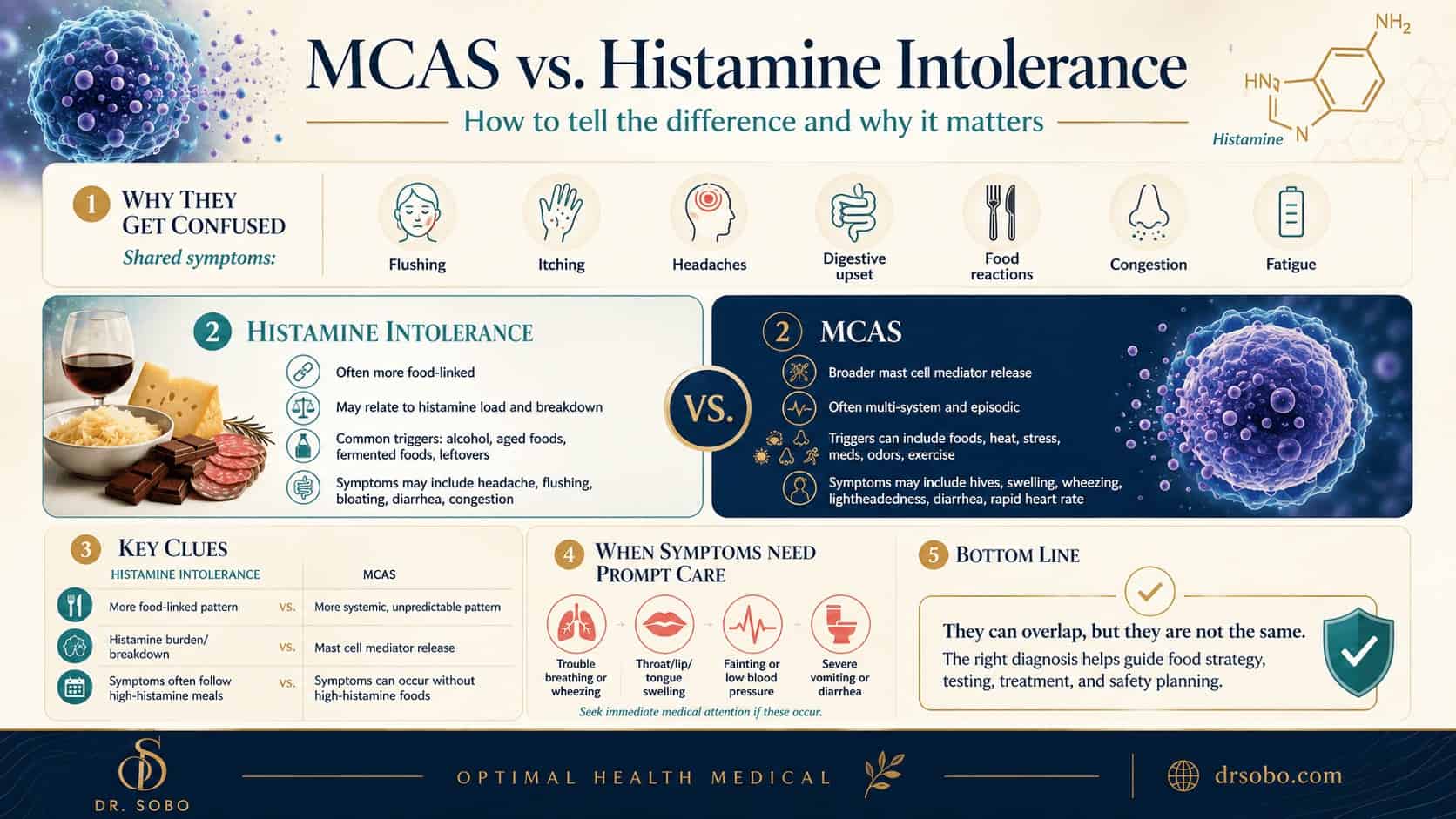
Why MCAS and Histamine Intolerance Are So Often Confused
MCAS and histamine intolerance are often confused because histamine can be part of both conversations. A patient with histamine intolerance may feel flushed, itchy, congested, bloated, or unwell after high-histamine foods. A patient with MCAS may also react to foods and may also feel better when histamine-related triggers are reduced. From the outside, both can look like food sensitivity.
The difference is that MCAS usually points toward mast cell activation and mediator release, while histamine intolerance usually points toward histamine load and histamine breakdown. Histamine intolerance may be more strongly linked to specific foods and digestive patterns. MCAS may involve broader triggers and more systemic episodes, including symptoms that resemble allergic reactions or anaphylaxis.
Patients can also have more than one issue. A person with mast cell activation may be more sensitive to histamine-rich foods because those foods add to an already reactive system. A person with gut inflammation or microbiome changes may have histamine symptoms without meeting MCAS criteria. This is why a careful clinical history is often more valuable than trying to force symptoms into one label.
Symptom Patterns That May Point More Toward Histamine Intolerance
Histamine intolerance may be more likely when symptoms are strongly food-linked and appear after high-histamine foods, fermented foods, aged foods, alcohol, leftovers, smoked foods, or certain packaged foods. Patients may notice a pattern of headaches, flushing, nasal congestion, itching, diarrhea, bloating, nausea, palpitations, or fatigue after specific meals.
The timing can vary. Some symptoms may appear quickly, while others may show up later the same day or the next day. A patient may also notice that tolerance changes depending on total histamine load. For example, one small exposure may be tolerated, but several exposures in the same day may trigger symptoms. Alcohol can be a common aggravator because it may contain histamine and may also interfere with histamine breakdown.
A food-symptom diary can be useful here. Instead of only listing “good” and “bad” foods, the diary should track timing, portions, leftovers, alcohol, stress, sleep, menstrual cycle when relevant, medications, exercise, infections, and symptom severity. Histamine reactions are often cumulative, so the full context matters.
Symptom Patterns That May Point More Toward MCAS
MCAS may be more likely when symptoms are episodic, intense, and involve multiple body systems at the same time. For example, a patient may experience flushing, hives, diarrhea, lightheadedness, throat tightness, wheezing, rapid heart rate, swelling, brain fog, and a sense of an allergic reaction without a clear single food explanation.
MCAS may also be considered when triggers are broad and inconsistent. A patient may react to heat one day, alcohol another day, a medication another day, and stress or exertion another time. Symptoms may not always track neatly with one food category. Some patients describe feeling “allergic to everything,” but formal allergy testing may not explain the full pattern.
Severe symptoms need urgent attention. Trouble breathing, throat swelling, fainting, low blood pressure, severe abdominal pain, repeated vomiting, or signs of anaphylaxis should not be managed as a simple food sensitivity. Patients with severe or systemic reactions should seek appropriate medical care and discuss emergency planning with a clinician.
MCAS vs. Histamine Intolerance: Diagnostic Differences
There is no single perfect test that cleanly separates every patient with MCAS from every patient with histamine intolerance. Diagnosis depends on the clinical pattern, exclusion of other causes, and sometimes laboratory testing. That said, the diagnostic approach is different.
For suspected MCAS, allergy and immunology guidelines often emphasize recurrent systemic symptoms, objective evidence of mast cell mediator release during episodes, and improvement with mediator-targeted therapy. Tryptase is one of the most specific tests used in mast cell activation evaluation. AAAAI guidance notes that an increase from baseline to 1.2 times baseline plus 2 ng/mL is considered indicative of mast cell activation, with timing of the blood draw after an event being important.
For suspected histamine intolerance, the evaluation is less standardized. Some clinicians consider symptom pattern, diet response, DAO-related factors, medication review, alcohol intake, gut health, and exclusion of other conditions. Testing may be inconsistent and does not always provide a clear answer. This is why a supervised elimination-and-reintroduction approach may be more clinically useful than relying on one lab result alone.
Conditions That Can Mimic MCAS or Histamine Intolerance
One of the biggest mistakes patients make is assuming that every flushing episode, food reaction, or digestive symptom must be MCAS or histamine intolerance. Many conditions can overlap.
- Food allergy or oral allergy syndrome
- Celiac disease or non-celiac gluten sensitivity
- Inflammatory bowel disease
- Irritable bowel syndrome
- Small intestinal bacterial overgrowth
- Medication side effects or supplement reactions
- Thyroid disease
- Perimenopause or hormone-related flushing
- POTS or dysautonomia
- Anxiety or panic physiology that overlaps with physical symptoms
- Carcinoid syndrome or other rare causes of flushing
- Systemic mastocytosis or clonal mast cell disease
This does not mean symptoms are “all in your head.” It means the body has many ways to produce similar symptoms. A good evaluation protects the patient from missing something important and from following a treatment plan that does not match the real driver.
Triggers: What to Track Before the Visit
Whether MCAS or histamine intolerance is suspected, trigger tracking is one of the most useful steps. A patient does not need to bring a perfect spreadsheet, but a clear pattern can help the clinician make better decisions.
| Trigger Category | Examples to Track | Why It Helps |
|---|---|---|
| Foods and beverages | Fermented foods, aged cheese, wine, beer, leftovers, smoked foods, vinegar, processed meats, spicy foods | Helps determine whether symptoms are more food-histamine linked or broader. |
| Environment | Heat, cold, humidity, fragrances, chemicals, smoke, pollen, mold exposure | Broad environmental triggers may point beyond simple dietary histamine intolerance. |
| Medications and supplements | NSAIDs, antibiotics, contrast dye history, new supplements, hormone therapies | Some medications can trigger symptoms or interfere with histamine processing. |
| Physical factors | Exercise, pressure, skin friction, hot showers, sleep deprivation | Physical triggers can be relevant in mast cell disorders. |
| Stress and illness | Acute infections, post-viral flares, major stress, poor sleep | Immune and nervous system stress can affect symptom threshold. |
| Timing and severity | How quickly symptoms start, how long they last, and which body systems are involved | Timing helps separate food intolerance patterns from systemic episodes. |
Why Over-Restricting Food Can Backfire
Many patients who suspect histamine intolerance or MCAS begin removing foods. This can be understandable when eating feels unpredictable, but long-term over-restriction can create new problems. Patients may lose weight unintentionally, under-eat protein, reduce fiber, worsen constipation, increase anxiety around food, and become nutritionally limited.
A low-histamine diet may be helpful as a short-term tool, not a lifelong identity. The most useful approach is often to reduce likely triggers for a defined period, track symptoms, then reintroduce foods strategically. The goal is to find the broadest tolerable diet, not the smallest possible list of “safe” foods.
Food freshness also matters. Histamine can increase as foods age or are stored. Some patients tolerate freshly cooked foods better than leftovers. Others tolerate certain foods in small amounts but not in repeated servings. These details matter more than rigid internet food charts.
What a Medical Evaluation May Include
A medical evaluation should begin with the story. When did symptoms start? What changed around that time? Are symptoms food-linked, episodic, seasonal, hormonal, stress-related, medication-related, or post-infectious? Which body systems are involved? Have symptoms ever included breathing trouble, swelling, fainting, low blood pressure, or severe diarrhea?
Depending on the case, evaluation may include a review of allergies, gastrointestinal health, medication and supplement use, diet history, thyroid markers, inflammatory markers, immune history, metabolic health, hormone status, and prior testing. If MCAS is strongly suspected, referral to or coordination with an allergy/immunology specialist may be appropriate, especially when severe reactions or anaphylaxis-like symptoms are present.
Dr. Sobo provides a whole-person review that can help patients organize the symptoms, identify patterns, and decide what should be investigated first. The goal is not to replace emergency care or specialty care when needed. The goal is to help patients move from confusion to a structured plan.
Treatment Differences: Why the Correct Pattern Matters
Treatment is not identical for histamine intolerance and MCAS, even though there can be overlap. Histamine intolerance strategies often focus on reducing histamine burden, improving meal freshness, reviewing alcohol and medications, supporting digestion, and reintroducing foods carefully. MCAS strategies may involve trigger avoidance, H1 and H2 antihistamines, mast-cell stabilizing strategies, leukotriene-related medications, emergency planning, and specialist evaluation when appropriate.
Patients should not start complex medication stacks on their own. Antihistamines and supplements may seem harmless, but they can cause side effects, interact with other medications, or mask symptoms that need evaluation. The best plan is individualized and adjusted based on response.
Lifestyle also matters. Sleep, stress, blood sugar stability, gut health, hormone shifts, and inflammation can influence the symptom threshold. Some patients improve when the full body context is addressed rather than chasing one trigger at a time.
When Symptoms Need Prompt Medical Attention
Some symptoms should not be treated as routine histamine intolerance. Patients should seek urgent medical care for symptoms that suggest anaphylaxis, severe allergic reaction, or another serious condition.
| Symptom | Why It Matters | What to Do |
|---|---|---|
| Trouble breathing, wheezing, or throat tightness | May signal a serious allergic or mast cell-related reaction. | Seek urgent care or emergency help. |
| Swelling of lips, tongue, throat, or face | Can progress quickly and affect the airway. | Seek urgent care or emergency help. |
| Fainting, severe dizziness, or low blood pressure | May reflect cardiovascular involvement or severe systemic reaction. | Seek urgent care or emergency help. |
| Repeated vomiting or severe diarrhea | Can cause dehydration and may occur in systemic reactions. | Contact a clinician promptly; seek urgent care if severe. |
| Severe abdominal pain, chest pain, or new neurologic symptoms | May reflect a non-histamine medical issue that should not be missed. | Seek prompt medical evaluation. |
How Dr. Sobo Helps Patients Sort Through MCAS, Histamine, and Gut-Immune Symptoms
Patients with complex histamine-like symptoms often feel dismissed because their symptoms do not fit one simple diagnosis. They may be told allergy testing is normal, digestive testing is incomplete, or anxiety is the only explanation. At the same time, some patients are over-labeled online and start unnecessary restrictions or protocols without a clear diagnosis.
Dr. Sobo provides a practical middle path. The evaluation focuses on the pattern of symptoms, possible triggers, medical history, gut health, immune and inflammatory factors, diet history, medication and supplement review, and when appropriate, lab-informed decisions or referral coordination. The goal is to identify the most likely drivers and build a plan that is safe, realistic, and personalized.
For some patients, that plan may include a structured food and symptom diary, a short-term dietary trial, gut-supportive strategies, medication review, antihistamine discussion with the appropriate clinician, inflammation support, or follow-up testing. For others, the first priority may be ruling out allergies, gastrointestinal disease, endocrine issues, or urgent medical concerns.
The Bottom Line on MCAS vs. Histamine Intolerance
MCAS and histamine intolerance can overlap, but they are not the same concept. Histamine intolerance is usually discussed as a problem with histamine burden and histamine breakdown, often with a food-linked pattern. MCAS is a broader mast cell mediator disorder that can involve multiple body systems and anaphylaxis-like episodes.
The right next step is not to self-diagnose from a food list or assume every symptom is MCAS. The right next step is to identify patterns, rule out important conditions, avoid unnecessary restriction, and work with a clinician who can interpret symptoms in the full context of the patient’s health.
If you are dealing with flushing, itching, food reactions, digestive symptoms, headaches, fatigue, or unexplained inflammatory symptoms, Dr. Sobo can help you explore whether histamine burden, mast cell activation, gut health, immune balance, or another factor may be contributing to your symptoms.
Schedule a Consultation
If you are trying to understand MCAS vs. histamine intolerance, a consultation can help you move from guesswork to a more organized plan. Dr. Sobo can review your symptoms, triggers, health history, diet patterns, medication and supplement use, and next steps for evaluation.
Learn more about functional medicine, peptide therapy, and Dr. Sobo’s whole-person approach to complex symptoms at Optimal Health Medical.
Schedule a consultation to discuss MCAS, histamine intolerance, food reactions, digestive symptoms, and complex inflammatory patterns.
FAQs About MCAS vs. Histamine Intolerance
What is the main difference between MCAS and histamine intolerance?
Histamine intolerance is usually discussed as difficulty breaking down or tolerating histamine, often with food-linked symptoms. MCAS involves inappropriate mast cell mediator release and may cause broader, episodic, multi-system symptoms such as flushing, hives, diarrhea, breathing symptoms, swelling, or anaphylaxis-like reactions.
Can you have both MCAS and histamine intolerance?
Some patients may have overlapping features. A person with mast cell activation may be more sensitive to high-histamine foods, while a person with gut-related histamine issues may not meet MCAS criteria. A careful symptom history and medical evaluation help clarify the pattern.
Is histamine intolerance a recognized diagnosis?
Histamine intolerance is discussed in medical literature, but it remains controversial and is not universally accepted as a formal diagnosis in conventional medicine. Because symptoms overlap with many conditions, patients should avoid self-diagnosis and work with a clinician.
What symptoms suggest MCAS rather than simple food intolerance?
Symptoms that are episodic, intense, and involve multiple systems may suggest MCAS. Examples include flushing with hives, diarrhea, lightheadedness, swelling, wheezing, low blood pressure, rapid heart rate, or anaphylaxis-like episodes.
What foods are high in histamine?
Common high-histamine or histamine-associated foods include fermented foods, aged cheeses, alcohol, processed meats, smoked fish, vinegar-containing foods, and leftovers. Tolerance varies, and food freshness can matter, so a supervised food diary is often more useful than rigid food lists.
How is MCAS tested?
Testing may include mast cell mediator evaluation, such as tryptase during or soon after a reaction, along with clinical history and response to treatment. Testing must be timed and interpreted carefully, often with allergy/immunology input.
Can a low-histamine diet help MCAS?
Some patients with MCAS report fewer symptoms when histamine-rich foods are reduced, but diet alone may not address all mast cell mediators or triggers. A low-histamine diet should usually be short-term, supervised, and followed by careful reintroduction when appropriate.
When should symptoms be treated as urgent?
Trouble breathing, throat swelling, fainting, low blood pressure, severe allergic symptoms, or anaphylaxis-like reactions require urgent medical attention. These symptoms should not be managed as routine food sensitivity.
What should I track before seeing a doctor?
Track foods, symptoms, timing, medications, supplements, alcohol, stress, sleep, exercise, temperature changes, infections, menstrual cycle when relevant, and severity. This helps reveal whether symptoms are more food-linked, systemic, or trigger-driven.
How can Dr. Sobo help with MCAS or histamine intolerance concerns?
Dr. Sobo can review the full symptom pattern, diet and trigger history, medications, gut health, immune and inflammatory factors, and possible next steps. The goal is to reduce guesswork, avoid unnecessary restriction, and create a personalized evaluation plan.
Sources
- American Academy of Allergy, Asthma & Immunology: Mast Cell Activation Syndrome (MCAS)
- Cleveland Clinic: Mast Cell Activation Syndrome (MCAS)
- Cleveland Clinic: Histamine Intolerance
- AAAAI Ask the Expert: MCAS Evaluation
- Journal of Allergy and Clinical Immunology: MCAS Diagnosis and Management Work Group Report
- Nutrients: Histamine Intolerance: Symptoms, Diagnosis, and Beyond
- Johns Hopkins Medicine: Low Histamine Diet – Optional Symptom-Guided Approach

Medically reviewed by