
Part 1 Could GLP-1 Medications Help Protect the Brain From Alzheimer’s-Related Changes?
Interest in GLP-1 medications has expanded far beyond weight loss and blood sugar control. These medications, commonly discussed under brand names such as Ozempic, Wegovy, Mounjaro, and others, were originally developed to support metabolic health. Today, researchers are also investigating whether GLP-1 receptor agonists may influence inflammation, insulin signaling, cardiovascular risk, and possibly even the biological pathways involved in Alzheimer’s disease.
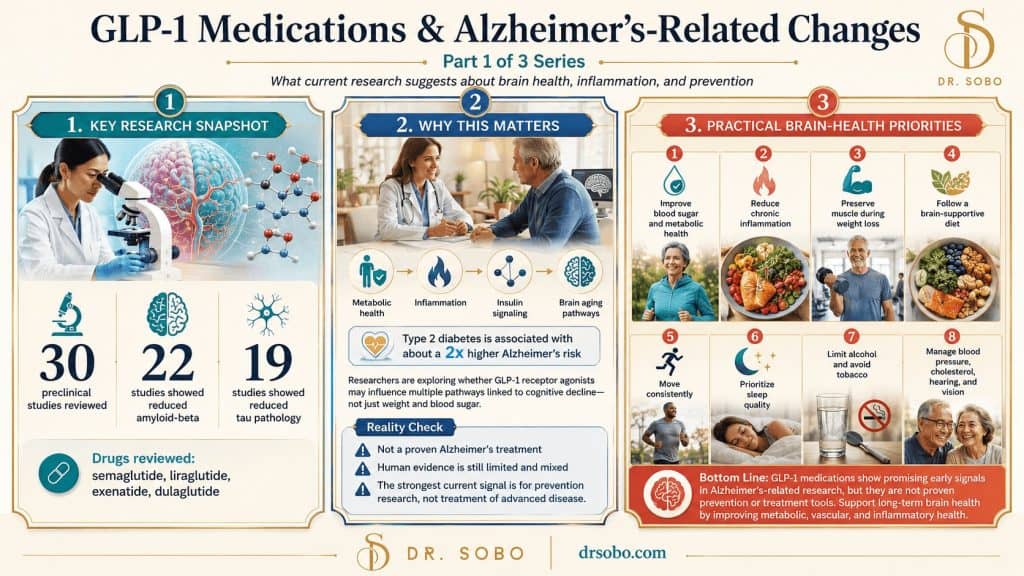
A recent review highlighted in the source material for this article examined 30 published preclinical studies involving GLP-1 drugs and Alzheimer’s-related changes, with a focus on amyloid-beta plaques and tau tangles, two protein abnormalities associated with Alzheimer’s disease. The review found that 22 studies showed reductions in amyloid-beta and 19 showed reductions in tau-related pathology in cell or animal models. Anglia Ruskin University’s summary of the research similarly reported consistent evidence from cell and animal studies that GLP-1 receptor agonists may reduce buildup of these hallmark proteins.
That does not mean GLP-1 medications are proven Alzheimer’s treatments. Human evidence is still limited, and some clinical trial results have been mixed. The more accurate takeaway is that GLP-1 medications may become part of a larger research conversation about prevention, metabolic health, inflammation, and brain aging.
For patients and families concerned about memory loss, cognitive decline, or dementia risk, this research raises an important question: Could improving metabolic health help protect the brain before cognitive symptoms become advanced?
The answer is still developing, but the connection between metabolism and brain health is becoming harder to ignore.
Why Alzheimer’s Research Is Looking Beyond the Brain Alone
Alzheimer’s disease has traditionally been discussed in terms of what happens inside the brain: memory loss, amyloid plaques, tau tangles, nerve cell injury, and progressive cognitive decline. Those remain central features of the disease. However, researchers increasingly recognize that brain aging is influenced by whole-body health.
The brain is not isolated from the rest of the body. It is affected by blood sugar regulation, blood vessel health, inflammation, nutrient status, sleep quality, physical activity, hormones, weight, and immune signaling.
The CDC lists several potentially modifiable dementia risk factors, including lack of physical activity, uncontrolled diabetes, high blood pressure, hearing loss, tobacco use, and alcohol use. The 2024 Lancet Commission on dementia prevention identified 14 modifiable risk factors across the life course, including obesity, diabetes, physical inactivity, smoking, hypertension, depression, hearing loss, excessive alcohol use, air pollution, social isolation, high cholesterol, and untreated vision loss.
This broader prevention model matters because GLP-1 medications act on metabolic pathways that may also influence brain health. They are not simply “weight loss drugs.” They affect appetite signaling, insulin release, glucose regulation, inflammation-related pathways, and possibly biological processes involved in neurodegeneration.
That is why the GLP-1 and Alzheimer’s conversation deserves attention—but also careful interpretation.
What Are GLP-1 Medications?
GLP-1 medications are known as GLP-1 receptor agonists. They mimic or activate pathways related to glucagon-like peptide-1, a hormone involved in blood sugar regulation, insulin secretion, digestion, appetite, and satiety.
These medications are commonly used for type 2 diabetes and chronic weight management. The recent Alzheimer’s-focused review evaluated four GLP-1 receptor agonists: semaglutide, liraglutide, exenatide, and dulaglutide. The ScienceDirect abstract for the 2026 systematic review describes the research focus as the effects of these GLP-1 receptor agonists on Alzheimer’s pathology, especially hyperphosphorylated tau and amyloid-beta.
Although the public often refers to these medications by brand names, the active ingredients matter more when discussing research. For example:
Active Ingredient | Common Context |
Semaglutide | Diabetes and weight management research |
Liraglutide | Diabetes, weight management, and several brain-health studies |
Exenatide | Diabetes research and neurodegenerative disease interest |
Dulaglutide | Diabetes treatment and metabolic research |
According to the article material provided, liraglutide was the most extensively represented GLP-1 drug in the review and appeared most consistent in reducing amyloid-beta and tau markers in the preclinical evidence.
Again, this does not prove that liraglutide, semaglutide, or any GLP-1 medication prevents Alzheimer’s in humans. It means the biological signal is strong enough to justify more research.
What Did the New GLP-1 and Alzheimer’s Review Find?
The review summarized in the source article examined 30 published studies conducted mostly in cell cultures and lab animals. These studies looked at how GLP-1 receptor agonists affected Alzheimer’s-related biological changes, especially amyloid-beta plaques and tau tangles.
The key findings were:
- 22 studies showed reductions in amyloid-beta plaques.
- 19 studies showed reductions in tau tangles.
- The drugs studied included semaglutide, liraglutide, exenatide, and dulaglutide.
- Human trial evidence remains limited and mixed.
- The strongest current argument may be for prevention research, not treatment of established Alzheimer’s disease.
Anglia Ruskin University reported that the review found GLP-1 receptor agonists may influence several pathways relevant to Alzheimer’s biology, including inflammation, brain insulin signaling, and enzymes involved in amyloid-beta production.
This is important because Alzheimer’s disease is not caused by one simple pathway. Amyloid-beta and tau are major disease markers, but inflammation, vascular health, oxidative stress, mitochondrial function, insulin resistance, and immune dysfunction may all contribute.
A medication class that affects multiple metabolic and inflammatory pathways could theoretically influence the brain in more than one way. That is why GLP-1 research has become so compelling.
Amyloid-Beta and Tau: Why These Proteins Matter
Alzheimer’s disease is associated with abnormal buildup of two proteins: amyloid-beta and tau.
Amyloid-beta can accumulate into plaques between nerve cells. Tau can form tangles inside nerve cells. These protein abnormalities are associated with impaired communication between neurons, inflammation, cellular stress, and eventual brain cell injury.
Reducing these proteins has become a major goal in Alzheimer’s drug development. However, Alzheimer’s research has also shown that targeting plaques alone is not always enough to restore cognition or stop disease progression. Brain health is more complex than removing one type of protein deposit.
That is why GLP-1 research is interesting. The potential value may not be limited to amyloid-beta or tau. Researchers are also looking at whether GLP-1 receptor agonists may affect inflammation, insulin signaling, oxidative stress, and cellular energy metabolism.
For a patient, the practical takeaway is this: the same metabolic problems that raise the risk of diabetes, obesity, chronic inflammation, and cardiovascular disease may also affect the brain over time.
That makes metabolic optimization a serious part of cognitive longevity.
The Inflammation Connection
Inflammation is one of the most important bridges between metabolic health and brain aging.
Chronic inflammation can affect blood vessels, immune signaling, insulin sensitivity, and the brain’s support cells. Over time, inflammatory stress may contribute to neurodegenerative changes. GLP-1 receptor agonists are being studied partly because they may influence inflammatory pathways relevant to both metabolic disease and brain health.
A recent review on GLP-1 receptor agonists in neurodegenerative disease noted growing evidence that these medications may modulate neuroinflammation by acting on important cellular and molecular components in the central nervous system.
This connects directly with Dr. Sobo’s existing educational content on inflammation and longevity. For readers who want to understand this foundation more deeply, see Dr. Sobo’s related article on chronic inflammation, longevity, and cognitive health in Connecticut and the article on GLP-1 inflammation benefits.
Inflammation is not always bad. The body needs short-term inflammation for healing and immune defense. The problem is persistent, low-grade inflammation that remains active over months or years. This type of inflammatory burden is often linked with abdominal obesity, insulin resistance, poor sleep, stress, ultra-processed foods, sedentary behavior, and metabolic syndrome.
That is why a brain-protection plan should not focus only on one drug or one supplement. It should address the inflammatory environment that affects the entire body.
The Insulin Resistance and Brain Health Connection
Insulin is often discussed only in relation to blood sugar. But insulin also has important effects in the brain.
The brain depends on efficient energy metabolism. When insulin signaling becomes impaired, it may affect brain cells, immune cells, inflammation, and the way the brain handles stress. Researchers have long studied the connection between type 2 diabetes and Alzheimer’s disease, and some literature has described Alzheimer’s as having features related to “brain insulin resistance.”
A review available through the National Library of Medicine notes that type 2 diabetes and Alzheimer’s disease commonly co-occur and that type 2 diabetes increases Alzheimer’s disease risk by approximately twofold.
This does not mean diabetes automatically causes Alzheimer’s. It means metabolic dysfunction is one of several important risk pathways. Blood sugar, insulin resistance, vascular health, inflammation, cholesterol, and body composition all matter.
This is where GLP-1 medications become relevant. They were developed to improve metabolic function. If metabolic dysfunction contributes to dementia risk, then therapies that improve metabolic health may also have downstream brain-health implications.
However, this remains an area of active research. Patients should not assume that taking a GLP-1 medication will prevent dementia. The better message is that metabolic health is brain health, and GLP-1 medications may eventually become one tool within a broader prevention strategy for appropriate patients.
Why Obesity Matters for Cognitive Decline
Obesity is not just a cosmetic issue or a number on a scale. It is often associated with insulin resistance, chronic inflammation, high blood pressure, sleep apnea, vascular dysfunction, and altered hormone signaling. These factors can affect the brain over time.
The Lancet Commission includes obesity among its modifiable dementia risk factors. The CDC also identifies diabetes, high blood pressure, physical inactivity, smoking, and alcohol use as risk factors that can increase dementia risk.
For readers who want to understand this connection more deeply, Dr. Sobo has previously covered how obesity may promote cognitive decline and how the benefits of semaglutide, Ozempic, and Wegovy may represent a new approach.
The most important point is that weight loss itself is not the only goal. The deeper goal is improving metabolic resilience. That may include:
- Better insulin sensitivity
- Lower inflammatory burden
- Improved blood pressure
- Better sleep quality
- Reduced visceral fat
- Improved muscle-to-fat ratio
- Better cardiovascular health
- More stable blood sugar and energy
These factors may collectively support better long-term brain health.
Are GLP-1 Medications Proven to Prevent Alzheimer’s?
No. GLP-1 medications are not currently proven to prevent Alzheimer’s disease, and they should not be presented as a dementia cure.
The current evidence includes promising preclinical findings, observational signals, and mixed human trial results. The Alzheimer’s Association has emphasized that GLP-1 medications are being studied for Alzheimer’s disease, but patients should not start or stop medications without guidance from a healthcare provider, and more clinical data is needed before these drugs could be considered Alzheimer’s treatments.
This distinction is critical.
What the research suggests
GLP-1 medications may influence Alzheimer’s-related biology, including amyloid-beta, tau, inflammation, insulin signaling, and metabolic risk factors.
What the research does not yet prove
GLP-1 medications do not yet have conclusive human evidence showing that they prevent Alzheimer’s disease or slow cognitive decline in people with established Alzheimer’s.
What patients should do now
Patients should focus on medically appropriate metabolic optimization, lifestyle risk reduction, and individualized care rather than self-prescribing or assuming GLP-1s are a guaranteed brain-protection therapy.
Prevention May Be the More Important Research Direction
One of the most important details in the provided article is the idea that GLP-1 medications may be more relevant to prevention than to treatment of established cognitive impairment.
That makes sense biologically. Alzheimer’s-related changes can begin years before obvious memory symptoms appear. By the time cognitive decline is clinically noticeable, the disease process may already be advanced.
This does not mean prevention is simple. It means earlier intervention may matter.
A prevention-oriented brain health strategy may include:
Risk Area | Brain-Health Goal |
Blood sugar | Improve insulin sensitivity and reduce glucose volatility |
Weight | Reduce visceral fat and inflammatory burden |
Blood pressure | Support vascular health and brain perfusion |
Exercise | Improve circulation, muscle mass, insulin sensitivity, and neuroplasticity |
Nutrition | Reduce ultra-processed foods and support anti-inflammatory dietary patterns |
Sleep | Support glymphatic clearance and memory consolidation |
Stress | Reduce chronic cortisol and inflammatory signaling |
Alcohol/tobacco | Lower neurotoxic and vascular risk exposure |
The Lancet Commission’s prevention model supports the idea that dementia risk is influenced by multiple life-course factors, not one single intervention.
For that reason, GLP-1 medications should be viewed as a possible medical tool—not a replacement for nutrition, exercise, sleep, stress management, and cardiovascular risk reduction.
How This Fits Into a Holistic Brain Health Plan
A smart dementia-prevention conversation should include both advanced medical therapies and foundational lifestyle medicine.
GLP-1 medications may be appropriate for certain patients with obesity, insulin resistance, type 2 diabetes, or related metabolic risk factors. But even when medication is appropriate, it should be paired with strategies that preserve muscle, improve nutrition, and support long-term metabolic health.
This is especially important because rapid weight loss without strength training and protein optimization can contribute to muscle loss. Muscle is not just for mobility; it is a major metabolic organ that helps regulate glucose, inflammation, and healthy aging.
Related content library:
What Patients Should Ask Their Doctor
Patients interested in GLP-1 medications for weight, diabetes, metabolic syndrome, or inflammation-related health concerns should have a personalized medical discussion. These medications are not appropriate for everyone, and they can have side effects, contraindications, cost considerations, and monitoring requirements.
Good questions to ask include:
- Am I a medically appropriate candidate for a GLP-1 medication?
- Do I have insulin resistance, prediabetes, type 2 diabetes, or metabolic syndrome?
- How would this medication fit into my long-term weight and metabolic health plan?
- How will we protect muscle mass during weight loss?
- What nutrition plan should I follow while using a GLP-1?
- How will we monitor blood sugar, inflammation markers, cholesterol, blood pressure, and body composition?
- Do I have other dementia risk factors that should be addressed?
- What can I do now to support long-term cognitive health?
For patients concerned about memory, family history, or cognitive decline, the goal should be a full prevention-oriented evaluation rather than relying on one intervention.
Practical Brain-Health Priorities While Research Continues
While GLP-1 and Alzheimer’s research continues, patients can take action on well-established risk factors. These steps should be individualized, but they represent a strong foundation:
- Improve metabolic health
Support healthy blood sugar, insulin sensitivity, waist circumference, cholesterol, and blood pressure.
- Reduce chronic inflammation
Focus on whole foods, adequate sleep, stress reduction, movement, and treatment of underlying inflammatory drivers.
- Build and preserve muscle
Strength training and adequate protein are essential, especially during weight loss.
- Follow a brain-supportive diet
Mediterranean-style dietary patterns, leafy greens, berries, fish, nuts, olive oil, and minimally processed foods may support cognitive health.
- Move consistently
Aerobic exercise, resistance training, balance work, and frequent movement breaks all matter.
- Prioritize sleep quality
Deep sleep supports memory, repair, hormone balance, and waste-clearing processes in the brain.
- Limit alcohol and avoid tobacco
Both are linked with increased risk for cognitive and vascular problems.
- Address hearing, vision, cholesterol, and blood pressure
These often-overlooked risk factors are part of modern dementia-prevention guidance.
Where the Research Goes Next
The GLP-1 and Alzheimer’s field is moving quickly. The most important next step is larger, better-controlled human research that can answer several key questions:
- Do GLP-1 medications reduce Alzheimer’s risk in people without diabetes?
- Are benefits stronger when started before cognitive symptoms appear?
- Which GLP-1 medications have the strongest brain-health signal?
- Are benefits related mainly to weight loss, blood sugar control, inflammation, or direct brain effects?
- Can GLP-1 medications work alongside other Alzheimer’s prevention or treatment strategies?
- Which patients are most likely to benefit?
Until those answers are clearer, the responsible interpretation is balanced optimism. The research is promising, but not definitive.
GLP-1 medications may eventually play a role in brain-health prevention for select patients, especially those with metabolic risk factors. But the foundation remains the same: protect the brain by protecting the body’s metabolic, vascular, inflammatory, and hormonal systems.
Key Takeaways
GLP-1 medications are being studied for far more than weight loss. A new review found that GLP-1 receptor agonists reduced amyloid-beta and tau markers in many preclinical Alzheimer’s studies, suggesting possible effects on biological pathways involved in brain aging. However, human evidence remains limited, and these medications are not proven Alzheimer’s treatments.
The strongest message for patients is that metabolic health and brain health are deeply connected. Obesity, insulin resistance, diabetes, inflammation, high blood pressure, poor sleep, and physical inactivity can all influence long-term cognitive risk. GLP-1 medications may become one important tool for selected patients, but dementia prevention still requires a comprehensive, personalized strategy.
FAQs
Can GLP-1 medications prevent Alzheimer’s disease?
GLP-1 medications are not proven to prevent Alzheimer’s disease. Early research suggests they may influence Alzheimer’s-related biological pathways, including amyloid-beta, tau, inflammation, and insulin signaling. However, most of the strongest evidence so far comes from preclinical studies, and larger human trials are needed.
What are amyloid-beta and tau?
Amyloid-beta and tau are proteins associated with Alzheimer’s disease. Amyloid-beta can form plaques between brain cells, while tau can form tangles inside brain cells. These changes are linked with nerve cell dysfunction and cognitive decline, although Alzheimer’s disease involves many biological pathways beyond these proteins.
Why are weight loss medications being studied for brain health?
GLP-1 medications affect metabolic pathways that may also influence the brain. They can support blood sugar regulation, insulin signaling, weight loss, and inflammation-related processes. Because diabetes, obesity, and chronic inflammation are associated with increased dementia risk, researchers are studying whether GLP-1 drugs may have brain-protective effects.
Is semaglutide approved to treat Alzheimer’s disease?
No. Semaglutide is not approved as a treatment for Alzheimer’s disease. It is used for diabetes and weight management under specific medical indications. Patients should not use GLP-1 medications for Alzheimer’s prevention or treatment unless directed by a qualified healthcare provider.
Are GLP-1 medications more likely to help with prevention or treatment?
Current research suggests the more promising direction may be prevention, especially in people with metabolic risk factors before advanced cognitive decline develops. However, this is not yet proven. More clinical trials are needed to determine whether GLP-1 medications can reduce dementia risk or slow Alzheimer’s-related changes in humans.
How does insulin resistance affect the brain?
Insulin resistance can affect blood sugar regulation, inflammation, vascular health, and cellular energy metabolism. The brain depends on stable energy and healthy signaling. Research has linked type 2 diabetes and insulin resistance with increased Alzheimer’s risk, making metabolic health an important part of cognitive prevention.
What lifestyle changes support dementia prevention?
Important brain-health strategies include regular physical activity, strength training, healthy diet, blood pressure control, blood sugar management, quality sleep, smoking avoidance, limited alcohol intake, hearing and vision care, cholesterol management, and social engagement. These strategies should be personalized based on medical history and risk factors.
Should I ask my doctor about GLP-1 medications if I am worried about dementia?
You can ask your doctor whether you have metabolic risk factors that may make GLP-1 therapy appropriate, such as obesity, type 2 diabetes, insulin resistance, or metabolic syndrome. The discussion should focus on your overall health, not just dementia prevention, because GLP-1 medications are not currently approved as Alzheimer’s prevention drugs.
Sources
ScienceAlert — Weight-Loss Drugs May Reduce Buildup of Alzheimer’s Proteins, Major Review Finds
Anglia Ruskin University — Weight-loss drugs could tackle Alzheimer’s – study
ScienceDirect / Molecular and Cellular Neuroscience — The effects of GLP-1 receptor agonists on Alzheimer’s pathophysiology: A systematic review
Alzheimer’s Association — GLP-1s and Alzheimer’s: What You Need to Know
CDC — Reducing Risk for Dementia
The Lancet — Dementia prevention, intervention, and care: 2024 report of the Lancet standing Commission
National Library of Medicine — Diabetes: Risk factor and translational therapeutic implications for Alzheimer’s disease
National Library of Medicine — Glucagon-like peptide-1 receptor agonists in neurodegenerative diseases: Molecular mechanisms and therapeutic potential
