
Could It Be MCAS? Symptoms, Triggers, Diagnosis, and What to Do Next
Does it ever feel like your body is reacting to everything at once? One week it it’s hives or flushing. Another week it is bloating, stomach pain, dizziness, headaches, fatigue, or brain fog. Sometimes it happens after certain foods. Sometimes it follows stress, heat, a change in weather, exercise, or something you cannot identify at all.
For many people, this pattern is frustrating because it does not fit neatly into one box. Standard allergy testing may not fully explain it. Basic labs may come back normal. You may be told you are dealing with stress, IBS, sensitivity, or “just allergies,” even though the bigger picture feels more complicated.
One explanation that may deserve closer attention is mast cell activation syndrome, often called MCAS. Mast cells are part of the immune system. They help protect the body by releasing chemical messengers when there is a threat. But in some people, mast cells appear to become overly reactive and release mediators too easily, contributing to symptoms that can affect multiple body systems.
At Dr. Sobo’s clinic, many patients arrive after months or years of trying to figure out why their bodies seem to overreact to foods, stress, environmental exposures, or daily life. For some, the missing piece is a deeper conversation about mast cell activation, histamine burden, and what it means to calm an immune system that feels stuck on high alert. The goal is not to self-diagnose from the internet. The goal is to understand the pattern, ask better questions, and pursue the right evaluation.
What Is MCAS?
MCAS stands for mast cell activation syndrome. Mast cells are immune cells found throughout the body, especially in tissues that interact with the outside world, such as the skin, airways, and gastrointestinal tract. When activated, they can release histamine, tryptase, prostaglandins, leukotrienes, and other signaling molecules. Those mediators are useful when the body needs to respond to infection or injury. The problem starts when mast cells appear to activate too easily, too often, or in response to things that should not trigger such a strong response.
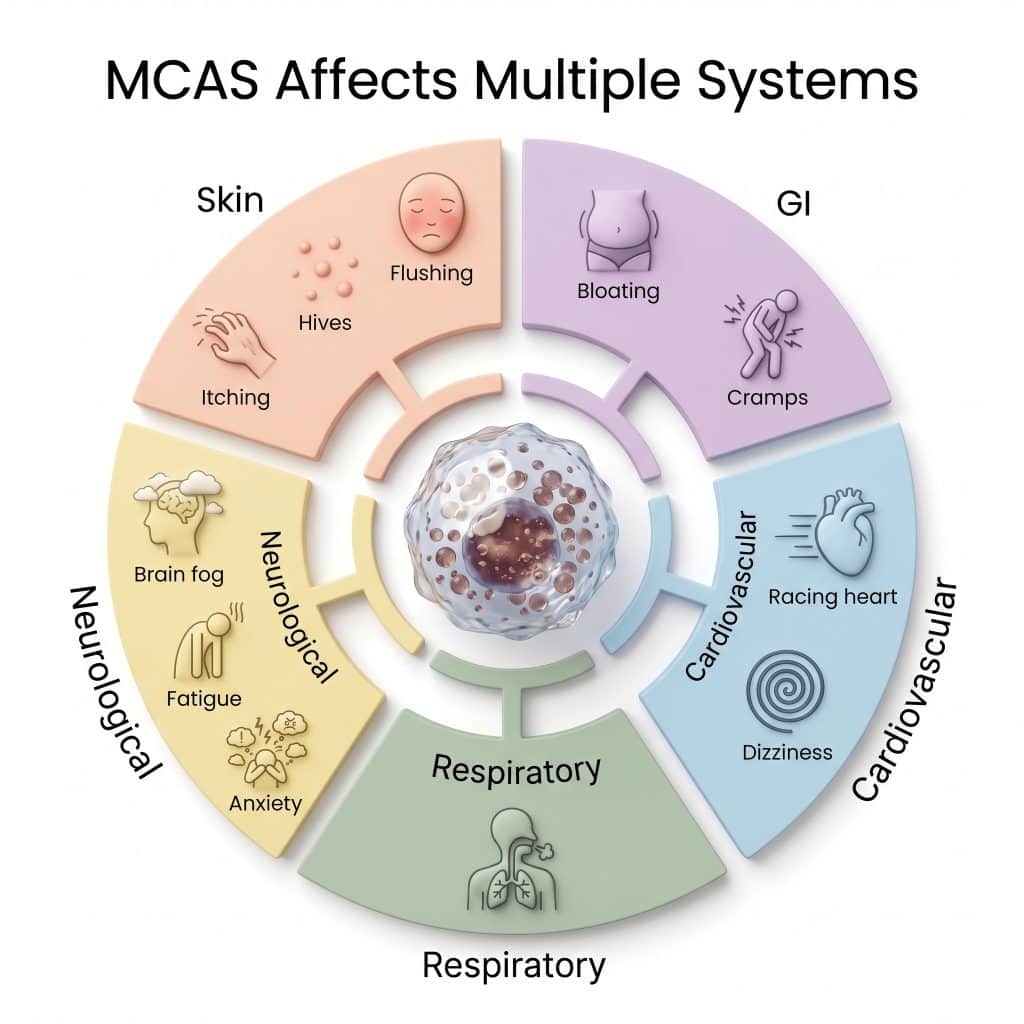
That overactivation can create symptoms that seem unrelated on the surface but are connected underneath. A person may experience skin symptoms, digestive symptoms, cardiovascular symptoms, and neurological symptoms all in the same flare. That multisystem pattern is one reason MCAS can be difficult to recognize quickly.
It is also important to be precise. Not every person with hives, flushing, or food sensitivity has MCAS. Diagnosis should be based on more than symptoms alone. A clinician generally looks for a recurring symptom pattern involving multiple organ systems, evidence of elevated mast cell mediators during flares when testing is possible, and symptom improvement with treatment aimed at blocking mast cell mediators or stabilizing mast cells.
Why MCAS Can Be So Hard to Recognize
One reason MCAS is often missed is that it rarely looks the same in every person. Symptoms can be broad, change over time, and overlap with many other conditions.
A patient may first think the issue is digestive. Another may believe it is hormonal. Someone else may focus on headaches, itching, racing heart, or unexplained anxiety. Because mast cell mediators can affect many tissues, symptoms may appear disconnected even when they are part of the same bigger picture.
Another challenge is that triggers may seem random. A classic allergy usually has a clearer cause-and-effect pattern. MCAS can be less predictable. Symptoms may flare with foods, alcohol, temperature shifts, stress, fragrances, infections, exercise, or no obvious trigger at all. That is one reason many patients feel dismissed. Their reactions are real, but the pattern does not always fit a standard allergy script.
Common Symptoms of MCAS
MCAS symptoms can vary from person to person, but they often involve more than one body system.
Skin symptoms
Skin is one of the most common places mast cell activity shows up. Symptoms may include:
- Flushing
- Hives
- Itching
- Rashes
- Swelling
- Burning or sensitivity
Digestive symptoms
Because mast cells are active in the GI tract, digestive symptoms are common. These may include:
- Bloating
- Nausea
- Abdominal cramping
- Diarrhea
- Reflux
- Food-triggered discomfort
- A feeling that more and more foods are becoming hard to tolerate
Cardiovascular symptoms
Some people experience:
- Racing heart
- Lightheadedness
- Feeling faint after eating or standing
- Blood pressure changes
- Episodes that feel almost like panic attacks
Respiratory symptoms
Respiratory symptoms can include:
- Shortness of breath
- Wheezing
- Throat tightness
- Nasal symptoms that are not fully explained by seasonal allergies
Neurological and whole-body symptoms
Many patients also report:
- Brain fog
- Fatigue
- Headaches
- Anxiety during flares
- Feeling inflamed or overstimulated
- Sensitivity to smells, lights, or noise
A single symptom on its own does not prove MCAS. What raises suspicion is the pattern: recurrent flares, multiple systems involved, unclear triggers, and at least partial response to treatments that reduce mediator activity.
When Your Body Feels Like It Is Always on High Alert
Many people with suspected mast cell problems describe a similar experience: their body no longer feels resilient. A meal, a supplement, a stressful week, poor sleep, a strong perfume, or heat can seem to tip everything over.
That does not necessarily mean the body is broken. It may mean the body has become overly reactive. Mast cells are meant to act like first responders. When they become too easy to trigger, everyday exposures can start producing symptoms that feel outsized compared with the trigger itself.
This is why the concept of mast cell stabilization matters. Instead of focusing only on suppressing one symptom at a time, the bigger goal is to help calm the immune system’s overreactivity so there are fewer flares, less histamine release, and better day-to-day tolerance.
Histamine Intolerance vs MCAS: What Is the Difference?
This is one of the most important questions because the terms are often used interchangeably online, even though they are not the same thing.
What is histamine intolerance?
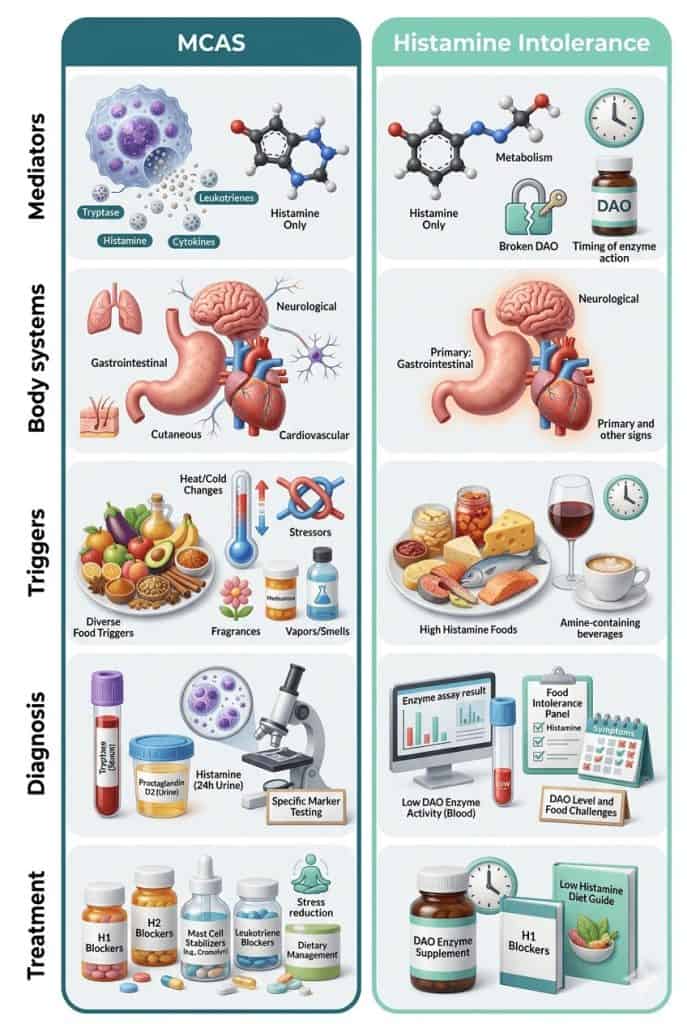
Histamine intolerance usually refers to a situation where the body’s ability to break down histamine is exceeded, often with gastrointestinal involvement. Diamine oxidase, or DAO, is one of the enzymes involved in histamine metabolism, especially in the gut.
Common histamine intolerance symptoms may include:
- Bloating
- Diarrhea
- Headaches
- Flushing
- Rhinitis
- Palpitations
- Skin symptoms such as itching or hives
Symptoms often seem more tied to food patterns, especially histamine-rich or histamine-liberating foods.
What is MCAS?
MCAS involves inappropriate mast cell activation with release of mediators such as histamine, tryptase, leukotrienes, prostaglandins, and cytokines. Because mast cells affect so many tissues, MCAS often presents as a multisystem issue rather than only a food-reaction issue.
How they overlap
Histamine intolerance and MCAS can overlap, but they are not identical.
You may have histamine-related symptoms without meeting criteria for MCAS. You may also have histamine intolerance that is making an underlying mast cell problem more obvious. In MCAS, histamine matters, but it is only one part of a broader mediator picture.
This distinction matters because treatment planning may differ. Someone with a primarily food-driven histamine burden may need a different workup and strategy than someone with recurrent multisystem flares, episodic mediator release, and a broader mast cell pattern.
For a deeper comparison, readers can also review Is It MCAS or Histamine Intolerance? The Differences.
Five Signs Your “Allergic Reactions” Might Actually Be MCAS
- Your symptoms affect multiple body systems
Traditional allergies may be more localized. MCAS often looks systemic. Skin, digestion, breathing, circulation, and neurological symptoms may all appear in the same flare.
- Your triggers are vague, multiple, or inconsistent
If you are reacting to foods one day, heat the next, and stress after that, the issue may not be one single allergen. It may be a body that has become easier to trigger.
- You have episodes that feel severe without a clear explanation
Some patients experience dramatic flares involving flushing, dizziness, low blood pressure, shortness of breath, GI distress, or symptoms that feel close to an allergic emergency. Recurrent severe episodes without a clearly identified allergen deserve specialist evaluation.
- You also have other chronic, seemingly unrelated issues
Patients sometimes have overlapping patterns involving chronic GI symptoms, autonomic-type symptoms, fatigue, headaches, skin reactivity, or other chronic inflammatory complaints. That does not prove MCAS, but it can make a mast cell conversation more relevant.
- Mast cell–targeted treatment seems to help
Another important clue is response to treatment. Improvement with antihistamines, H1/H2 blockers, or mast cell stabilizers can support the clinical picture, although symptom response alone is not enough to confirm diagnosis.
For related reading, see 5 Signs Your Allergic Reactions Could Actually Be MCAS.
What Does Mast Cell Stabilization Mean?
Mast cell stabilization means helping mast cells become less reactive so they are less likely to release inflammatory mediators in response to everyday triggers.
That can matter because symptom relief is not always about one single medication or one single trigger. In many cases, the better question is: what can reduce the body’s overall inflammatory reactivity and histamine burden?
In practice, mast cell stabilization may involve a combination of:
- trigger reduction
- nutrition changes
- gut support
- stress reduction
- antihistamines or prescription agents when appropriate
- natural compounds that may support mast cell balance
Two commonly discussed options are quercetin and cromolyn sodium.
Quercetin
Quercetin is a plant flavonoid found in foods such as onions, apples, and berries. It is often discussed as a supportive compound in mast cell and histamine-related care.
Patients interested in this topic can read:
Cromolyn sodium
Cromolyn is a prescription mast cell stabilizer used in certain mast cell-related scenarios. It is not a casual self-treatment option. It should be discussed with an appropriate clinician, especially when symptoms are significant or diagnosis is still being clarifie
How MCAS Is Diagnosed
This is where nuance matters most.
MCAS should not be diagnosed from symptoms alone. A more structured approach is usually needed. In general, diagnosis involves:
- A compatible clinical history
There should be recurrent episodes consistent with mast cell mediator release, often involving at least two organ systems.
- Objective evidence when possible
Testing during or close to flares may include mast cell mediators such as serum tryptase or certain urine mediators, depending on the clinical context and what the treating clinician orders. Timing matters, which is one reason testing can be challenging.
- Improvement with mediator-targeted treatment
Response to treatments such as antihistamines or mast cell stabilizers may support the diagnosis, though it is considered part of the total picture rather than proof by itself.
Because symptoms can overlap with allergies, GI disorders, medication reactions, autonomic dysfunction, infections, hormone-related issues, and other conditions, a careful differential diagnosis is important.
What to Do if You Suspect MCAS
If this article sounds familiar, the best next step is not to panic or start self-labeling. It is to begin organizing the pattern.
Helpful steps often include:
- tracking symptoms by body system
- noting food-related patterns
- logging major triggers such as heat, stress, alcohol, fragrances, exercise, poor sleep, or menstrual-cycle changes
- writing down what treatments seem to help or worsen symptoms
- bringing that history to a qualified clinician
You may also benefit from reviewing related educational content such as:
A More Complete Way to Think About Relief
Many patients are not looking for a label just to have a label. They are looking for a path forward.
That is why a broader clinical lens can help. If the body is inflamed, stressed, histamine-burdened, and reacting across multiple systems, real improvement may require more than symptom suppression. It may involve identifying triggers, supporting the gut, reducing inflammatory load, improving sleep and resilience, and considering both natural and medical tools appropriately.
At Dr. Sobo’s clinic, that kind of conversation is not just about whether you have MCAS on paper. It is about whether there is a mast cell or histamine pattern contributing to what you are experiencing and what can be done to help calm it.
MCAS, Histamine Issues, and Functional Evaluation in Stamford, CT
If you are in Stamford, CT or anywhere in Connecticut and you are dealing with unexplained hives, flushing, digestive flares, food reactions, brain fog, dizziness, or a body that seems hypersensitive to everything, it may be time to look beyond a simple allergy explanation.
A thoughtful evaluation can help determine whether the pattern points toward mast cell activation, histamine intolerance, another immune or GI issue, or a combination of factors. That distinction matters because a more accurate framework leads to a more useful plan.
If you would like to explore your symptoms in a more comprehensive way, schedule a consultation with Dr. Sobo to discuss your history, triggers, and possible next steps.
FAQs
What are the most common MCAS symptoms?
MCAS symptoms can vary widely, but common complaints include flushing, hives, itching, abdominal pain, bloating, diarrhea, headaches, brain fog, dizziness, rapid heart rate, shortness of breath, and sensitivity to foods, fragrances, stress, or temperature changes. The pattern that raises more concern is not just one symptom, but recurrent flares affecting multiple body systems.
Is MCAS the same as histamine intolerance?
No. Histamine intolerance and MCAS can overlap, but they are not the same condition. Histamine intolerance is generally discussed as a problem with breaking down histamine, often with food-related symptoms and possible DAO involvement. MCAS involves inappropriate mast cell activation and release of multiple mediators across body systems, not only histamine.
Can MCAS cause digestive problems?
Yes. Mast cells are active in the gastrointestinal tract, so MCAS may contribute to symptoms such as bloating, cramping, diarrhea, nausea, reflux, and food sensitivity patterns. GI symptoms alone do not confirm MCAS, but digestive issues are commonly part of the multisystem picture.
Can MCAS cause brain fog or anxiety?
It can. Some people with suspected mast cell activation report brain fog, headaches, fatigue, overstimulation, and anxiety-like symptoms during flares. These symptoms can overlap with many other conditions, which is one reason careful clinical evaluation matters.
How is MCAS diagnosed?
A structured diagnosis usually includes three pieces: recurrent symptoms consistent with mast cell mediator release, objective evidence of mast cell mediator elevation during episodes when testing is possible, and improvement with treatment that blocks mediators or stabilizes mast cells. Symptoms alone are not considered enough.
Why is MCAS often misdiagnosed?
MCAS symptoms can mimic allergies, IBS, anxiety, food intolerance, hormonal issues, chronic inflammatory conditions, and autonomic problems. Triggers may also seem inconsistent. Because the presentation is broad and testing may depend on timing during flares, the diagnosis is often not straightforward.
What is mast cell stabilization?
Mast cell stabilization refers to reducing the tendency of mast cells to release inflammatory mediators too easily. Depending on the patient, that may involve trigger reduction, diet changes, gut support, antihistamines, prescription therapies, and selected natural compounds such as quercetin under clinician guidance.
When should I talk to a doctor about possible MCAS?
You should consider medical evaluation if you have repeated allergy-like or inflammatory episodes involving more than one body system, reactions without clear triggers, recurring flushing or hives, food-related symptom clusters, or severe episodes that feel disproportionate to the apparent trigger.
Sources
- American Academy of Allergy, Asthma & Immunology: Mast Cell Activation Syndrome (MCAS)
- Using the Right Criteria for MCAS
- MCAS, Evaluation and Diagnosis — AAAAI Ask the Expert
- Histamine Intolerance: Symptoms, Diagnosis, and Beyond
- Basal Serum Diamine Oxidase Levels as a Biomarker of Histamine Intolerance
- Impact of Polyphenols on Mast Cells with Special Emphasis on Quercetin
