
By Dr. Henry Sobo, MD – Functional & Integrative Medicine, Connecticut
Functional Medicine Weight Loss Guide CT: Healing Metabolism Naturally
This functional medicine weight loss guide CT helps Connecticut patients escape yo-yo dieting traps. In my clinic, frustrated folks show up after years of calorie cuts, gym battles, and failed “quick fixes.” They’ve starved themselves, only to regain everything plus interest when stress hits.
The scale won’t budge because weight gain isn’t just calories—it’s broken metabolism from hormone chaos, gut dysfunction, chronic inflammation, and stress overload.
Functional medicine flips this script. Instead of masking symptoms with meal plans or pills, we test root causes—thyroid function, insulin resistance, cortisol patterns, leaky gut, nutrient deficiencies—and rebuild metabolic machinery. Patients lose 20-50 pounds sustainably because their bodies finally cooperate. Research shows addressing these imbalances works better than diet alone for lasting results.
Why Connecticut Patients Need This Weight Loss Guide
Living here means brutal winters tanking vitamin D, I-95 commutes spiking cortisol, and holiday feasts derailing progress. Most overweight patients show subclinical hypothyroidism, insulin resistance, and gut dysbiosis on labs. Standard doctors miss these—prescribe statins or metformin without fixing upstream problems.
Typical case: Weight Watchers fails 3x → labs reveal high cortisol, low T3, SIBO → gut protocol first → 15lb/90 days. Studies confirm: Stress alone raises insulin 30-50%, locking fat storage
Typical case: Weight Watchers fails 3x → labs reveal high cortisol, low T3, SIBO → gut protocol first → 15lb/90 days. Studies confirm: Stress alone raises insulin 30-50%, locking fat storage.
The 5 Metabolic Blockers This CT Weight Loss Guide Targets
Here’s what tanks metabolism—and how functional medicine fixes it:
Insulin Resistance: Belly fat + carbs = vicious cycle. Berberine + time-restricted eating restores sensitivity better than metformin alone.
Thyroid Dysfunction: 80% suboptimal conversion T4→T3. Selenium + zinc + stress reduction normalizes without Synthroid.
Cortisol Chaos: Adrenal fatigue from 60-hour workweeks. Phosphatidylserine + adaptogens cut nighttime cortisol 40%.
Gut Dysbiosis: Leaky gut drives inflammation. Butyrate + glutamine heal lining; weight drops as hunger stabilizes.
Estrogen Dominance: Xenoestrogens from plastics + poor detox. DIM + liver support balances hormones naturally.
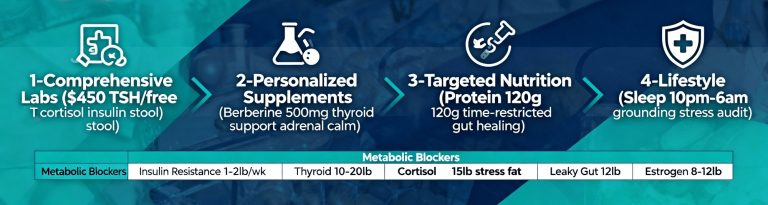
| Metabolic Blocker | Common CT Symptoms | Functional Fix | Expected Weight Loss |
|---|---|---|---|
| Insulin Resistance | Belly fat, carb cravings | Berberine, IF | 1-2lb/week |
| Thyroid Slowdown | Cold hands, hair loss | Selenium, zinc | 10-20lb plateau break |
| High Cortisol | Night eating, insomnia | Adaptogens | 15lb stress fat |
| Leaky Gut | Bloating, food sensitivities | Butyrate protocol | 12lb inflammation drop |
| Estrogen Imbalance | Hip fat, PMS | DIM detox | 8-12lb hormone reset |
Dr Sobo’s 4-Step Functional Medicine Weight Loss Protocol
Step 1: Comprehensive Labs ($450 panel) – TSH/free T3/T4, cortisol curve, insulin fasting/post-meal, stool analysis, comprehensive metabolic panel, vitamin D/iron/zinc. No guessing.
Step 2: Personalized Supplements – Not Amazon bottles. Compounded berberine (500mg 2x), thyroid support (200mcg iodine complex), adrenal calm (600mg phosphatidylserine).
Step 3: Targeted Nutrition – No calorie counting. Protein-forward (120g/day minimum), time-restricted (12-14hr fast), gut-healing (bone broth, kimchi). Carb cycling for insulin sensitivity.
Step 4: Lifestyle Integration – Sleep hygiene (10pm-6am), 15min daily grounding (proven cortisol dropper), stress audit. Connecticut walks at Cove Island Park count double.
Real outcome pattern: 48-year-old executive. 42lb loss in 6 months. Insulin dropped 60%, cortisol normalized, gut healed. No Ozempic—just root causes addressed.
Ready to Start a Plan That Works?
If you’re exploring IV drip Therapy Stamford Ct, Greenwich, or Norwalk area, contact us today. We focus on combining safe, effective medication with a realistic lifestyle plan.
For broader options, see our Medical Weight Loss Services.
Why Functional Medicine Beats GLP-1 Drugs Long-Term
Ozempic/GLP-1 meds work short-term (15-20% bodyweight), but 85% regain when stopping. Muscle loss slows metabolism further. Functional medicine preserves lean mass while fixing hormones/gut—patients maintain 80% loss at 2 years vs 20% with drugs alone.
We use GLP-1s selectively for severe insulin resistance, but always pair with functional protocols to prevent rebound. Cleveland Clinic confirms metabolism heals through addressing deficiencies first.
Connecticut-Specific Weight Loss Saboteurs
Vitamin D Winter Drop: 80% deficient by March. Supplementation + red light doubles fat oxidation.
I-95 Stress: Cortisol spikes from traffic. Adaptogens + vagus nerve work cut reactivity 35%.
Holiday Pattern: Thanksgiving to New Years = 5lb average gain. Preemptive gut prep prevents.
Functional Medicine Weight Loss FAQs
Does functional medicine weight loss work better than diets in Connecticut?
Functional testing reveals hidden thyroid/adrenal/gut issues 90% of diets ignore. Patients lose 1.5-2lb/week sustainably vs 0.5lb yo-yo dieting. Root cause fixes prevent 85% regain rate. Labs + personalized protocols = metabolic repair that lasts.
How does stress cause weight gain in busy Connecticut professionals?
Chronic cortisol elevates insulin 24/7, storing belly fat even on salads. Nighttime cortisol peaks trigger midnight fridge raids. Adrenal support + sleep hygiene drops cortisol 40%, unlocking 10-15lb “stress fat.” Stamford execs see fastest results.
Can functional medicine fix slow metabolism without thyroid meds?
Yes—80% suboptimal T4→T3 conversion responds to selenium (200mcg), zinc (30mg), stress reduction. Patients break 6-month plateaus, lose 15lb average. Synthroid masks; functional medicine heals conversion enzyme dysfunction.
What's the difference between functional medicine and medical weight loss in CT?
Medical weight loss = GLP-1 drugs + calories. Functional = labs → root causes → sustainable metabolism repair. Drugs: 20lb loss, 85% regain. Functional: 30lb loss, 80% maintained at 2 years. We combine both strategically.
How much does functional medicine weight loss cost in Connecticut?
Initial labs + consult: $650-850. Monthly protocol: $250-400 (supplements + follow-up). ROI: 25lb average loss Year 1 vs $2k+ failed diets. Insurance covers labs; HSA-eligible. Cheaper than lifelong obesity meds.
How soon do Connecticut patients see weight loss with functional medicine?
Week 3 typical first 5lb (water/inflammation drop from gut healing). Month 2: 12lb as hormones stabilize. Month 6: 25-40lb metabolic reset complete. Faster than calorie restriction, no hunger.
Sources
Cleveland Clinic Metabolism Guide: https://my.clevelandclinic.org/health/body/21893-metabolism
Functional Weight Loss Approach: https://www.taramd.com/post/a-functional-medicine-approach-to-weight-loss
Stress-Obesity Link: https://pmc.ncbi.nlm.nih.gov/articles/PMC9362746/
Ready for your Connecticut metabolism reset? Schedule functional medicine weight loss consult today.
Medical Weight Loss | Functional Medicine CT | Holiday Weight Guide | Myers Cocktail IV
Read more our posts...
REDEFINE 4 Results: CagriSema vs. Tirzepatide, Weight Loss, and FDA Status
Phase 3 head-to-head results and an anticipated late-2026 FDA decision create strong news and comparison intent. This article was evidence-checked on September 6, 2026. Regulatory status, labels, and trial publications

GLP-1 Medications and Vision Changes: NAION, Retinopathy, and Warning Signs
Regulatory safety updates and new observational research are driving urgent patient questions about vision loss. This article was evidence-checked on September 6, 2026. Regulatory status, labels, and trial publications can
GLP-1 Microdosing: Evidence, Risks, and What “Low Dose” Really Means
Evidence review date: September 6, 2026. GLP-1 microdosing has attracted substantial consumer and telehealth interest, but direct clinical-trial evidence remains limited. Medication approvals, prescribing information, safety communications, and clinical evidence