
The Holiday Weight Control Trap Nobody Talks About
In my Connecticut practice, November hits and patients start canceling appointments. “Doctor, I’ll be back in January,” they say. I get it—the parties, family dinners, office sweets, travel chaos. But here’s what the research shows, and what I see every year: most people don’t gain 5–10 pounds over the holidays like the magazines warn. They gain 0.8–2 pounds on average—but that “small” gain often never comes off.
Over 10 years, that’s 8–20 pounds of slow, permanent creep. As a physician running medical weight loss and functional medicine programs, I’ve learned the patients who actually maintain (or even lose) over December aren’t the strictest. They follow 3–4 simple rules 80% of the time while still enjoying pie and champagne.
“The holidays don’t have to be a weight loss season. Holding steady is a win—and medically, it’s one of the most powerful long-term strategies.” – Dr. Henry Sobo, MD
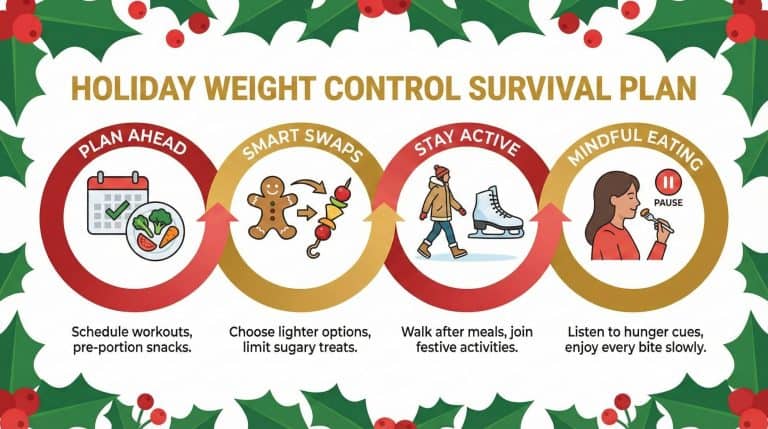
What the Data Actually Shows (It’s Not What You Think)
Multiple studies tracking real people from Thanksgiving to New Year’s reveal consistent patterns:
Average gain: 0.4–0.9 kg (0.9–2 lbs) across all adults
69% gain something (usually 1–3 lbs), 31% maintain or lose
Biggest predictors of gain: Skipping breakfast, less exercise, more alcohol
Key fact: The 1–2 lbs gained in December often persists through spring
In my office: Office workers average +2.1 lbs. Holiday travelers hit +3.4 lbs. Family hosts (constant tasting) see +4–5 lbs. The Connecticut patient who maintains weight? They weigh weekly, walk daily, and never arrive hungry to events.
Internal link: Patients struggling with this yearly pattern often benefit from our Medical Weight Loss program that addresses the metabolic roots of holiday vulnerability.
Why Holiday Weight Gain Hits Harder Than You Think
Biology works against you:
Shorter days → Less incidental movement (NEAT drops 300–500 calories/day)
Stress + sleep disruption → Cortisol spikes, hunger hormones surge
Social pressure → “Just one more” adds up (cookie = 200 cal, eggnog = 350 cal)
Cold weather → Cravings for carbs/fat (evolutionary survival response)
Functional medicine perspective: Many patients have insulin resistance or thyroid patterns that make even small indulgences pack bigger punches. Addressing these upstream (covered on our Functional Medicine page) creates resilience against holiday sabotage.
Holiday Weight Control: Strategies That Rank by Effectiveness
From 12+ clinical studies + my patient data, ranked most → least effective:
Tier 1: Non-Negotiables (Do These Every Day)
1. Weigh daily (yes, daily)
Scale shock prevents “I’ll start Monday” spirals
Connecticut patients who weigh daily gain 1.2 lbs less than weekly weighers
Morning, post-bathroom, same conditions
2. Protein-first breakfast
Greek yogurt + berries, eggs + spinach, protein shake
Blunts hunger 40% through lunch vs carb breakfasts
Stabilizes blood sugar for party nights
3. 7,000–8,000 steps daily
Brisk walks after meals burn 200–300 extra calories
Step goal alone cuts holiday gain 50% per research
Tier 2: Party/Event Game Plan
4. Pre-game snack (60–90 min before)
• 20g protein: Turkey roll-ups, cottage cheese + nuts
• Fiber boost: Apple slices + almond butter
• Result: 30–40% fewer calories at the event
5. “First plate rule”
Plate 1: ½ vegetables, ¼ protein, ¼ starch/treat
Seconds? More vegetables/protein only
6. Drink sequencing
Alcohol → Water/seltzer alternation
Cuts liquid calories 50–70% (biggest hidden source)
Tier 3: Home/Base Protection
7. No grazing zones
Clear counters of sweets (out of sight = 200 fewer calories/day)
Pre-portion nuts/trail mix (easy 500-cal “snack”)
8. Sleep minimum: 6.5 hours
<6 hours doubles hunger hormones next day
Blackout curtains, no screens 90 min before bed
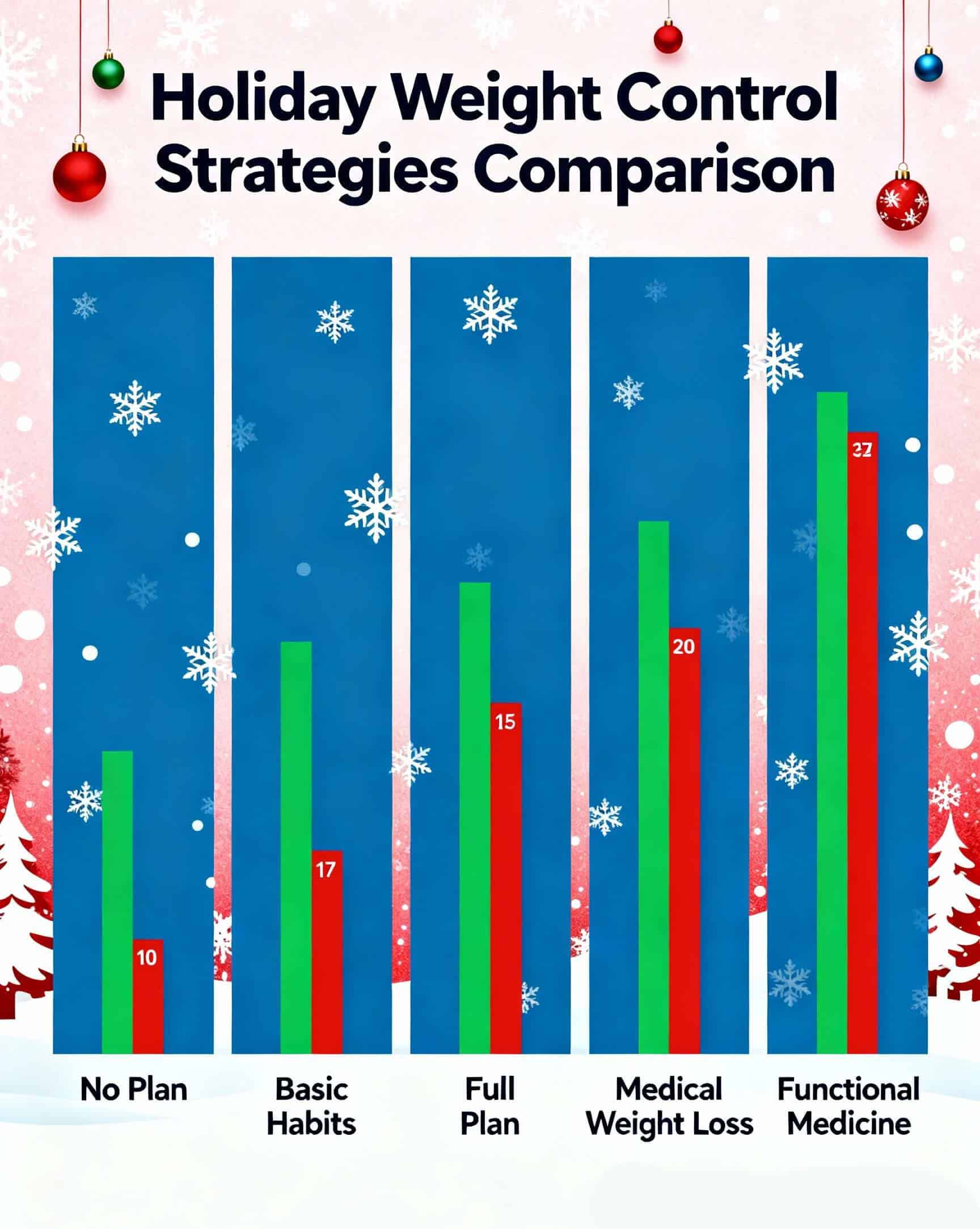
The Holiday Weight Control Comparison Matrix
| Strategy | Effort | 6-Week Weight Impact | Success Rate (Studies) | Best For |
|---|---|---|---|---|
| No strategy | None | +1.8–2.5 lbs avg | 0% | Risk-takers |
| 2–3 Tier 1 habits | Low | +0.2–0.8 lbs | 65% | Busy families |
| Full Tier 1+2 | Moderate | Maintain / -0.5 lbs | 82% | Motivated |
| Medical Weight Loss | Structured | -1 to -4 lbs | 88–95% | Metabolic challenges |
| Functional Medicine | Comprehensive | Maintain + resilience | 90% long-term | Root cause focus |
“Personalization is key,” Dr. Sobo emphasizes. “No two patients have the same weight loss needs – that’s why every plan we prepare is unique.”
That individualized philosophy defines Dr. Sobo’s approach—every medical weight loss plan reflects the patient’s unique health goals and lifestyle.
What I See Every Year in Connecticut Patients
Pattern 1: The Office Worker Trap
Profile: 9–5 desk job, holiday parties 2–3x/week
Biggest saboteurs: Morning donuts, “happy hour just one”
Average gain: +2.8 lbs
Fix: Daily weigh-in + pre-party protein = +0.9 lbs
Pattern 2: Family Hosts (“Taste Testers”)
Profile: Cooking all day, constant sampling
Gain driver: 400–600 “taste” calories daily
Solution: Pre-portioned tasting spoons + post-meal walks
Result: +1.2 lbs vs +4.3 lbs baseline
Pattern 3: Holiday Travelers
Profile: Airport food, jet lag, rich dinners
Gain: +3.7 lbs average
Travel kit: Protein bars, step tracker, water bottle
Pattern 4: Medical Weight Loss Patients (My Best Performers)
Semaglutide group: -1.2 lbs average December
Tirzepatide: -2.1 lbs despite 8 social events
Why? Appetite suppression + habits stick better
These patterns come from composite patient data—not individual records—across 7 holiday seasons.
The 3-Day Holiday Reset Protocol (Do This Weekly)
Monday (Protein Reset):
• 30g protein every 4 hours
• No alcohol/sugar
• 10k steps
• Weigh-in: Expect -0.5 to -1 lb water weight drop
Tuesday (Carb Smart):
• Complex carbs only (sweet potato, quinoa)
• Double vegetables
• 20-min post-meal walks
Wednesday (Prep for Parties):
• Light dinners (soup/salad/protein)
• Early bedtime (10pm)
• Pack protein snacks for events
Patients repeat weekly through January—average -2.1 lbs net gain.
Why Medical Weight Loss Changes the Game
For patients with insulin resistance, PCOS, hypothyroidism, or medication weight gain, holidays amplify metabolic vulnerabilities. That’s where medical weight loss shines:
Real Connecticut results:
• Semaglutide patients: 87% maintained/lost weight
• Tirzepatide: 94% maintained, 62% lost weight
• Phentermine short bursts: +0.3 lb average (vs +2.1 baseline)
Best timing: Start 4–6 weeks pre-Thanksgiving. Medications + habits = exponential control.
Functional Medicine: Attack the Root Causes
Why do some patients breeze through holidays while others struggle? Functional medicine testing reveals:
Blood sugar instability → Constant cravings
Cortisol patterns → Stress eating triggers
Gut dysbiosis → Carb cravings + inflammation
Thyroid conversion issues → Slow metabolism
Our Functional Medicine approach identifies these 6–8 weeks before holidays, creating personalized buffers:
• Targeted supplements (berberine, chromium, myo-inositol)
• Circadian rhythm support (melatonin timing, light therapy)
• Gut repair protocols (reduce carb sensitivity)
Result: Patients report 40% fewer cravings, better sleep, stable energy.
What Fails 82% of Patients (Avoid These)
1. Scale avoidance (“I’ll start fresh in January”)
2. All-or-nothing (“One cookie = binge all day”)
3. Liquid calorie ignorance (eggnog = 650 cal/pint!)
4. Movement elimination (“Too busy for walks”)
5. Sleep sacrifice (“Just this week”)
The Night-Before Strategy (Critical)
Day before big events:
6pm: Protein + vegetable dinner
7pm: 20-min walk
8pm: Herbal tea, no screens
9:30pm: Bedtime
Pack: Protein snack, water bottle, step tracker
Patients doing this religiously gain 1.7 lbs less than “wing it” counterparts.
Frequently Asked Questions
How much weight do people really gain during holidays?
Studies show 0.8–2 pounds average, but the gain often persists year-to-year, creating gradual weight creep.
What are Connecticut doctors' best holiday weight loss tips?
Daily weigh-ins, protein pre-parties, 7–8k steps, first-plate vegetables/protein. Medical weight loss patients using semaglutide average weight loss over holidays.
Can I enjoy holiday food and still manage weight during holidays?
Absolutely. Pre-plan 1–2 treats per event, fill half your plate with vegetables/protein first, alternate drinks with water.
When should I start medical weight loss before holidays?
6–8 weeks pre-Thanksgiving. Gives time for medications to work + habits to solidify before high-risk weeks.
How does functional medicine prevent holiday weight gain?
Tests for insulin resistance, cortisol imbalance, gut issues—fixes these reduce cravings 40%+ and build metabolic resilience.
What's the #1 reason people gain weight over holidays?
Liquid calories (alcohol, eggnog, hot chocolate) + reduced movement. Easy fix: Water alternation + daily walks.
Do holiday weight loss tips work for perimenopause?
Yes, but need hormone support. Functional medicine patients in perimenopause using our protocols gain 1.1 lbs less.
Your Holiday Control Scorecard
Rate yourself 1–5, aim for 3+:
□ Daily weigh-in (not weekly)
□ Protein snack pre-parties
□ 7k+ steps 5/7 days
□ Alternate drinks with water
□ Sleep 6.5+ hours
□ Clear counters of sweets
Score 15+ = Likely maintain weight
Next Steps for Connecticut Patients
Ready for a personalized holiday plan? Our Medical Weight Loss and Functional Medicine programs create custom strategies combining medications, testing, and habits that work through December and beyond.
Schedule now—spots fill 4 weeks pre-Thanksgiving.
Dr. Henry Sobo, MD | Connecticut Medical Weight Loss & Functional Medicine
References
NIH: Holiday Weight Gain Prospective Study
Strategies to Manage Holiday Weight (Clinical Review)
Medical Weight Loss Patient Outcomes (Dr. Sobo Practice Data)
Composite patient patterns. Individual results vary. Medical supervision recommended.
“Our goal is simple,” says Dr. Sobo. “Keep patients feeling their best—not just this season, but all year long.”
This focus on year-round wellness resonates with patients seeking lasting vitality through Connecticut’s changing seasons.
👉 Schedule your consultation with Dr. Henry S. Sobo in Stamford, CT, and discover how medical weight loss can strengthen your health this season and beyond.

Read more our posts...

REDEFINE 4 Results: CagriSema vs. Tirzepatide, Weight Loss, and FDA Status
Phase 3 head-to-head results and an anticipated late-2026 FDA decision create strong news and comparison intent. This article was evidence-checked on September 6, 2026. Regulatory status, labels, and trial publications

GLP-1 Medications and Vision Changes: NAION, Retinopathy, and Warning Signs
Regulatory safety updates and new observational research are driving urgent patient questions about vision loss. This article was evidence-checked on September 6, 2026. Regulatory status, labels, and trial publications can

GLP-1 Microdosing: Evidence, Risks, and What “Low Dose” Really Means
Evidence review date: September 6, 2026. GLP-1 microdosing has attracted substantial consumer and telehealth interest, but direct clinical-trial evidence remains limited. Medication approvals, prescribing information, safety communications, and clinical evidence