
Part 9 of the Dr. Sobo Peptide Stacking Series
Peptide stacking for sleep and stress requires more than matching a symptom to a peptide. Poor sleep, slow recovery, and an overactive stress response can overlap, but they can also arise from very different causes. A patient who cannot fall asleep may need a different evaluation from someone who wakes repeatedly, snores, experiences chronic pain, works an irregular schedule, or feels unrefreshed despite spending enough time in bed.
That distinction matters because no peptide stack has been established as a standard treatment for chronic insomnia, anxiety, or stress-related sleep disruption. Some peptides discussed in this area have limited human data; others are supported mainly by laboratory, animal, or mechanistic research. The most responsible approach begins with a diagnosis, evidence-supported care, and measurable treatment goals—not a predetermined list of substances.
Dr. Henry C. Sobo evaluates peptide questions within a broader medical picture that includes sleep patterns, health history, medications, metabolic and hormonal factors, pain, recovery, and relevant testing. For patients in Stamford and throughout Connecticut, the purpose of a consultation is to determine what may be interfering with restorative sleep and whether any form of individualized peptide stacking therapy has a clear clinical rationale.
What Peptide Stacking for Sleep and Stress Means
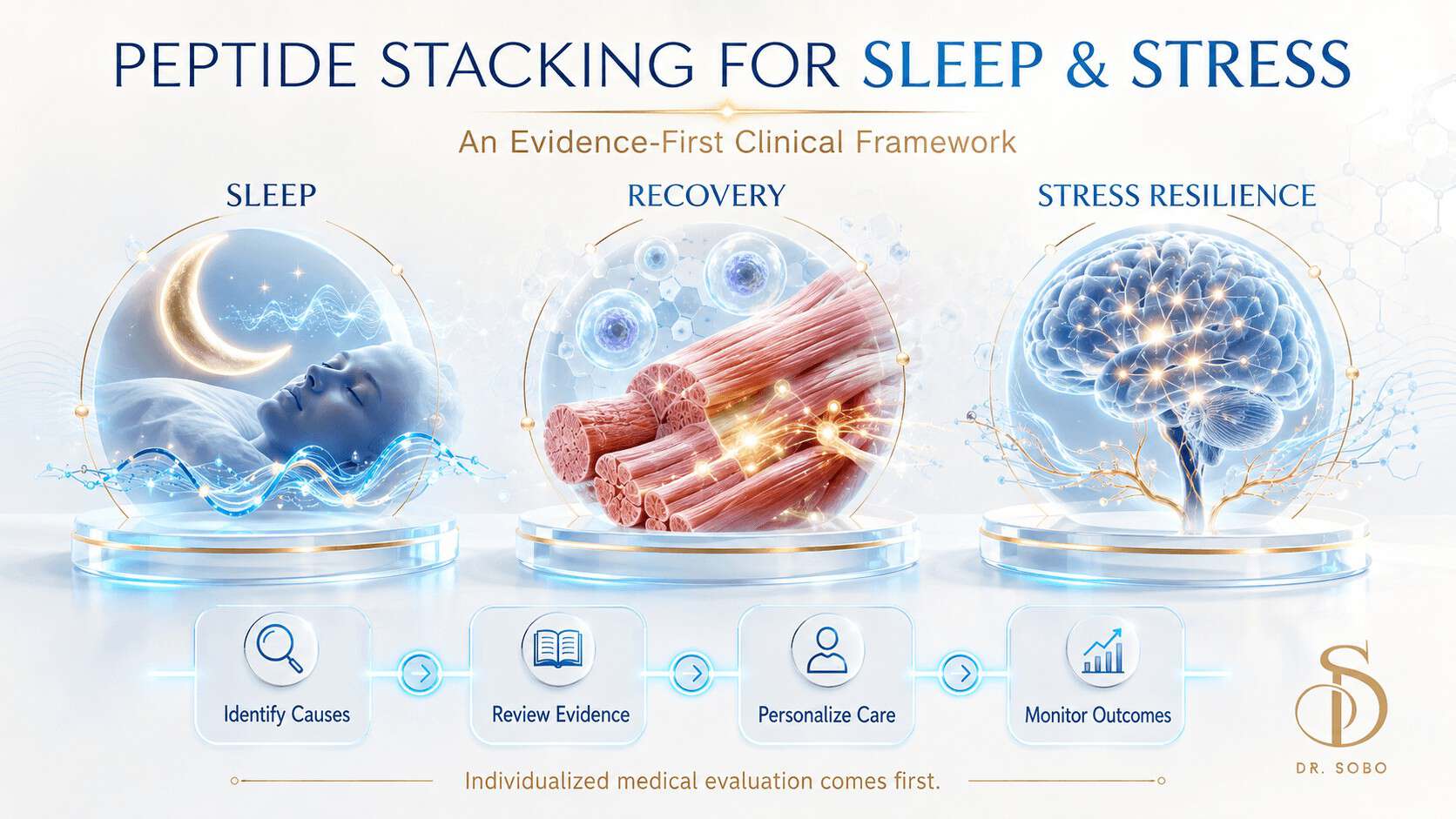
Peptide stacking means using more than one peptide or related therapy within a coordinated treatment plan. In a sleep-and-stress context, the proposed components may target different biological pathways, such as sleep regulation, circadian timing, nervous-system signaling, growth hormone release, or tissue recovery. However, a proposed mechanism is not the same as a proven patient benefit, and combining substances does not automatically make treatment more effective.
A medically sound plan should answer four questions before anything is combined:
- What is the actual problem? Difficulty falling asleep, nighttime awakenings, early waking, nonrestorative sleep, chronic pain, circadian disruption, or daytime stress may require different approaches.
- What evidence supports each component? Evidence may range from human clinical trials to preliminary biological theory.
- Why is more than one therapy needed? Every component should have a distinct, patient-specific purpose.
- How will benefit and safety be measured? The plan should define outcomes, follow-up timing, and reasons to change or stop treatment.
This framework prevents “stacking” from becoming a numbers game. More substances can mean more variables, more uncertainty, and greater difficulty identifying what caused a benefit or adverse effect. The principles in peptide stacking safety are particularly important when sleep, mood, hormone signaling, or multiple medications are involved.
Why Sleep, Recovery, and Stress Resilience Are Connected
Sleep is an active biological state, not simply an absence of wakefulness. During the night, the brain and body cycle through distinct sleep stages that support memory, metabolic regulation, immune function, and physical restoration. Deep non-rapid-eye-movement sleep is also associated with normal pulses of growth hormone. At the same time, pain, illness, anxiety, alcohol, stimulants, medication effects, and circadian disruption can fragment sleep and reduce how restorative it feels.
Stress and sleep can reinforce each other. Worry and heightened arousal may delay sleep or trigger awakenings. Poor sleep can then reduce daytime coping capacity, worsen pain sensitivity, and make ordinary demands feel more difficult. This does not mean every tired or stressed patient has an abnormal cortisol level, an “HPA-axis disorder,” or a peptide deficiency. Those labels should not replace a proper clinical assessment.
Recovery is also broader than tissue repair. It includes the ability to regain physical and mental function after exercise, illness, injury, or sustained stress. When recovery feels inadequate, the cause may involve sleep loss, excessive training, inadequate nutrition, anemia, thyroid dysfunction, menopause symptoms, depression, medication effects, sleep apnea, chronic pain, or another medical condition. Treating a theoretical pathway while missing the underlying diagnosis can delay more appropriate care.
Current Evidence and FDA Status as of August 8, 2026
None of the peptides reviewed below is FDA-approved specifically to treat insomnia, chronic stress, anxiety, or general recovery. Compounded drug preparations are not FDA-approved and are not reviewed by FDA for safety, effectiveness, or manufacturing quality before marketing. That does not mean all compounding pharmacies are equivalent to unregulated sellers. When a compounded prescription is clinically appropriate, it should be patient-specific, issued by a qualified healthcare professional, dispensed by a legitimate pharmacy operating under applicable requirements, clearly labeled, and supported by medical follow-up.
In July 2026, the FDA Pharmacy Compounding Advisory Committee considered Emideltide-related substances, Epitalon-related substances, and Semax-related substances for possible inclusion on the federal 503A Bulks List. The committee did not recommend Emideltide, also called DSIP, and recommended Epitalon- and Semax-related substances. These were advisory committee votes about a possible compounding pathway. They were not FDA drug approvals, did not create approved indications, and did not establish that any of these peptides is safe or effective for sleep or stress. Final federal action remains separate from the committee’s recommendations.
| Peptide or Combination | Why It Is Discussed | Evidence Relevant to Sleep or Stress | Key Limitation |
|---|---|---|---|
| DSIP/Emideltide | Sleep regulation | Small, older human sleep studies | No large modern trials establishing effectiveness or long-term safety for insomnia |
| Epitalon | Circadian and melatonin-related biology | Laboratory, animal, and limited human biomarker research | No established clinical efficacy for insomnia |
| Selank | Anxiety- and stress-related signaling | Limited human research in anxiety-related conditions | No large contemporary trials establishing it as an insomnia or anxiety standard of care |
| Semax | Neurological and cognitive pathways | Research is primarily neurological, not sleep-focused | Mechanistic findings do not prove improved sleep or stress resilience |
| CJC-1295/Ipamorelin | Growth hormone signaling | CJC-1295 has human biomarker data for GH and IGF-1 | Biomarker changes do not establish better sleep, recovery, or body composition |
| Sermorelin | Stimulation of endogenous growth hormone release | Mechanism and hormone-response data | Not established as a treatment for insomnia |
| BPC-157 or GHK-Cu | Proposed tissue-repair or recovery pathways | Primarily laboratory, animal, or mechanistic evidence for relevant claims | An indirect effect on sleep remains unproven |
What Should Be Evaluated Before Peptide Therapy?
The most useful first step is to define the sleep complaint precisely. “I do not sleep well” can describe several different patterns, and each pattern changes the diagnostic priorities.
Difficulty Falling Asleep
Long sleep-onset time may be associated with stress, anxiety, a delayed sleep schedule, late caffeine or stimulant use, screen exposure, medication effects, or spending too much time awake in bed. The timing and consistency of the sleep-wake schedule may be more informative than total time in bed.
Frequent Nighttime Awakenings
Repeated awakenings can occur with sleep apnea, pain, reflux, alcohol use, menopause symptoms, urinary symptoms, environmental disruption, or medication effects. Loud snoring, gasping, witnessed breathing pauses, morning headaches, or significant daytime sleepiness warrant evaluation for a sleep-related breathing disorder.
Early-Morning Waking
Waking substantially earlier than intended may be related to circadian timing, depression, alcohol, age-related sleep changes, or an inconsistent schedule. It should not automatically be interpreted as a melatonin problem or a reason to use a circadian-focused peptide.
Nonrestorative Sleep
Some patients spend seven or eight hours in bed yet wake feeling unrefreshed. Possible explanations include fragmented sleep, sleep apnea, restless legs syndrome, chronic pain, medication effects, insufficient deep sleep, mood disorders, or an underlying medical condition. Objective testing may be appropriate when the history suggests a sleep disorder that cannot be evaluated from symptoms alone.
Stress, Anxiety, and a “Tired but Wired” Pattern
Feeling exhausted while mentally activated is common, but it is not a specific diagnosis. A clinician may need to assess anxiety, depression, trauma-related symptoms, work schedules, stimulant use, alcohol, thyroid function, and other contributors. Persistent or severe anxiety deserves evidence-based care; an investigational peptide should not be presented as a substitute for appropriate behavioral-health treatment.
Evidence-Supported Sleep Care Still Comes First
Peptide interest should not displace established sleep care. For long-term insomnia, cognitive behavioral therapy for insomnia, commonly called CBT-I, is generally recommended as a first-line treatment. CBT-I is more than basic sleep-hygiene advice. It uses structured methods to address behaviors, schedules, and thought patterns that perpetuate insomnia.
Depending on the diagnosis, a plan may also address:
- Consistent sleep and wake times
- Appropriate morning light and reduced late-night light exposure
- Caffeine, nicotine, alcohol, and stimulant timing
- Exercise timing and total training load
- Pain, reflux, menopause symptoms, or nocturia
- Sleep apnea or restless legs syndrome
- Anxiety, depression, and chronic stress
- Prescription and over-the-counter medication effects
- Nutritional or metabolic factors when clinically relevant
These measures are not a generic obstacle placed before personalized medicine. They help establish the diagnosis and make any later treatment easier to evaluate. If a patient begins multiple interventions simultaneously, it becomes difficult to know which change improved sleep—or which one caused a problem.
What the Research Says About Individual Peptides
DSIP/Emideltide and Sleep
Delta sleep-inducing peptide, also known as DSIP or Emideltide, has been investigated for possible effects on sleep regulation. A small placebo-controlled study published in 1987 followed 14 middle-aged adults with chronic insomnia during seven nights of administration. The researchers reported changes in nighttime sleep and some daytime measures.
The study is relevant because it involved people with insomnia, but it cannot carry the weight often placed on it online. It was small, brief, and conducted decades ago. It does not establish long-term safety, optimal dosing, comparative effectiveness, or benefit across different causes of insomnia. Larger contemporary randomized trials have not established DSIP as a standard insomnia treatment.
FDA’s 2026 review also identified evidence and characterization limitations. The advisory committee did not recommend Emideltide free base or Emideltide acetate for the 503A Bulks List. That decision concerned compounding policy, not a withdrawal of an approved drug; DSIP was not FDA-approved for insomnia before the vote and remains investigational.
Epitalon and Circadian Biology
Epitalon is a synthetic tetrapeptide that has been explored in research involving melatonin-related biomarkers, circadian biology, telomerase activity, and cellular aging. These areas make it relevant to discussions about sleep timing, but relevance is not the same as demonstrated treatment efficacy.
FDA’s 2026 review did not identify clinical efficacy studies showing that Epitalon treats insomnia. A small study in healthy adults reported a change in a urinary melatonin metabolite, but it did not evaluate insomnia outcomes and does not establish that Epitalon restores a “youthful” pineal gland or corrects a recognized “Epitalon deficiency.” There is no accepted clinical diagnosis called Epitalon deficiency.
The July 2026 advisory committee recommendation concerning Epitalon-related bulk drug substances did not approve Epitalon or validate claims for sleep, circadian disorders, or healthy aging. Readers who want the regulatory details can review what the 2026 Epitalon FDA advisory committee vote means.
Selank and Stress-Related Symptoms
Selank has been examined in limited human research involving anxiety-related and asthenic symptoms. Some studies reported anxiolytic or antiasthenic effects and explored immune-related markers. However, much of the evidence comes from relatively limited research conducted outside the United States, and the findings have not been confirmed by large contemporary trials.
Selank is not FDA-approved for generalized anxiety disorder, insomnia, chronic stress, or sleep-related conditions. Statements that it is equivalent to a benzodiazepine, reliably normalizes the HPA axis, or produces effects for a specific number of days go beyond what the available evidence can establish. It should be discussed as investigational, with the limits of the research made clear.
Semax and Neurological Signaling
Semax is an investigational peptide studied primarily in neurological and cognitive contexts. Proposed mechanisms include effects on neurotrophic and signaling pathways. Those mechanisms do not prove that Semax improves sleep, prevents the cognitive consequences of sleep loss, or increases clinically meaningful stress resilience.
The July 2026 advisory committee recommendation involving Semax-related substances addressed potential 503A Bulks List inclusion. It did not make Semax FDA-approved and did not establish an approved use for insomnia, anxiety, cognitive performance, or chronic stress.
CJC-1295 and Ipamorelin
CJC-1295 is a growth hormone-releasing hormone analog, while Ipamorelin is a growth hormone secretagogue receptor agonist. In healthy adults, CJC-1295 research has demonstrated increases in circulating growth hormone and IGF-1. That is evidence of a biological effect, but it is not proof of better sleep, faster recovery, improved body composition, or greater energy.
High-quality human evidence has not established the CJC-1295 and Ipamorelin combination as an insomnia treatment. If growth-hormone-related therapy is considered for another individualized reason, the clinician must distinguish the intended biological target from outcomes that have actually been demonstrated. Medical history, metabolic factors, contraindications, dosing, and follow-up all matter.
Sermorelin
Sermorelin is a growth hormone-releasing hormone analog that can stimulate endogenous growth hormone release. Its mechanism makes it relevant to hormone and recovery discussions, but it has not been established as a treatment for chronic insomnia or stress-related sleep disruption. A hormone response should not be described as proof that sleep architecture or recovery has normalized.
BPC-157 and GHK-Cu
BPC-157 is an investigational peptide supported primarily by laboratory and animal research for many of the recovery claims associated with it. Controlled human evidence has not established BPC-157 as a treatment for insomnia, systemic inflammation, chronic pain-related sleep disruption, or soft-tissue recovery. Any proposed effect on sleep through reduced discomfort or recovery remains indirect and unproven.
GHK-Cu has been studied in relation to copper signaling, collagen, tissue remodeling, and wound-related pathways. Those findings do not establish that systemic GHK-Cu treatment improves sleep quality, mental clarity, stress regulation, or recovery time in patients. Neither BPC-157 nor GHK-Cu should be presented as a proven “support layer” for a sleep stack.
How a Personalized Plan Should Be Designed
Personalization does not mean choosing a different peptide for every symptom. It means determining whether a peptide is appropriate at all, then using the fewest interventions necessary to answer a defined clinical question.
1. Define the Primary Outcome
The primary goal should be specific: reducing sleep-onset time, decreasing awakenings, improving total sleep time, addressing pain that disrupts sleep, or improving daytime function. Vague goals such as “optimize recovery” are difficult to measure and can allow ineffective treatment to continue.
2. Identify Conditions That Need Their Own Treatment
Sleep apnea, restless legs syndrome, thyroid dysfunction, depression, anxiety disorders, chronic pain, menopause-related symptoms, and medication effects require appropriate evaluation. A peptide stack should not be used to mask warning signs or postpone evidence-based care.
3. Review the Evidence for Each Proposed Component
Each substance should have a documented rationale tied to the patient’s goal. Human clinical evidence should carry more weight than animal research, laboratory findings, or a theoretical mechanism. When evidence is preliminary, that uncertainty should be part of informed decision-making.
4. Avoid Unnecessary Overlap
Substances that act through similar pathways may create redundancy without proven additional benefit. Starting several therapies together also makes it harder to determine what is helping. A staged approach can make response and tolerability easier to interpret, but the appropriate sequence is an individual medical decision.
5. Establish Monitoring Before Treatment
Monitoring may include a sleep diary, daytime-function measures, symptom scales, adverse-effect review, medication reconciliation, and laboratory testing when clinically appropriate. The plan should also establish when to reassess treatment and what would justify continuing, changing, or stopping it.
How Long Does It Take to Evaluate a Treatment Plan?
There is no evidence-based universal timeline for peptide stacking for sleep and stress. Response depends on the underlying diagnosis, the intervention, other medications, health status, sleep schedule, adherence, tolerability, and how outcomes are measured. Promises that a particular peptide will work within days—or that an “HPA reset” requires an exact number of months—are not supported across patients.
A useful baseline can track:
- Approximate time needed to fall asleep
- Number and duration of nighttime awakenings
- Total sleep time and wake time
- Morning refreshment and daytime sleepiness
- Daytime concentration, mood, and function
- Pain or physical symptoms that interrupt sleep
- Exercise recovery when it is a treatment goal
- Side effects or new symptoms
Wearable data can provide trends, but consumer devices do not replace a medical sleep evaluation or formal sleep study when one is indicated. The goal is not to chase a single “sleep score.” It is to determine whether the patient is sleeping and functioning better without unacceptable risk.
Who May Need Additional Evaluation Before Discussing Peptides?
A medical assessment is especially important for people with loud snoring or witnessed breathing pauses, severe daytime sleepiness, new or worsening mood symptoms, uncontrolled medical conditions, pregnancy or breastfeeding, active cancer, complex endocrine conditions, or multiple medications. This is not a complete contraindication list; the relevant risks depend on the specific substance and the patient’s history.
Urgent symptoms—such as chest pain, severe shortness of breath, fainting, suicidal thoughts, a sudden neurological change, or a dangerous reaction—require prompt medical care rather than an online sleep or peptide plan.
Peptide Stacking for Sleep and Stress in Connecticut
Patients researching peptide therapy often arrive with a list assembled from podcasts, social media, or online protocols. A list can begin a conversation, but it cannot establish a diagnosis or determine whether the proposed combination is appropriate.
At Optimal Health Medical in Stamford, Dr. Sobo approaches sleep, stress, and recovery questions through medical history, symptom patterns, current medications, relevant testing, evidence limits, and follow-up. The objective is not to create the longest stack. It is to identify the most important clinical problem, address established causes, and decide whether a carefully monitored therapy has a reasonable role.
If you live in Stamford, Greenwich, Norwalk, or another Connecticut community and want to discuss a personalized approach, schedule a consultation with Dr. Sobo. Bring a current medication and supplement list, recent laboratory results if available, and a one- to two-week record of your sleep pattern. That information can make the first discussion more focused and useful.
What Patients Should Remember
Sleep, recovery, and stress resilience influence one another, but they are not interchangeable diagnoses. DSIP, Epitalon, Selank, Semax, CJC-1295, Ipamorelin, Sermorelin, BPC-157, and GHK-Cu have different mechanisms and very different evidence levels. None has been established as the best peptide for chronic insomnia, and no multi-peptide stack has been proven as a standard treatment for insomnia, anxiety, or chronic stress.
The strongest plan begins by defining the sleep problem, screening for conditions that need established treatment, reviewing the quality of evidence, and setting measurable outcomes. If an investigational or compounded therapy is considered, it should be patient-specific, medically supervised, appropriately dispensed, and reassessed when it does not produce a clear benefit.
Frequently Asked Questions About Peptide Stacking for Sleep and Stress
Can peptide stacking treat insomnia, chronic stress, or anxiety?
Peptide stacking has not been established as a proven treatment for insomnia, chronic stress, or anxiety. The peptides discussed for these concerns have widely different evidence levels, ranging from small or older human studies to laboratory, animal, and mechanistic research. No peptide combination has been confirmed through large, high-quality clinical trials as a standard treatment for these conditions. Persistent sleep or stress symptoms require an individualized evaluation to identify underlying causes and determine which treatment options are appropriate.
Are peptides FDA-approved for insomnia or stress-related conditions?
No peptide discussed in this article is FDA-approved specifically to treat insomnia, chronic stress, general recovery, or stress-related sleep disruption. Some have been studied for pathways related to sleep, neurological function, hormone signaling, or tissue recovery, but scientific interest does not establish an approved indication. Compounded preparations are also not FDA-approved. A treatment decision should follow a patient-specific medical evaluation, an appropriate prescription and pharmacy process when applicable, and ongoing monitoring.
Which peptide is best for improving deep sleep?
No peptide has been established as the best treatment for increasing deep sleep or treating chronic insomnia. DSIP, also called Emideltide, has been examined in limited human sleep research, but the available studies are small, brief, and largely decades old. They do not establish long-term effectiveness, optimal dosing, or superiority over evidence-supported insomnia care. The first priority is identifying whether symptoms involve insomnia, circadian disruption, sleep apnea, pain, medication effects, or another cause.
What did the July 2026 FDA advisory committee decide about DSIP?
In July 2026, the FDA Pharmacy Compounding Advisory Committee did not recommend Emideltide-related bulk drug substances, also called DSIP, for inclusion on the 503A Bulks List. FDA staff identified limited efficacy evidence and unresolved characterization and safety questions. The committee recommendation is advisory, and FDA retains responsibility for final regulatory action. DSIP remains investigational and is not FDA-approved for insomnia, narcolepsy, or opioid withdrawal.
Does a 503A Bulks List recommendation mean a peptide is FDA-approved?
No. A 503A Bulks List recommendation concerns whether a bulk drug substance may qualify for use in certain patient-specific pharmacy compounding under applicable requirements. It does not approve the peptide as a drug, create an approved medical indication, or prove safety and effectiveness. Advisory committee recommendations are nonbinding, and FDA must complete its review and take final action before the federal list or applicable policy changes.
Does Epitalon improve sleep or regulate circadian rhythm?
Epitalon has been explored in laboratory, animal, and limited human research involving melatonin-related biomarkers and circadian biology. Current evidence does not establish it as an effective insomnia treatment or a proven way to restore circadian function. FDA’s 2026 review did not identify clinical efficacy studies in patients with insomnia. The advisory committee recommendation concerning possible 503A listing was not FDA approval and did not confirm a sleep-related benefit.
Can Selank or Semax help with stress, anxiety, or sleep?
Evidence remains limited. Selank has been examined in some human studies involving anxiety-related and asthenic symptoms, but the research does not establish it as a standard treatment for anxiety, chronic stress, or insomnia. Semax has primarily been investigated for neurological and cognitive applications rather than sleep disorders. Neither peptide is FDA-approved for insomnia or chronic stress, and proposed effects on neurotrophic or stress-related pathways do not prove meaningful clinical benefit.
What is the CJC-1295 and Ipamorelin stack, and can it improve sleep?
CJC-1295 is a growth hormone-releasing hormone analog, while Ipamorelin activates the growth hormone secretagogue receptor. Human CJC-1295 research has demonstrated increases in growth hormone and IGF-1, but those biomarker changes do not prove better sleep, faster recovery, improved body composition, or increased energy. High-quality human evidence has not established the combination as an insomnia treatment. Potential risks, contraindications, metabolic factors, dosing, and monitoring require individual evaluation.
Can BPC-157 or GHK-Cu indirectly improve sleep through recovery?
That possibility remains unproven. BPC-157 is supported primarily by laboratory and animal research and has not been established in controlled human trials as a treatment for insomnia, chronic pain-related sleep disruption, or systemic inflammation. GHK-Cu has been studied for processes involving copper signaling, collagen, and tissue remodeling, but those findings do not demonstrate improved sleep or stress regulation in patients. Any proposed sleep benefit would be indirect and investigational.
Is combining several peptides safer or more effective than using one therapy?
Not necessarily. Most proposed peptide stacks have not been evaluated as complete combinations in controlled human trials, so their combined effects, interactions, ideal dosing, and long-term safety may be uncertain. Multiple simultaneous therapies also make it harder to identify what caused a benefit or adverse effect. When an investigational or compounded therapy is considered, every component should have a documented purpose and measurable outcome.
What should be evaluated before considering peptide therapy for sleep problems?
A medical evaluation should define the sleep complaint and investigate possible causes such as sleep apnea, restless legs syndrome, circadian disruption, chronic pain, menopause symptoms, thyroid dysfunction, medication effects, alcohol or stimulant use, anxiety, and depression. Current prescriptions, medical history, relevant laboratory findings, and possible interactions should also be reviewed. Evidence-supported options should not be overlooked; CBT-I is generally recommended as a first-line treatment for long-term insomnia.
How long does it take to know whether a sleep or stress treatment is working?
There is no universal evidence-based timeline for evaluating peptide stacking for sleep and stress. Timing depends on the diagnosis, selected treatment, dosing, other medications, health status, sleep behavior, tolerability, and measured outcomes. Before treatment begins, the patient and clinician should establish goals such as sleep-onset time, awakenings, total sleep time, daytime function, recovery symptoms, and adverse effects. A therapy should be reassessed when it provides no measurable benefit.
Related Dr. Sobo Resources
- Peptide Stacking Therapy in Connecticut
- Peptide Stacking Safety: Why More Is Not Always Better
- Epitalon FDA Status 2026
- DSIP Peptide
- Epitalon Peptide Therapy
- Selank Peptide
- CJC-1295 and Ipamorelin Stack
- Peptide Stacking for Cognitive Performance and Brain Health
- Peptide Stacking for Gut Health and Immune Support
Sources
- FDA: July 23–24, 2026 Pharmacy Compounding Advisory Committee Meeting
- FDA Briefing Document: Emideltide-Related Bulk Drug Substances
- FDA Briefing Document: Epitalon-Related Bulk Drug Substances
- FDA Briefing Document: Semax-Related Bulk Drug Substances
- FDA Presentation Materials: Emideltide, Epitalon, and Semax
- FDA: Bulk Drug Substances Used in Compounding Under Section 503A
- National Heart, Lung, and Blood Institute: Insomnia Treatment
- Effects of Delta-Sleep-Inducing Peptide on Sleep-Wake Behavior in Chronic Insomnia
- Selank in the Therapy of Generalized Anxiety Disorders and Neurasthenia
- Immunomodulatory Effects of Selank in Patients With Anxiety-Asthenic Disorders
- Human Study of CJC-1295 Effects on Growth Hormone and IGF-1 Secretion
- Regulatory Affairs Professionals Society: July 2026 Advisory Committee Vote Report

Medically reviewed by