
By Dr. Henry Sobo, MD – Medical Weight Loss, Functional & Hormone Therapy, Connecticut
Ipamorelin + CJC-1295 Stack: Benefits, Science, and Results
Peptide therapy has become an increasingly discussed area within regenerative and metabolic medicine. Among the most frequently researched combinations is the Ipamorelin and CJC-1295 peptide stack, which is commonly used to support natural growth hormone signaling.
Growth hormone plays a central role in tissue repair, metabolic regulation, sleep cycles, and body composition. As natural hormone production declines with age, interest has grown in therapies designed to support the body’s own endocrine signaling rather than replace hormones directly.
The combination of Ipamorelin and CJC-1295 is often discussed because these two peptides influence growth hormone pathways through complementary mechanisms. When used together in physician-supervised protocols, they may help stimulate pulsatile growth hormone release while maintaining the body’s natural feedback loops.
Patients researching treatment options often begin by learning about Ipamorelin peptide therapy before exploring how peptide stacking strategies may enhance results.
What Is the Ipamorelin + CJC-1295 Stack?
The Ipamorelin and CJC-1295 stack refers to the combined use of two peptides that stimulate growth hormone signaling through different biological pathways.
Ipamorelin is a growth hormone secretagogue that activates the ghrelin receptor in the hypothalamus and pituitary gland. This stimulation triggers the release of growth hormone in pulses that mimic the body’s natural endocrine rhythm.
CJC-1295, by contrast, is a growth hormone-releasing hormone (GHRH) analog. It works by increasing the signaling activity that tells the pituitary gland to produce growth hormone.
When these two peptides are used together, they stimulate growth hormone release through complementary mechanisms:
- CJC-1295 increases the signal telling the pituitary to release GH
- Ipamorelin triggers the release of GH through ghrelin receptor activation
Because the two peptides activate different pathways, stacking them may produce a more consistent pattern of growth hormone signaling than either peptide alone.
How the Peptide Stack Works in the Body
The Ipamorelin CJC-1295 stack influences growth hormone production through a multi-step endocrine process.
First, CJC-1295 increases growth hormone-releasing hormone activity in the hypothalamus. This primes the pituitary gland to release growth hormone.
Second, Ipamorelin activates the ghrelin receptor, which triggers the pituitary to release growth hormone pulses.
Third, growth hormone enters circulation and stimulates the production of insulin-like growth factor-1 (IGF-1).
IGF-1 is responsible for many of the downstream biological effects associated with growth hormone, including:
- muscle protein synthesis
- fat metabolism
- collagen production
- tissue repair
Because the stack supports natural hormone release rather than replacing hormones directly, it is often discussed as a more physiologic approach to growth hormone support.
Why Peptide Stacking Is Used
Peptide stacking refers to combining multiple peptides that influence different biological pathways in order to enhance therapeutic outcomes.
The Ipamorelin and CJC-1295 stack is one of the most common examples because the peptides work through complementary mechanisms.
Potential advantages of peptide stacking may include:
- stronger growth hormone signaling
- more consistent hormone pulses
- improved recovery from exercise
- improved sleep quality
- improved body composition
However, peptide therapy should always be used under medical supervision to ensure appropriate dosing and monitoring.
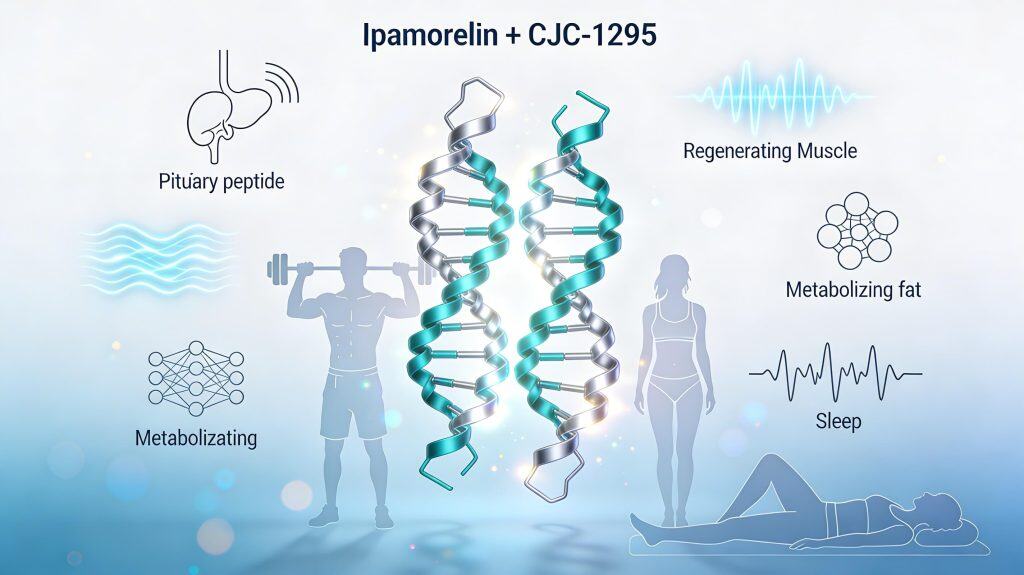
Benefits of the Ipamorelin + CJC-1295 Stack
Improved Recovery From Exercise
Growth hormone and IGF-1 signaling play important roles in muscle repair and connective tissue recovery. When these hormones are released in response to exercise, they help stimulate protein synthesis and cellular regeneration.
For individuals who train regularly or participate in athletic activities, improved recovery may allow for greater consistency in exercise routines.
Recovery benefits may include:
- reduced muscle soreness
- improved recovery time between workouts
- improved connective tissue repair
- improved training capacity
These effects are one reason peptide therapy has been explored in sports medicine and recovery programs.
Improved Body Composition
Growth hormone influences lipolysis, the metabolic process that breaks down stored fat for energy.
When combined with structured exercise and nutrition programs, the Ipamorelin CJC-1295 stack may support improvements in body composition.
Potential changes may include:
- reduction in visceral fat
- increased lean muscle mass
- improved metabolic efficiency
Some metabolic therapy programs also combine recovery peptides with treatments designed to support weight loss and metabolic health such as Semaglutide, Tirzepatide, and Retatrutide These therapies focus on appetite regulation and metabolic control, while peptide therapy may support recovery and muscle preservation.
Improved Sleep Quality
Growth hormone secretion is closely linked to deep sleep cycles. Because the Ipamorelin CJC-1295 stack stimulates growth hormone release, some patients report improvements in sleep depth and overnight recovery.
Improved sleep may also contribute to:
- improved cognitive performance
- improved metabolic health
- improved recovery from exercise
Sleep improvements are often among the earliest benefits reported by patients using growth hormone secretagogue peptides.
Skin Health and Collagen Production
Growth hormone influences collagen synthesis and connective tissue health.
Because collagen is an important structural protein in skin, tendons, and ligaments, therapies that stimulate growth hormone signaling may contribute to improvements in tissue repair and skin elasticity.
Over time, collagen production declines with age. Supporting growth hormone pathways may help counteract some of these changes.
Feature | Ipamorelin | CJC-1295 |
Peptide Type | Growth hormone secretagogue | GHRH analog |
Mechanism | Activates ghrelin receptor | Stimulates GH-releasing hormone |
Primary Role | Trigger GH release | Increase GH signaling |
Typical Use | Recovery and sleep support | Often stacked with Ipamorelin |
Because these peptides influence different mechanisms within the growth hormone pathway, combining them may produce stronger results.
CJC-1295 DAC vs Non-DAC
CJC-1295 exists in two forms: DAC and non-DAC.
Version | Half Life | Typical Discussion |
CJC-1295 DAC | Long acting | Weekly dosing protocols |
CJC-1295 non-DAC | Short acting | Often paired with Ipamorelin |
The non-DAC version is commonly used in stacking protocols because it mimics natural hormone pulses more closely.
Timeline of Potential Results
Timeframe | Possible Changes |
Month 1 | Improved sleep and energy |
Month 2 | Improved recovery and metabolism |
Month 3 | Lean muscle development |
Months 4-6 | Improved body composition |
Individual results vary depending on lifestyle factors such as diet, exercise, and sleep habits.
Who May Be a Candidate for the Stack
Individuals who explore the Ipamorelin CJC-1295 stack often include adults interested in improving recovery, metabolic health, and overall wellness.
Possible candidates may include individuals who:
- train regularly and want improved recovery
- are experiencing age-related changes in body composition
- want to improve sleep quality
- want to support lean muscle mass
A physician evaluation is necessary to determine whether peptide therapy is appropriate.
Safety Considerations
Peptide therapy should always be used under medical supervision.
Ipamorelin and CJC-1295 are generally well tolerated, but potential side effects may include:
- injection site irritation
- mild headaches
- water retention
- temporary fatigue
Proper dosing and monitoring help reduce potential risks.

HAVE QUESTIONS ABOUT the Ipamorelin CJC-1295 stack?
If you have questions about The the Ipamorelin CJC-1295 stack and reside in Connecticut, Greenwich, or Norwalk area, contact us today for a Personalized Consultation. We focus on combining safe, effective medication with a realistic lifestyle plan.
For broader options, see our Conditions Treated page.
Frequently Asked Questions
What is the Ipamorelin CJC-1295 stack?
The Ipamorelin CJC-1295 stack combines two peptides that stimulate natural growth hormone release through complementary mechanisms. CJC-1295 increases growth hormone-releasing hormone signaling, while Ipamorelin activates ghrelin receptors that trigger growth hormone release.
Why are Ipamorelin and CJC-1295 used together?
The peptides influence different pathways within the growth hormone axis. Using them together may produce stronger and more consistent hormone signaling than either peptide alone.
How long does the peptide stack take to work?
Some patients report improvements in sleep and recovery within several weeks. Body composition changes may develop gradually over three to six months.
Can the peptide stack help with fat loss?
Growth hormone stimulates lipolysis, the metabolic process that breaks down stored fat. The peptide stack may support fat metabolism when combined with diet and exercise.
Can the stack build muscle?
Growth hormone and IGF-1 signaling influence muscle protein synthesis and recovery. The peptide stack may support lean muscle development when paired with resistance training.
Is the Ipamorelin CJC-1295 stack safe?
When used under medical supervision, these peptides are generally well tolerated. Possible side effects may include injection site irritation, mild headaches, or water retention.
Does the stack improve sleep?
Growth hormone secretion occurs during deep sleep cycles. Some patients report improved sleep quality and deeper rest when using growth hormone secretagogue peptides.
Can the peptide stack be combined with weight loss therapy?
Some metabolic programs combine recovery peptides with medications such as Semaglutide or Tirzepatide to support weight loss while helping preserve lean muscle mass
Who should avoid peptide therapy?
Individuals with certain medical conditions, including uncontrolled endocrine disorders or active cancer, may not be candidates for peptide therapy.
How is the peptide stack administered?
Ipamorelin and CJC-1295 are typically administered through subcutaneous injections according to physician-guided protocols.
More Helpful Articles
REDEFINE 4 Results: CagriSema vs. Tirzepatide, Weight Loss, and FDA Status
Phase 3 head-to-head results and an anticipated late-2026 FDA decision create strong news and comparison intent. This article was evidence-checked on September 6, 2026. Regulatory status, labels, and trial publications
GLP-1 Medications and Vision Changes: NAION, Retinopathy, and Warning Signs
Regulatory safety updates and new observational research are driving urgent patient questions about vision loss. This article was evidence-checked on September 6, 2026. Regulatory status, labels, and trial publications can
GLP-1 Microdosing: Evidence, Risks, and What “Low Dose” Really Means
Evidence review date: September 6, 2026. GLP-1 microdosing has attracted substantial consumer and telehealth interest, but direct clinical-trial evidence remains limited. Medication approvals, prescribing information, safety communications, and clinical evidence
Helpful links:
- BPC‑157 gastrointestinal and musculoskeletal healing benefits
- Thymosin Beta‑4 (TB‑500) for systemic tissue repair
- comprehensive peptide therapy in Connecticut
Sources
Growth Hormone Releasing Peptides Research
https://pubmed.ncbi.nlm.nih.gov/9849822/
Growth Hormone Secretagogues Study
https://www.sciencedirect.com/science/article/abs/pii/S1096637499999987
Ipamorelin Overview
https://en.wikipedia.org/wiki/Ipamorelin
Ghrelin and Growth Hormone Research
https://pmc.ncbi.nlm.nih.gov/articles/PMC4863553/
