
VIP (Vasoactive Intestinal Peptide)
VIP (Vasoactive Intestinal Peptide) Therapy in Stamford, CT
Vasoactive Intestinal Peptide (VIP) is a naturally occurring neuropeptide that helps regulate inflammation, blood flow, digestion, lung function, circadian rhythm, and immune balance. At Dr. Henry Sobo’s holistic practice in Stamford, CT, VIP peptide therapy is offered as an individualized, off‑label option for select patients with chronic inflammatory and neuro‑immune conditions.
What Is VIP?
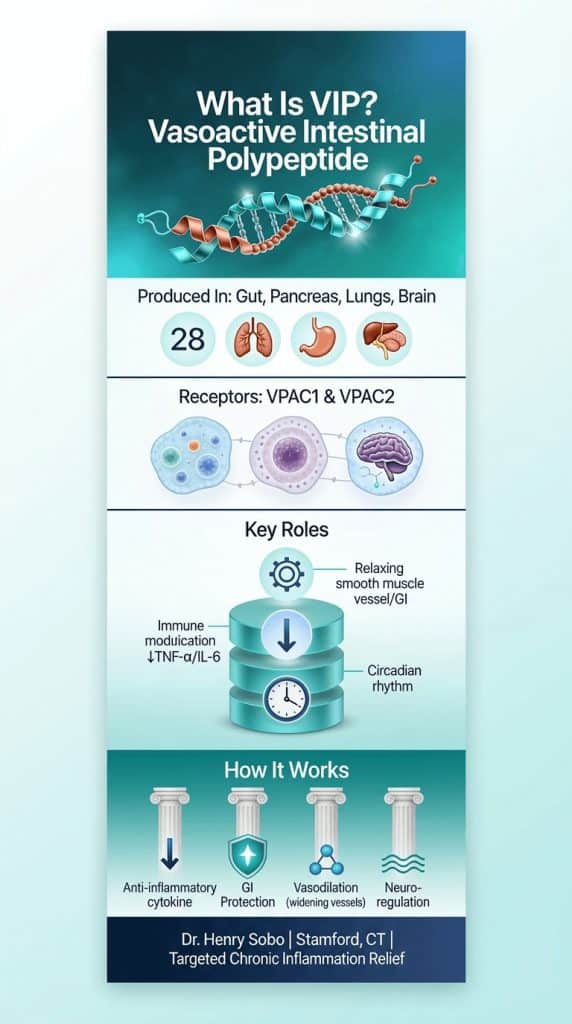
VIP (also called vasoactive intestinal polypeptide) is a 28–amino acid peptide produced in many parts of the body, including the gut, pancreas, lungs, and brain. It is part of the secretin/glucagon hormone family and signals through specific receptors (VPAC1 and VPAC2) on nervous, immune, and epithelial cells.
Key physiologic roles include:
Relaxing smooth muscle in blood vessels and the gastrointestinal (GI) tract, supporting vasodilation and motility.
Modulating immune responses and lowering production of inflammatory mediators such as TNF‑alpha and IL‑6.
Influencing circadian rhythm via its activity in the brain’s suprachiasmatic nucleus, which can impact sleep–wake patterns.
VIP has been studied in cardiovascular, gastrointestinal, pulmonary, neuroendocrine, and immune systems for its broad regulatory effects.
How VIP Works in the Body
VIP acts as both a neurotransmitter and a neuro‑endocrine modulator, binding to VPAC1 and VPAC2 receptors widely distributed in the GI tract, lungs, blood vessels, and immune organs.
Major mechanisms relevant to Dr. Sobo’s patients include:
- Anti‑inflammatory and immune modulation
- Downregulates pro‑inflammatory cytokines such as TNF‑alpha, IL‑6, IL‑12, and nitric oxide while increasing anti‑inflammatory mediators.
- Promotes a shift away from Th1/Th17‑dominant immune responses toward more regulatory and Th2‑type activity, supporting immune balance in chronic inflammatory and autoimmune conditions.
- Gastrointestinal protection and motility
- Decreases gastric acid secretion while stimulating pancreatic bicarbonate and intestinal fluid secretion, helping protect the mucosal barrier and support motility.
- Modulates tight‑junction proteins (such as ZO‑1, occludin, and claudin‑3), which can help maintain intestinal barrier integrity in inflammatory states.
- Vasodilation and blood pressure effects
- Acts as a potent vasodilator in the GI mucosa and systemic circulation, which can lower arterial blood pressure and improve local blood flow.
- Neuro‑regulation and circadian rhythm
- Plays a key role in synchronizing neurons in the brain’s circadian “clock,” affecting sleep timing and potentially contributing to more regular, restorative sleep cycles.
In preclinical arthritis models, VIP has demonstrated the ability to reduce inflammatory infiltrates, cartilage destruction, and autoimmune activity, highlighting its dual anti‑inflammatory and immunomodulatory potential.
Conditions VIP May Help Support
While VIP is still considered investigational and is not FDA‑approved for any standard indication, research and clinical experience suggest it may help support patients with complex inflammatory and neuro‑immune conditions when used as part of a comprehensive program.
Conditions and symptom clusters for which VIP may be considered include:
- Chronic inflammatory response to mold and water‑damaged buildings (CIRS)
- Mold‑related biotoxins can drive persistent innate immune activation and chronic inflammation.
- In a published cohort of CIRS patients, intranasal VIP was associated with improved inflammatory markers and clinical functioning over extended follow‑up, when used after prior environmental and detox steps.
- Persistent inflammation and autoimmune states
- VIP has been investigated in models of autoimmune arthritis, where it reduced disease incidence and severity and lowered destructive joint inflammation.
- Its immune‑balancing properties have prompted research interest in autoimmune diseases, including inflammatory bowel disease and neuroinflammatory disorders.
- Gastrointestinal inflammatory and functional disorders
- VIP modulates GI secretion, motility, and barrier integrity, and has been linked with conditions such as colitis, Crohn’s disease, ulcerative colitis, and irritable bowel syndromes in experimental models.
- Elevated or dysregulated VIP signaling has been observed in certain IBS phenotypes, and VIP‑targeted strategies are being explored for symptom control.
- Pulmonary and respiratory issues
- VIP promotes bronchodilation by relaxing airway smooth muscle and exerts anti‑inflammatory effects in the respiratory tract.
- It has been studied in pulmonary hypertension and other lung diseases for its vasodilatory and anti‑inflammatory properties.
- Neurocognitive and fatigue syndromes
- Because VIP acts in the brain, regulates circadian rhythm, and modulates neuroinflammation, it is being used clinically in select patients with brain fog, autonomic dysregulation, mood symptoms, and chronic fatigue associated with chronic inflammation or mold‑related illness.
Symptom areas that may be addressed as part of a comprehensive plan include:
- Chronic fatigue and brain fog
- Sleep disruption and unrefreshing sleep
- Migraine and headache patterns
- Depression, anxiety, and stress‑related neuroimmune symptoms
- Autonomic dysfunction (lightheadedness, heart‑rate variability issues)
- Chronic GI symptoms such as bloating, IBS‑like pain, or motility changes
Respiratory issues including asthma‑like symptoms or low exercise tolerance
VIP for Mold Related Illness and CIRS
Chronic inflammatory response syndrome (CIRS) related to water‑damaged buildings and mold exposure is characterized by persistent immune activation, multi‑system symptoms, and often low endogenous VIP levels.
Key points from the CIRS literature:
- Mold‑related biotoxins can trigger durable innate immune activation with elevated inflammatory markers and neurocognitive symptoms.
- A published open‑label study of patients with CIRS due to water‑damaged buildings used intranasal VIP as a later‑stage intervention after prior detoxification steps; VIP was associated with improved functional status and normalization of several inflammatory and hormonal markers in many patients.
- VIP is considered by many integrative and environmental medicine clinicians as a potential “final step” in CIRS protocols, when exposures have been controlled and earlier stages have been addressed.
At Dr. Sobo’s practice, evaluation for VIP in mold‑ or biotoxin‑related illness is individualized and may include review of exposure history, symptoms, and available laboratory data before considering whether VIP is appropriate as part of a broader treatment sequence.
VIP and Mast Cell Activation / Chronic Inflammation
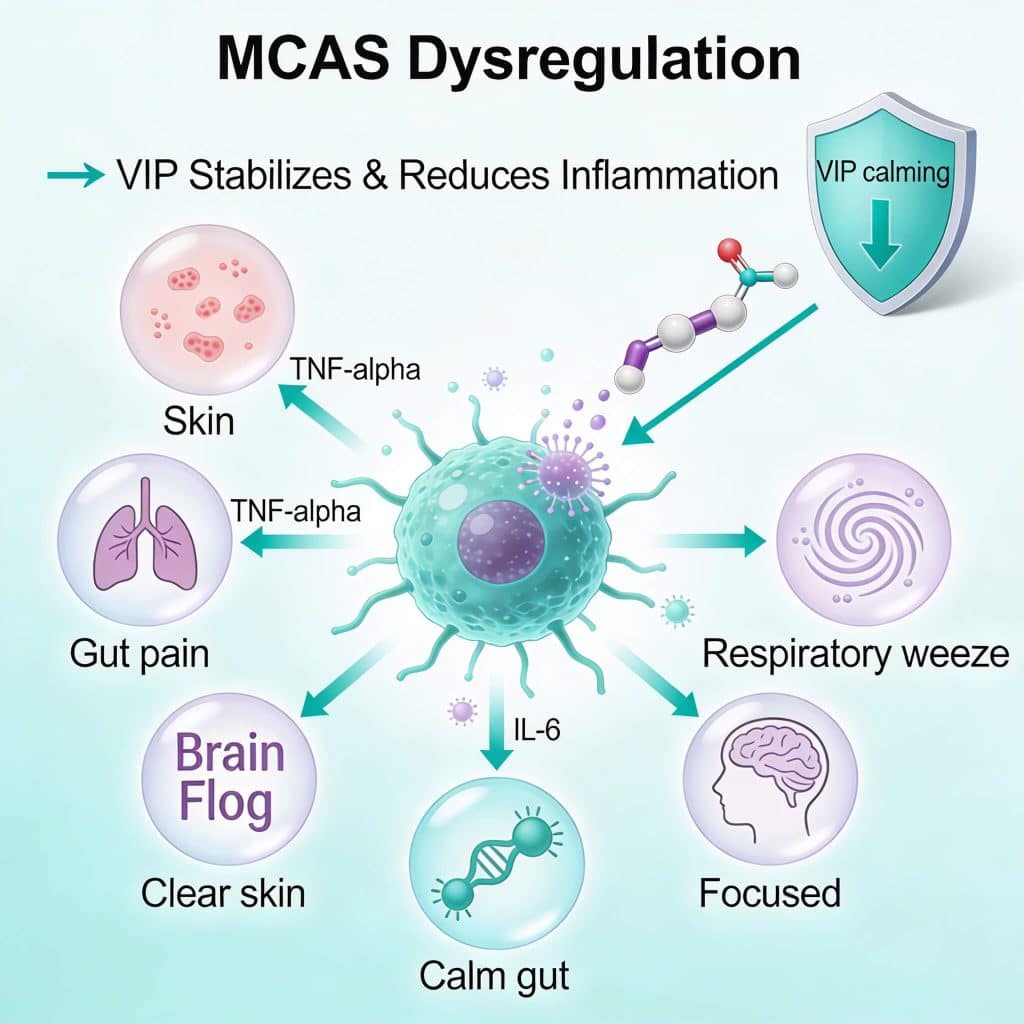
Mast Cell Activation Syndrome (MCAS) and other chronic inflammatory states often involve overlapping immune and neuroendocrine dysregulation. VIP’s immune‑modulating actions intersect with several pathways relevant to mast cell–driven inflammation:
- VIP can be produced by and act upon immune cells such as T cells, B cells, and mast cells, influencing cytokine production and histamine release patterns.
- It has been shown to decrease TNF‑alpha and IL‑6 production, which are key drivers in many chronic inflammatory and mast cell–related conditions.
Dr. Sobo has written extensively about natural mast cell support protocols, distinguishing MCAS from histamine intolerance, and integrative strategies for stabilizing mast cells; VIP may be considered in selected cases within that broader framework.
VIP and Pulmonary / Lung Function
In the respiratory tract, VIP is found in parasympathetic nerves and acts as a bronchodilator and pulmonary vasodilator. These actions may:
- Relax airway smooth muscle to support airflow and ease bronchospasm.
- Exert anti‑inflammatory effects in the pulmonary tissue, potentially aiding conditions with inflammatory airway involvement.
VIP has been investigated in pulmonary hypertension and other serious lung disorders, and it has obtained orphan‑drug designation in VIP‑related formulations for pulmonary hypertension, though products remain investigational.
In integrative practice, VIP is sometimes delivered via inhalational or intranasal routes to target the sinuses and lungs more directly, when clinically appropriate.
Routes of VIP Administration
Because native VIP is rapidly broken down in the bloodstream, delivery method and frequency are important for any therapeutic use.
Commonly used clinical routes include:
- Intranasal VIP
- Provides direct access to nasal mucosa, sinuses, and potentially central nervous system pathways via olfactory regions.
- Widely used in CIRS protocols and environmental medicine practices, often compounded as a nasal spray by specialized pharmacies.
- Inhaled / nebulized VIP
- Targets the respiratory tract and lungs, where VIP can support bronchodilation and local anti‑inflammatory effects.
- May be used in select patients with pulmonary manifestations, under close clinical supervision.
Specific dosing schedules, frequency (e.g., one to several times daily), and duration are always individualized based on clinical status, response, and tolerability.
Safety, FDA Status, and Important Disclaimers
Regulatory and safety considerations are central to how VIP is used at Dr. Sobo’s practice:
- FDA approval status
- Vasoactive Intestinal Peptide itself does not currently hold full FDA approval for any general therapeutic indication and is considered investigational.
- Certain VIP‑based fusion proteins or formulations have received orphan‑drug designation in rare diseases such as pulmonary hypertension, but these are not standard outpatient therapies.
- Compounded therapy
- In integrative and functional medicine, intranasal or inhaled VIP is typically prepared by compounding pharmacies, based on a prescriber’s order, for individualized off‑label use.
- Potential side effects
- Published studies and clinical reports describe VIP as generally well tolerated when used intranasally in carefully selected patients, with relatively few serious adverse events reported in open‑label cohorts.
- Possible reactions may include nasal irritation, flushing, headache, changes in blood pressure, or transient symptom flares related to immune shifts; all require monitoring and discussion with the treating physician.
Because VIP can influence multiple organ systems, it should be used only under the guidance of an experienced clinician who can monitor symptoms, vitals, and relevant laboratory markers, and who can integrate VIP into a larger diagnostic and treatment strategy.
VIP with Dr. Sobo in Stamford, CT
Dr. Henry Sobo is a board‑certified physician in Stamford, CT, with a focus on holistic and integrative therapies, including peptide treatments, for complex, chronic conditions. His approach to VIP therapy typically includes:
- Comprehensive history and evaluation of symptoms, triggers (such as mold exposure), and previous treatments.
- Review of available laboratory and imaging data relevant to inflammation, immune function, and organ systems involved.
- Determining whether VIP is appropriate and, if so, selecting the route (usually intranasal, occasionally inhalational) and cautious starting dose.
- Ongoing monitoring for clinical response and tolerability, and coordination with other supportive therapies such as detoxification, gut repair, mast cell stabilization, and nutritional or lifestyle interventions.
Patients from Stamford and surrounding Connecticut communities seeking evaluations for VIP peptide therapy, especially in the context of mold‑related illness, chronic inflammation, or complex neuro‑immune symptoms, can contact Dr. Sobo’s office to schedule a consultation and discuss whether this advanced peptide approach may fit into their personalized care plan.
FAQs
What Conditions Does VIP Peptide Treat at Dr. Sobo's Practice?
VIP peptide supports chronic inflammation, autoimmune issues, GI disorders (IBS, IBD), pulmonary problems (asthma, COPD), migraines, MCAS, depression/anxiety, fatigue, brain fog, sleep disruption, and autonomic dysfunction. Its anti-inflammatory actions (reducing TNF-alpha/IL-6), bronchodilation, and circadian modulation address root causes in neuro-immune disorders. Johns Hopkins research highlights its arthritis prevention via immune shifts.
Dr. Sobo in Stamford, CT uses VIP for mold/CIRS, MCAS, and overlapping symptoms like neuroinflammation or pulmonary fibrosis. It’s not a standalone fix but excels in personalized plans with lab-guided dosing.
How Is VIP Peptide Administered and What's the Dosage?
VIP is primarily given intranasally (nasal spray) or inhaled via nebulizer 1-4 times daily, compounded by pharmacies for targeted lung/sinus delivery, bypassing rapid GI breakdown. Intranasal hits sinuses, brain pathways, and systemic effects; nebulized aids asthma/COPD. Dr. Sobo starts low (e.g., 50mcg/spray) based on tolerance, titrating per response. Frequency depends on condition—daily for CIRS maintenance. Always under supervision; combine with his MCAS protocols.
Is VIP Peptide FDA Approved, and Is It Safe?
VIP peptide is not FDA-approved for standard use but has orphan drug status for pulmonary hypertension; Dr. Sobo uses it off-label via compounding pharmacies with strong safety data in studies. Well-tolerated intranasally, side effects are rare (nasal irritation, flushing, BP changes) and monitored closely. CIRS trials report high compliance with symptom resolution.
Not for everyone—requires full eval at Dr. Sobo’s Stamford practice to avoid risks in active infections or uncontrolled exposures.
Can VIP Help Asthma, COPD, or Lung Issues from Inflammation?
Yes, VIP promotes bronchodilation, relaxes airway muscle, and reduces pulmonary inflammation (TNF-alpha/IL-6), benefiting asthma, COPD, fibrosis, and sarcoidosis-related issues. Inhaled delivery maximizes lung targeting. Dr. Sobo integrates it for mold-driven respiratory symptoms post-detox.
Does VIP Peptide Improve Brain Fog, Fatigue, or Sleep in Chronic Illness?
VIP modulates brain circadian rhythms, reduces neuroinflammation, and balances neuroimmune responses, helping brain fog, fatigue, unrefreshing sleep, anxiety, and autonomic dysfunction in CIRS/MCAS. Patients report clearer thinking and energy.
VIP for MCAS or IBS: How Does Dr. Sobo Use It?
VIP stabilizes mast cells, lowers GI inflammation, and supports barrier integrity for MCAS, IBS, and IBD; Dr. Sobo combines with IV quercetin or his protocols.
How to Get Started with VIP Peptide Therapy with Dr. Sobo?
Schedule a consultation at Dr. Sobo’s Stamford, CT office: discuss symptoms, labs, mold history; if suitable, get custom-compounded VIP with follow-up monitoring.
Ideal for locals seeking holistic CIRS/MCAS care.