
By Dr. Henry Sobo, MD – Medical Weight Loss, Functional & Hormone Therapy, Connecticut
Weight Loss for Men Over 40: The Testosterone–Metabolism Connection
Men over 40 often notice stubborn belly fat, declining energy, and shrinking muscle despite steady workouts and cleaner eating. The root cause frequently ties back to declining testosterone levels, which disrupt metabolism, insulin sensitivity, and body composition in ways that make weight loss far more challenging. In my Stamford practice, addressing this testosterone-metabolism connection through functional medicine restores hormonal balance and sustainable fat loss for men in Connecticut.
Why Men Over 40 Gain Weight
Testosterone levels drop 1–2% annually after age 40, affecting over one-third of men over 45 with suboptimal levels. This leads to fatigue, mood dips, visceral fat buildup, and muscle loss, slowing basal metabolic rate.
Insulin resistance compounds the issue, impairing glucose uptake in muscles and favoring fat storage. The result: a metabolic slowdown where even moderate calorie cuts fail without hormonal intervention.
Testosterone, Muscle, and Metabolism
Testosterone drives protein synthesis, muscle maintenance, and energy expenditure. Low levels reduce lean mass, dropping daily calorie burn by hundreds.
Obesity and low T form a cycle: fat converts testosterone to estrogen, worsening deficiency. Long-term therapy in deficient men yields sustained weight loss and waist reduction.
The Testosterone–Insulin–Fat Axis
Low T impairs mitochondrial function and fat oxidation, fueling insulin resistance. Restoring physiologic levels improves insulin sensitivity and body composition.
Evidence on Testosterone Therapy
Studies show testosterone therapy in hypogonadal obese men reduces BMI, waist size, and fat mass while preserving muscle—effects sustained over years. When paired with lifestyle changes, it enhances outcomes beyond diet alone.
| Metric | Untreated Low T Men | With Testosterone Therapy (1–8 Years) | Source |
|---|---|---|---|
| Weight Loss | +2–5 kg gain | -15–20% body weight | PubMed Central |
| Waist Circumference | +3–5 cm | -10–15 cm | Nature.com |
| Lean Mass Change | -5–10% | +5–10% | Oxford Academic |
| Insulin Sensitivity | Declines | Improves (HOMA-IR ↓20–30%) | Oxford Academic |
Ready to Start a Plan That Works?
If you have questions about Testosterone Therapy and reside in Connecticut, Greenwich, or Norwalk area, contact us today. We focus on combining safe, effective medication with a realistic lifestyle plan.
For broader options, see our Medical Weight Loss Services.
Functional Medicine in Connecticut
We start with full panels: total/free T, SHBG, estradiol, insulin, lipids. Tailored plans include nutrition, peptides, and supervised TRT for eligible men.
10+ Step Checklist for Male Hormone & Metabolic Restoration
Schedule comprehensive bloodwork (T, free T, insulin, lipids).
Track waist circumference and body fat weekly.
Prioritize 7–9 hours sleep nightly for T production.
Strength train 3–4x/week (focus compounds: squats, deadlifts).
Eat 1.6g protein/kg bodyweight daily.
Limit refined carbs; aim <100g/day for insulin control.
Intermittent fast 14–16 hours (if tolerated).
Supplement zinc (30mg), vitamin D (5,000 IU), magnesium (400mg).
Manage stress: 10min meditation or walks daily.
Re-test hormones at 6–12 weeks; adjust protocol.
Monitor PSA/hematocrit quarterly on TRT.
Add peptides if plateaued (e.g., for GH support).
Local Impact: Stamford & Fairfield County
Men in Stamford, Norwalk, Darien, and Greenwich face high stress from commutes and desk jobs, accelerating T decline. Our CT patients see 10–20lbs fat loss in 6 months via targeted plans.
| Suburb/Area | Common Challenges | Tailored Fixes |
|---|---|---|
| Stamford | Corporate stress, poor sleep | Evening consults, sleep protocols |
| Norwalk | Shift work, irregular meals | Flexible testing, meal timing |
| Darien/Greenwich | High cortisol from finance | Adrenal support, peptides |
Frequently Asked Questions
What causes low testosterone in men over 40—and how to reverse it?
Annual 1–2% drop from aging, obesity (adipose converts T to estrogen), stress/cortisol spikes, sleep <7hrs, insulin resistance. Stamford execs see it from commutes. Reverse: test free/total T + SHBG; lose 10% weight (raises T 50–100ng/dL); zinc 30mg/D 5kIU; lift heavy. If <300ng/dL + symptoms, consider TRT. 70% improve naturally first.“GLP‑3” is an informal nickname used in media and online forums for retatrutide, Eli Lilly’s investigational triple‑agonist weight‑loss drug. It targets GLP‑1, GIP, and glucagon receptors simultaneously—hence the “third generation” label after single (Ozempic) and dual (Mounjaro) agonists. This term has no official medical or regulatory meaning and often appears in gray‑market peptide discussions.
How does low T sabotage weight loss for men?
Cuts muscle 5–10% (drops RMR 200–400 cals/day), shifts to glucose over fat burn, worsens insulin (visceral fat up 3–5cm/yr). Untreated: +2–5kg gain. Therapy breaks cycle: lipid oxidation up, fat mass down 15%. Pair with protein 1.6g/kg.
Does TRT cause significant weight loss in men over 40?
Yes—sustained 15–20% BW reduction, -10–15cm waist, +5–10% lean mass (1–8yrs studies). Obese hypogonadal men: BMI drops, insulin sensitivity +20–30%. Monitor quarterly; excels with diet/lift vs. alone.
What labs diagnose T-metabolism issues in CT?
Total/free T, SHBG, estradiol, fasting insulin/HOMA-IR, HbA1c, lipids, CRP, thyroid. CGM/DUTCH for dynamics. Morning fasted draw; our Stamford lab processes fast. Guides TRT vs. lifestyle/peptides.Phase 2 trials reported 24.2% average body‑weight loss at highest doses over 48 weeks (NEJM). Recent phase 3 TRIUMPH‑4 data (Dec 2025) showed 28.7% loss over 68 weeks, exceeding semaglutide (15–17.5%) and tirzepatide (22.5%). Benefits also include liver fat reduction and better cardiometabolic markers, though long‑term data is pending.
TRT safety for 40+ men: risks vs. benefits?
Natural T boosters before TRT?
TRT timeline for fat loss/muscle gain?
TRT vs. GLP-1s (e.g., semaglutide) for men?
Untreated low T long-term risks?
Grossmann M. Testosterone and weight loss: the evidence. Curr Opin Endocrinol Diabetes Obes. 2014. https://pmc.ncbi.nlm.nih.gov/articles/PMC4154787/
Traish AM et al. Effects of long-term treatment with testosterone on weight and waist circumference. Int J Obes (Lond). 2015. https://www.nature.com/articles/ijo2015139
Kelly DM, Jones TH. Testosterone and metabolic syndrome. PMC. 2015. https://pmc.ncbi.nlm.nih.gov/articles/PMC4650473/
Dr. Henry Sobo Testimonials. drsobo.com. https://drsobo.com/testimonials/
Healthgrades Patient Reviews – Dr. Henry Sobo. https://www.healthgrades.com/physician/dr-henry-sobo-28pv4
Bhasin S et al. Testosterone therapy in hypogonadal men results in sustained…. J Clin Endocrinol Metab. 2013. https://pmc.ncbi.nlm.nih.gov/articles/PMC3799011/
HSS.edu. How Aging Affects Testosterone and Muscle Mass in Men. https://www.hss.edu/health-library/move-better/muscle-mass-testosterone
Mayo Clinic. Male menopause: Myth or reality?. https://www.mayoclinic.org/healthy-lifestyle/mens-health/in-depth/male-menopause/art-20048056
Read more our posts...
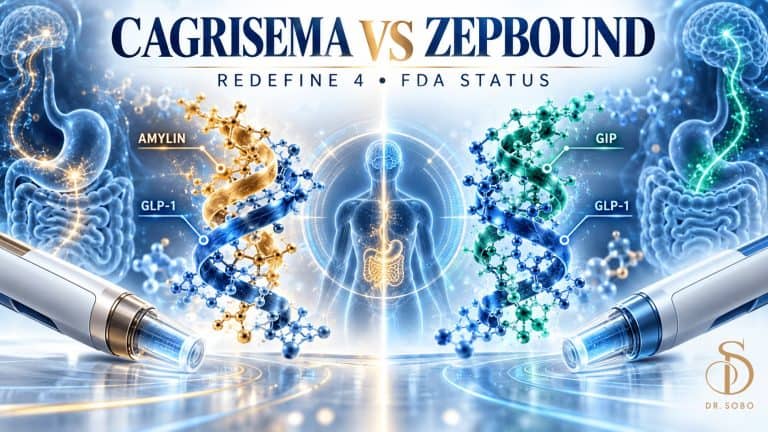
REDEFINE 4 Results: CagriSema vs. Tirzepatide, Weight Loss, and FDA Status
Phase 3 head-to-head results and an anticipated late-2026 FDA decision create strong news and comparison intent. This article was evidence-checked on September 6, 2026. Regulatory status, labels, and trial publications

GLP-1 Medications and Vision Changes: NAION, Retinopathy, and Warning Signs
Regulatory safety updates and new observational research are driving urgent patient questions about vision loss. This article was evidence-checked on September 6, 2026. Regulatory status, labels, and trial publications can
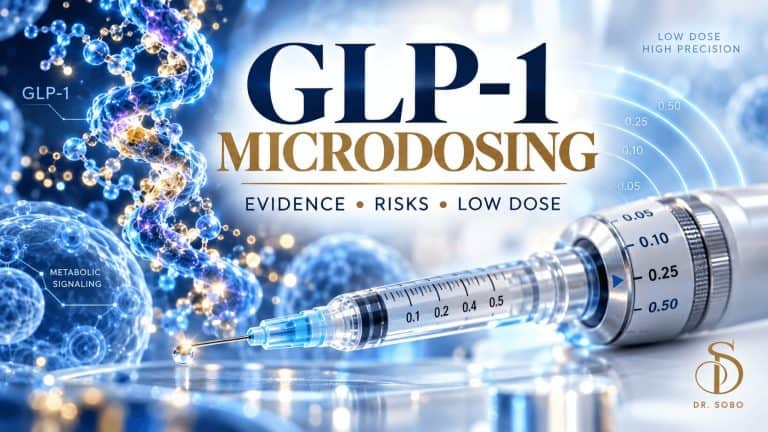
GLP-1 Microdosing: Evidence, Risks, and What “Low Dose” Really Means
Evidence review date: September 6, 2026. GLP-1 microdosing has attracted substantial consumer and telehealth interest, but direct clinical-trial evidence remains limited. Medication approvals, prescribing information, safety communications, and clinical evidence