
Vitamin C for the Immune System and Infectious Diseases: What Patients in Stamford, CT Should Know
Vitamin C has been associated with immune health for generations, but the most useful discussion is more nuanced than the old idea of simply taking extra vitamin C whenever you feel a cold coming on. Vitamin C is an essential nutrient involved in immune defense, antioxidant protection, collagen formation, wound healing, and iron absorption. It supports several immune-cell functions, helps protect tissues from oxidative stress, and plays a role in how the body responds to infection.
That does not mean vitamin C is a cure-all for infectious disease. It also does not mean every person needs high-dose supplementation. The most accurate position is that vitamin C supports normal immune function, and in some settings it may play a supportive role in resilience and recovery. For patients exploring IV therapy or more targeted immune boost IV therapy in Connecticut, vitamin C remains one of the most relevant nutrients in the conversation.
For adults in Stamford and surrounding Connecticut communities, interest in vitamin C often rises during colder months, periods of travel, high-stress seasons, and times when recovery feels slower than usual. That makes this topic especially relevant for patients looking into IV drip therapy in Stamford as part of a larger wellness and recovery strategy.
Why Vitamin C Matters for Immune Function
Vitamin C is essential, which means the body cannot make it on its own and must get it from food or supplementation. It is concentrated in immune cells, where it supports important defensive functions. Vitamin C helps maintain epithelial barrier integrity, contributes to antioxidant protection, supports white blood cell activity, and plays a role in tissue repair.
This matters because the immune system is not a single switch. It is a coordinated network involving physical barriers, immune signaling, inflammation control, cellular defense, and healing after stress or infection. When vitamin C levels are too low, immune resilience can suffer. Severe deficiency causes scurvy, but even before deficiency reaches that level, inadequate vitamin C may reduce the body’s ability to respond and recover efficiently.
That is why vitamin C remains central to discussions around immune support and infectious disease. Not because it is a miracle treatment, but because it is biologically important to how the body defends and repairs itself.
Vitamin C and Infectious Diseases: What Patients Should Understand
Vitamin C is often discussed as though it answers one simple question, but there are several different issues involved:
- Does vitamin C support normal immune function?
- Can vitamin C help reduce the severity of some illnesses?
- Can vitamin C shorten recovery time?
- Is oral vitamin C the same as IV vitamin C?
- Do some people benefit more than others?
These are not all the same question. Vitamin C clearly supports normal immune function. The evidence becomes more mixed when people move from that basic fact into broader claims about preventing or treating infections in the general population.
A realistic way to explain this is simple: vitamin C is important to the immune system, and some people may benefit from vitamin C support during periods of illness or recovery, but it should not be presented as a guaranteed prevention or cure strategy.
That more balanced explanation is especially important in medical content. It improves trust, aligns better with patient education, and creates stronger long-term search value than exaggerated immune-booster claims.
Why Vitamin C Is Common in Immune-Support IV Therapy
Vitamin C is frequently included in immune-support IV formulas because it plays a meaningful role in immune defense, antioxidant activity, and tissue repair. When used intravenously, vitamin C can be delivered directly into circulation, which is one reason it remains popular in both integrative and wellness-based recovery protocols.
Patients looking into IV vitamin C: the forgotten therapy or high-dose intravenous vitamin C treatment are often not simply asking whether vitamin C is healthy. They are asking whether a more direct treatment approach may help when they feel physically depleted, stressed, under-recovered, or run down.
In IV therapy, vitamin C is often paired with other ingredients such as zinc, glutathione, electrolytes, or fluids depending on the treatment goal. That makes sense because people seeking immune support are often also dealing with dehydration, poor sleep, travel fatigue, inflammation, or generalized depletion.
Oral Vitamin C vs. IV Vitamin C
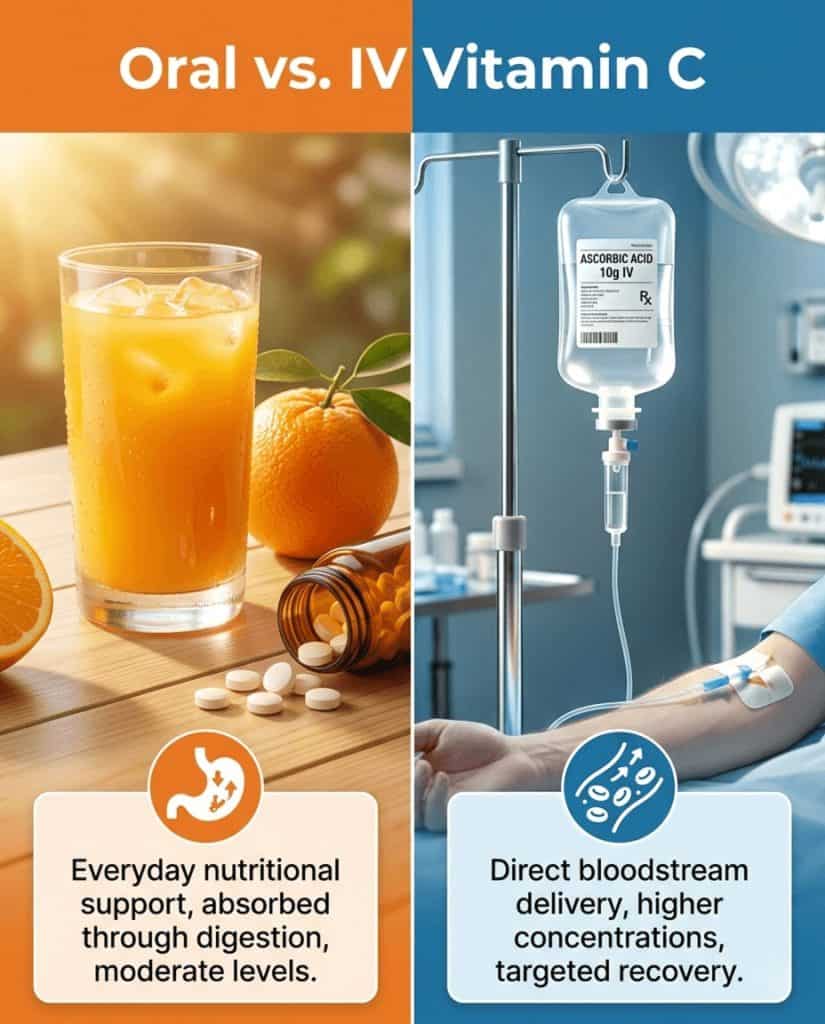
Patients often ask whether intravenous vitamin C is just a stronger version of oral vitamin C. The answer is that the two are related but not identical.
Oral vitamin C is appropriate for everyday nutritional support, and for many people it is enough when combined with a nutrient-dense diet. Fruits and vegetables remain the foundation of healthy vitamin C intake.
IV vitamin C is different because it bypasses the digestive tract and is delivered directly into the bloodstream. That allows for a more targeted treatment approach and can achieve concentrations that oral intake alone does not provide. For patients interested in more advanced vitamin C-focused protocols, pages such as Primal Panacea: more evidence for high-dose vitamin C and IV vitamin C used by medical pioneer Fred R. Klenner, MD help build out this topic cluster more effectively.
A practical way to explain the difference is this:
- Oral vitamin Cis part of routine nutritional support
- IV vitamin Cis a more direct delivery option used when a clinician believes intravenous treatment better fits the patient’s goals and presentation
Why Patients Often Seek Vitamin C IV Therapy During Illness Recovery
When patients look into vitamin C IV therapy, they are usually not asking an academic question about biochemistry. They are asking whether they can recover better when they feel worn down, stressed, inflamed, or slow to bounce back.
That is why vitamin C IV therapy often draws interest during:
- Cold and flu season
- Recovery after viral illness
- Periods of heavy stress
- Travel-heavy schedules
- Weeks of poor sleep
- Lingering fatigue after being sick
- Times when the body feels depleted and under-supported
The appeal is understandable. Vitamin C plays a role in immune support, oxidative stress control, and tissue repair. Fluids can help address dehydration. Other supportive ingredients may be added depending on the formula. That is also why broader immune boost IV therapy in Connecticut often combines vitamin C with zinc, glutathione, and hydration rather than relying on vitamin C alone.
A More Realistic Look at Infectious-Disease Support
High-quality content on infectious disease needs to stay grounded. No single nutrient functions as a complete infection strategy by itself. Vitamin C can support immune health, but it should not be presented as a replacement for diagnosis, evidence-based treatment, hydration, rest, or monitoring of more serious symptoms.
Vitamin C may support the body during periods of infectious stress and recovery. It may help some patients feel better supported during illness and recovery phases. It may also be part of a broader immune-support plan. But it is most useful when discussed as supportive care rather than an all-in-one solution.
Who May Be a Good Candidate for Vitamin C Immune-Support IV Therapy?
A personalized vitamin C IV plan may make sense for adults who:
- Feel run down during cold and flu season
- Travel frequently and want support for resilience and recovery
- Recover slowly after seasonal illness
- Feel physically depleted during stressful periods
- Struggle with hydration during illness recovery
- Want a physician-guided immune-support option rather than guessing with supplements
- Are already exploring IV vitamin therapy benefitsas part of a broader wellness plan
These are common real-world situations where patients often seek supportive vitamin C and immune-focused therapy.
Who Is Not a Good Candidate for a Simple “Just Get Vitamin C” Approach?
Not every patient with fatigue, fever, or lingering symptoms should start with a wellness-based immune IV. Some people need a fuller medical evaluation first because symptoms may point to something more serious, including:
- Pneumonia or another more significant infection
- Severe dehydration
- Shortness of breath
- Chest discomfort
- Persistent high fever
- Severe weakness
- Unexplained weight loss
- Recurrent infections
- Medication interactions or chronic illness that changes treatment needs
Formula Comparison: Vitamin C IV vs. Broader Immune-Recovery Drips
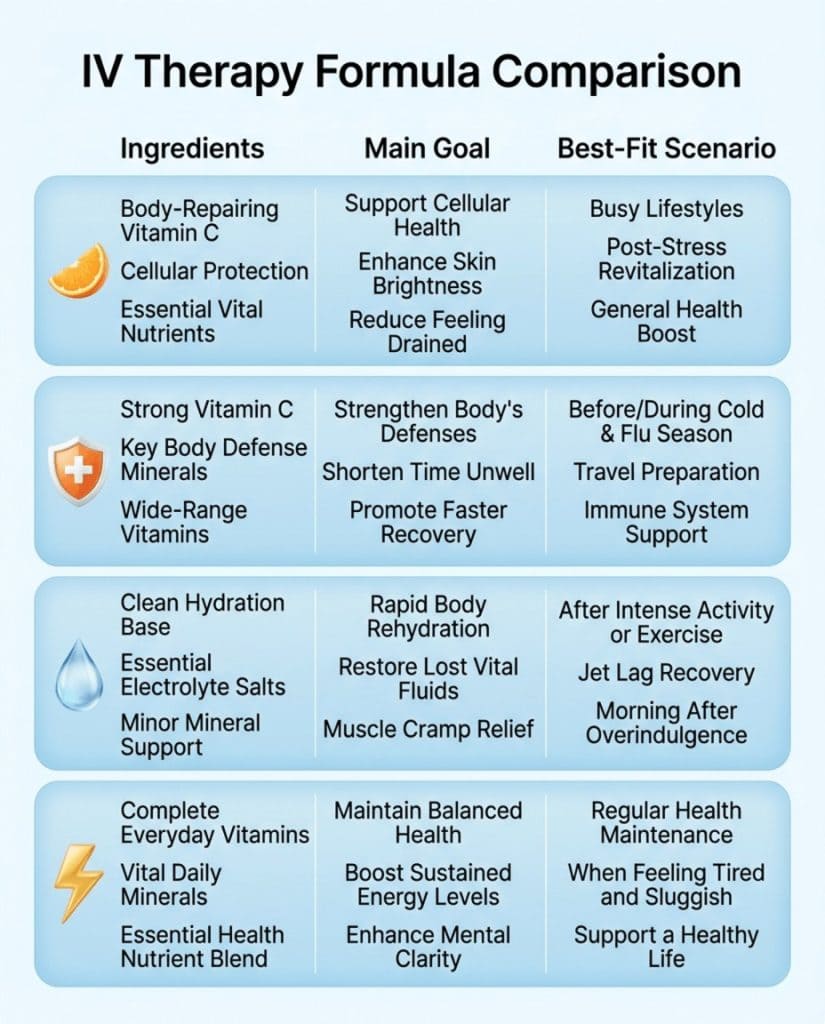
Patients often assume vitamin C IV and immune IV mean exactly the same thing, but in practice these treatments overlap without being identical.
Formula Type | Common Ingredients | Main Goal | Best-Fit Scenario |
Vitamin C IV | Vitamin C with fluids | Direct vitamin C delivery and recovery support | Patients specifically focused on vitamin C-centered immune support |
Immune Recovery IV | Vitamin C, zinc, glutathione, fluids | Broader immune and antioxidant support | Seasonal stress, illness recovery, feeling physically run down |
Hydration + Recovery IV | Fluids, electrolytes, selected vitamins | Rehydration and physical recovery | Travel depletion, dehydration, post-illness fatigue |
General Wellness IV | B vitamins, magnesium, vitamin C, fluids | Energy, resilience, and overall support | Adults who feel depleted but are not focused solely on immune support |
The best formula depends on the reason for treatment, not just the popularity of the ingredient.
Vitamin C, Oxidative Stress, and Recovery
One reason vitamin C continues to matter is its antioxidant role. Illness, inflammation, stress, and poor recovery can increase oxidative stress in the body. Vitamin C helps neutralize reactive oxygen species and supports processes related to tissue repair and immune defense.
For patients, that matters because illness recovery is not just about fighting pathogens. It is also about how the body handles inflammation, oxidative stress, and the repair process afterward. This is one reason vitamin C remains such a consistent part of both general immune-support content and more advanced discussions like Linus Pauling: brilliant scientist and medical pioneer talks vitamin C.
Stamford, CT: Why This Topic Has Strong Local Relevance
This is not just a broad nutrition topic. It has clear local intent in Stamford and surrounding Connecticut communities.
Many adults in Stamford deal with:
- Demanding work schedules
- Frequent commuting
- Business travel
- Poor sleep during stressful periods
- Family responsibilities
- Seasonal illness exposure
- Limited time for proactive recovery
That creates strong local interest in therapies that support resilience, hydration, and immune recovery. Someone searching in Stamford is often not looking for a textbook answer about vitamin C. They are looking for practical guidance on questions like:
- Can vitamin C IV therapy help when I feel run down?
- What is the difference between an immune IV and a vitamin C IV?
- What kind of IV makes sense during cold and flu season?
- Where can I find physician-guided immune boost IV therapy in Connecticut?
- How does vitamin C fit into IV drip therapy in Stamford?
A Deeper Stamford-Local Treatment Section
In Stamford, the issue is often not just vitamin C in isolation. It is accumulation. A demanding week at work blends into too little sleep, stressful commuting, travel, dehydration, cold-weather exposure, and poor recovery. By the time symptoms show up, many adults are not just wondering whether vitamin C is good for them. They are looking for a more structured plan to help them recover and feel more resilient.
That is where physician-guided vitamin C IV therapy becomes especially relevant. It offers a more direct support option for patients who want help during seasonal stress, travel-heavy periods, or slow recovery after illness. One patient may need hydration plus immune-support nutrients. Another may benefit from a broader formula that includes vitamin C, zinc, and glutathione. Someone else may simply want a more thoughtful plan than over-the-counter guesswork.
This local treatment context also strengthens the topical cluster around IV therapy in Connecticut, IV vitamin therapy benefits, and benefits of IV vitamin therapy for energy. Together, these pages build authority around hydration, recovery, immune support, and physician-guided wellness care.
Why Physician Guidance Matters With Vitamin C IV Therapy
Vitamin C has a familiar public image, which can make patients underestimate the importance of individualized treatment. But any IV therapy should be considered in context.
A physician-guided approach matters because treatment should consider:
- Symptom severity
- Hydration status
- Medical history
- Kidney stone history or kidney concerns
- Medications
- Treatment goals
- Whether broader evaluation is needed first
The goal is to help patients understand when vitamin C may fit into a reasonable recovery plan and when something more is needed.
Vitamin C Works Best as Part of a Bigger Immune-Support Strategy
A strong immune-support plan is never just one nutrient. Long-term resilience still depends on:
- Adequate sleep
- Hydration
- Nutrient-dense food
- Stress management
- Exercise and recovery balance
- Evidence-based medical care when needed
- Targeted support in the right setting
Vitamin C can be an important part of that larger plan. It supports immune function, antioxidant protection, and recovery. But it works best when it fits into a broader strategy rather than being treated like a stand-alone fix.
Patients who want a wider overview of infusion-based wellness support can also explore IV vitamin therapy benefits and benefits of IV vitamin therapy for energy to better understand how these treatments fit into the larger recovery conversation.
Final Thoughts
Vitamin C deserves its reputation as an important immune-support nutrient, but the strongest patient education keeps the message precise rather than exaggerated. Vitamin C supports normal immune function, contributes to antioxidant protection, and plays a role in recovery and tissue repair. In some settings, vitamin C IV therapy may be a useful supportive option for patients dealing with seasonal stress, travel, immune-related depletion, or slower-than-usual recovery after illness.
For patients in Stamford and nearby Connecticut communities, the most useful question is not whether vitamin C is trendy. It is whether vitamin C therapy fits the person, the symptoms, and the broader plan. When used thoughtfully and under medical guidance, vitamin C IV therapy can be a meaningful part of immune-support and recovery-focused care.
Add Your Heading Text Here
What does vitamin C actually do for the immune system?
Vitamin C supports several parts of immune function. It helps maintain barrier defenses, supports white blood cell activity, contributes to antioxidant protection, and plays a role in tissue repair. That is why vitamin C remains one of the most discussed nutrients in immune health. It is best understood as a foundational immune-support nutrient rather than a simple cold cure.
Does vitamin C prevent infections?
Not in a guaranteed or universal way. Vitamin C is important for normal immune function, and deficiency can weaken immunity, but routine extra supplementation has not been shown to completely prevent infections in the general population. A more accurate explanation is that vitamin C supports immune resilience and may help some people recover more effectively, but it should not be treated as a guaranteed prevention strategy.
Can vitamin C help you recover faster when you’re sick?
It may help somewhat in certain situations, but expectations should stay realistic. Some people may experience modest support during recovery, especially when vitamin C is combined with hydration, rest, nutrition, and appropriate medical care. The better way to describe vitamin C is as a supportive recovery nutrient rather than a cure.
What is the difference between oral vitamin C and IV vitamin C?
Oral vitamin C is appropriate for routine nutritional intake and everyday supplementation. IV vitamin C bypasses digestion and is delivered directly into the bloodstream, making it a more targeted treatment option. The right route depends on the patient, the goal, and whether direct intravenous delivery makes sense in the overall treatment plan.
What is usually in an immune-support IV besides vitamin C?
Many immune-support IV formulas combine vitamin C with zinc, glutathione, fluids, and sometimes electrolytes or B vitamins. This is because patients who want immune support are often also dealing with dehydration, stress, poor recovery, or generalized depletion. A broader formula can address more than one need at the same time.
Who is a good candidate for vitamin C IV therapy?
A good candidate may be someone who feels run down during seasonal illness periods, travels often, recovers slowly after infection, struggles with hydration during illness recovery, or wants a physician-guided immune-support option. The best candidates are people whose symptoms and goals fit a supportive resilience and recovery plan.
Who is not a good candidate for a simple wellness-first approach?
Someone with chest pain, breathing difficulty, persistent high fever, severe weakness, recurrent infections, or unexplained weight loss may need more direct medical evaluation before starting wellness-based IV therapy. The same applies to patients whose symptoms may reflect thyroid issues, anemia, medication effects, or another underlying condition.
Is vitamin C IV therapy safe?
Safety depends on the dose, the patient, the setting, and the reason for treatment. Even though vitamin C is familiar, IV therapy should still be individualized and medically supervised. Patients with certain kidney concerns, stone history, medication issues, or more serious symptoms may need additional evaluation before treatment.
Is vitamin C enough by itself for immune support?
Usually not. Vitamin C is important, but immune resilience depends on more than one nutrient. Sleep, hydration, diet quality, stress control, exercise recovery, and proper medical care all matter. Vitamin C can be valuable, but it works best as part of a broader strategy.
Why does this topic matter so much in Stamford and Connecticut?
Because local lifestyle patterns create the exact kind of demand that makes immune-support IV therapy appealing. Busy professionals, commuters, travelers, parents, and active adults often deal with stress, poor sleep, cold-weather exposure, and slow recovery. That makes vitamin C IV therapy a practical local wellness topic rather than just a general nutrition subject.
Sources
Vitamin C — Health Professional Fact Sheet, NIH Office of Dietary Supplements
Dietary Supplements for Immune Function and Infectious Diseases — NIH Office of Dietary Supplements
6 Benefits of Vitamin C — Cleveland Clinic
Can Vitamin C Help You Fight a Cold? — Cleveland Clinic
Mayo Clinic Q and A: Does Vitamin C Help Us When We’re Sick?
Aging and the Immune System: Strengthening Your Defenses — Mayo Clinic Press
Colds, Flu, and Complementary Health Approaches — NCCIH
Safe Use of Complementary Health Products and Practices — NCCIH