
Feeling tired all the time is easy to dismiss. Many adults assume low energy is just part of a busy life, poor sleep, stress, overtraining, frequent travel, long workdays, or getting older. In reality, fatigue and poor recovery often build gradually from several overlapping issues at once. Dehydration, inconsistent eating, nutrient depletion, stress overload, intense exercise, travel, illness, and poor sleep can all affect how the body feels and performs. That is one reason more people are looking into IV therapy as part of a broader wellness strategy.
IV drips for energy and general health are designed to deliver fluids and selected nutrients directly into the bloodstream. In the right setting, that may help support hydration, recovery, and short-term nutrient repletion more directly than relying only on oral intake. Cleveland Clinic notes that IV vitamin therapy delivers nutrients quickly and efficiently, but also emphasizes that research is limited for many broad wellness claims and that benefits depend on the person and the use case.
That balanced perspective is the right one for this topic. IV therapy is not a substitute for sleep, food quality, exercise, medical care, or identifying an underlying health issue. It can, however, be a useful supportive option for the right patient when treatment is individualized and medically guided. The goal is not simply to chase a trend. The goal is to help the body rehydrate, recover, and function better when there is a clear reason to do so. Your attached material also supports this treatment framing by focusing on common IV formulas for fatigue, recovery, hydration, immune support, and general wellness.
Why So Many Adults Feel Run Down
Fatigue rarely comes from one cause alone. A person may be sleeping poorly, working long hours, skipping meals, traveling often, pushing hard in the gym, not hydrating enough, and expecting the body to keep performing at full capacity. Others are recovering from illness, dealing with brain fog, struggling with a demanding season at work, or noticing that they no longer bounce back the way they used to.
That is why low energy can feel vague but still be disruptive. The symptoms are real, yet the causes may be layered. Vitamin B12 helps keep blood and nerve cells healthy and helps prevent megaloblastic anemia, a condition that can make people tired and weak. Magnesium is required for energy production and also supports muscle and nerve function. Vitamin C is required for collagen synthesis, supports wound healing, and acts as an important antioxidant. Those functions help explain why these nutrients appear so often in wellness-oriented IV formulas.
For patients who feel like they are constantly running on empty, a personalized IV therapy plan may be considered as one part of a more complete strategy.
How IV Therapy Supports Energy and General Health
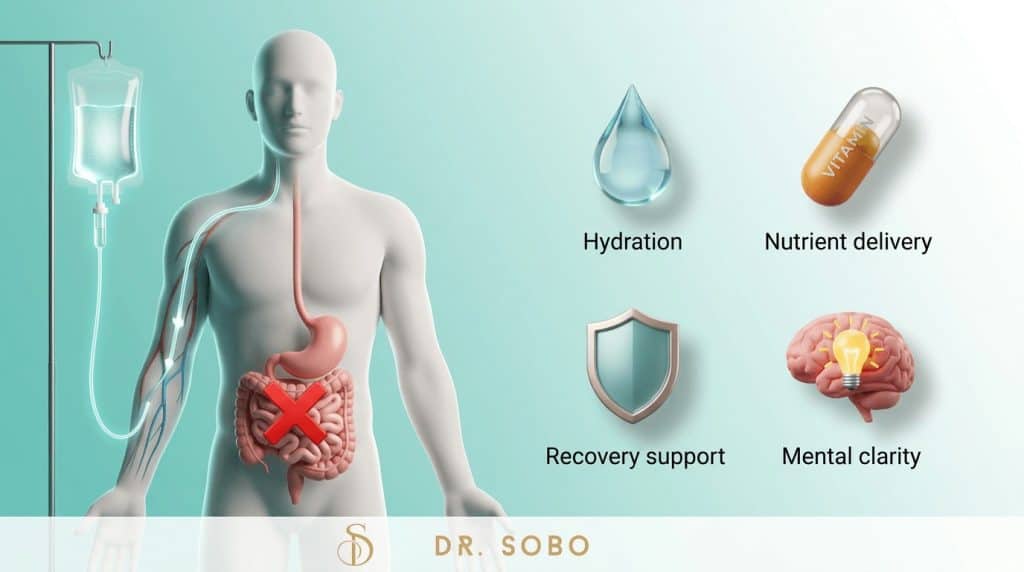
IV therapy works by infusing fluids and selected nutrients directly into a vein over a controlled period of time. Because the digestive system is bypassed, the ingredients enter circulation directly. That delivery route is one reason IV-based support is used in conventional care when direct hydration or intravenous nutrient delivery is needed. Cleveland Clinic’s discussion of IV vitamin therapy also points out that the appeal comes from direct delivery, even though the evidence for broad lifestyle claims varies widely.
For general wellness, the main goals are usually practical:
- Improving hydration
- Supporting recovery after physical or mental stress
- Helping during periods of nutrient strain
- Supporting resilience during travel or seasonal stress
- Giving the body more direct support during demanding periods
That does not mean every person with low energy needs an IV. It means IV therapy may make sense when the symptoms, context, and treatment goals line up.
Why Hydration Alone Can Make a Significant Difference
One of the most overlooked reasons people feel awful is simple dehydration. Mild dehydration can contribute to headaches, dizziness, muscle cramps, fatigue, and poor concentration. Many adults do not think of themselves as dehydrated because they are still drinking some water, but frequent travel, exercise, hot weather, illness, alcohol, long meetings, busy commutes, and poor routines can all chip away at fluid balance.
This is why hydration-focused IVs remain popular. Instead of slowly trying to catch up with fluids over the rest of the day, a supervised hydration drip may provide more direct support. In some cases, that alone is a major reason patients report feeling better. They are not necessarily responding to a trendy formula. They are responding to improved fluid balance, better circulation support, and a more rapid correction of depletion.
Your source material repeatedly connects IV therapy with recovery from exercise, illness, seasonal stress, and general depletion, which aligns well with this hydration-first explanation.
Common IV Drips for Energy and General Health
Several IV formulas are commonly used for patients seeking support for low energy, hydration, and overall wellness. Each one is built around a somewhat different treatment goal.
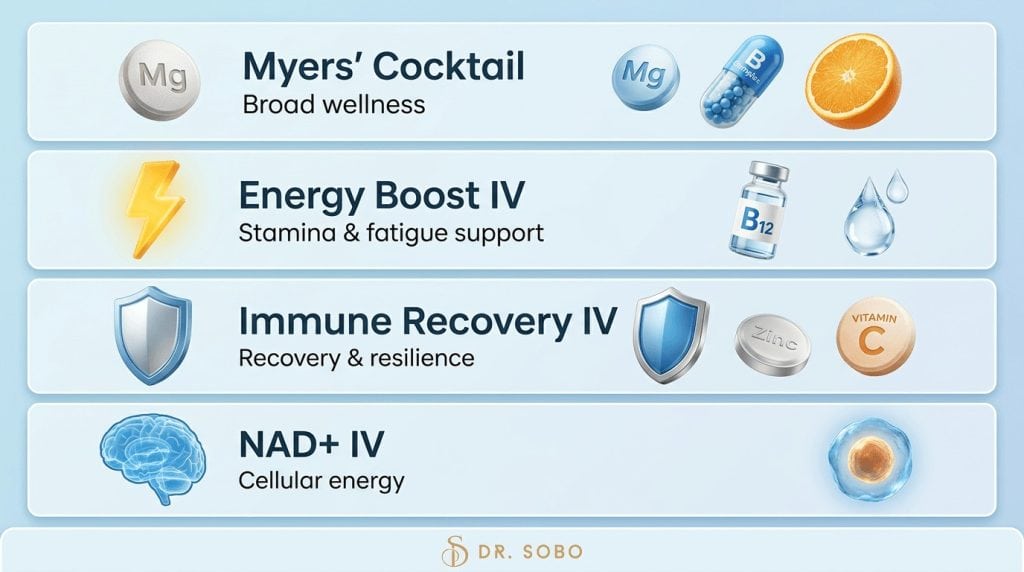
Myers’ Cocktail
Myers’ Cocktail is one of the best-known IV nutrient blends. It typically contains magnesium, B-complex vitamins, calcium, and vitamin C. Because these nutrients are associated with muscle function, nerve function, energy metabolism, and antioxidant activity, Myers’ Cocktail is often used as a broad wellness infusion for people who feel run down, stressed, tense, or physically depleted. Magnesium’s role in energy production and neuromuscular function helps explain why it is commonly included.
This option often appeals to patients who want general nutrient support rather than a narrow formula focused on one single issue. It is commonly viewed as a foundational drip for people who feel like their overall recovery and resilience need support.
Energy Boost IV
An energy-focused IV often includes B12, B-complex vitamins, fluids, electrolytes, and sometimes amino acids. These formulas are commonly selected for people dealing with mental fatigue, physical depletion, poor workout recovery, demanding work schedules, or a general sense of burnout. Vitamin B12 is especially relevant because inadequate B12 can contribute to tiredness and weakness.
This type of drip is best understood as targeted support for periods when the body feels depleted rather than a cure for every form of fatigue. Patients exploring energy-focused IV vitamin therapy are usually looking for help with stamina, recovery, and feeling more functional again.
Immune Recovery IV
Immune-support drips commonly contain vitamin C, zinc, glutathione, and fluids. Vitamin C supports immune function and acts as an antioxidant, which is why it remains central to many recovery-oriented wellness formulas. NIH’s supplement guidance also notes that evaluating immune function is complex and that no single supplement acts like a simple switch for immunity, which is why supportive language is more accurate than exaggerated promises.
For general health content, immune recovery fits naturally because many patients do not separate low energy, stress, slow recovery, and reduced resilience into isolated categories. When the body is under strain, these issues tend to overlap.
NAD+ IV Therapy
NAD+ IV therapy has gained attention in the wellness and longevity space because NAD is involved in cellular metabolism. Patients often seek it for brain fog, mental clarity, low stamina, and general energy support. The strongest publish-ready framing is to present NAD+ as an emerging wellness option rather than a proven anti-aging breakthrough. Cleveland Clinic’s recent discussion of IV vitamin therapy reflects the need for that kind of caution in wellness marketing generally.
Comparison Table: Which IV Formula Fits Which Goal?
Comparison Table: Which IV Formula Fits Which Goal?
IV Formula | Common Ingredients | Primary Goal | Best-Fit Use Case |
Myers’ Cocktail | Magnesium, B-complex, calcium, vitamin C | Broad wellness and recovery support | Feeling generally run down, stressed, or depleted |
Energy Boost IV | B12, B vitamins, electrolytes, fluids, amino acids | Stamina and fatigue support | Post-workout fatigue, demanding schedules, mental and physical burnout |
Immune Recovery IV | Vitamin C, zinc, glutathione, fluids | Recovery and resilience support | Seasonal stress, travel, feeling physically run down |
NAD+ IV | NAD+ with fluids | Cellular energy and clarity support | Brain fog, low stamina, wellness and longevity goals |
This kind of comparison helps users understand that the best formula depends on the reason for treatment rather than whichever drip sounds the most impressive.
Why People Often Feel Better After IV Therapy
When patients say an IV helped them feel better, they are usually describing one or more concrete effects.
Better Hydration
If dehydration has been contributing to fatigue, headaches, poor exercise recovery, or dizziness, improved fluid balance alone may make a noticeable difference.
Nutrient Support During Demanding Periods
Stress, poor eating, intense exercise, illness, and packed schedules can increase nutritional strain. IV therapy may help support selected patients during those periods by combining hydration with vitamins, minerals, and other supportive ingredients.
Improved Recovery
Many patients seek IV therapy not because they are acutely ill, but because they are not recovering well. They feel wiped out after workouts, travel, stressful weeks, or seasonal illness. In those settings, a drip that combines fluids and selected nutrients may help support the recovery process.
More Mental Clarity
Brain fog is one of the most common quality-of-life complaints among busy adults. When hydration, nutrient support, and recovery improve, many patients notice that they feel sharper and more functional.
Who May Be a Good Candidate for IV Drips?
A personalized IV therapy plan may be a reasonable fit for adults who:
- Feel depleted after demanding work weeks
- Need support after intense workouts or athletic training
- Struggle with recovery after travel
- Tend to feel run down during seasonal changes
- Want hydration support after illness or dehydration
- Are looking for physician-guided wellness support rather than generic drip menus
- Feel low on energy and want a proactive strategy that may include hydration and nutrient support
These are not promises of outcome. They are the kinds of real-world scenarios in which IV therapy is often considered.
Who May Need More Evaluation Before Considering an IV?
Not every tired person is a good fit for wellness IV therapy as a first step. Some people need further medical evaluation because fatigue can be associated with:
- Anemia
- Thyroid disease
- Chronic sleep deprivation or sleep apnea
- Medication effects
- Hormonal issues
- Depression or chronic stress disorders
- Persistent post-viral symptoms
- Unexplained weight loss
- Shortness of breath, chest symptoms, or palpitations
This is one of the reasons balanced content ranks better over time. It does not pretend every case of low energy should be solved with a drip. It recognizes that some patients need a broader workup, and that makes the wellness message more credible, not less.
Why Physician Guidance Matters
There is a meaningful difference between individualized oversight and impulse-purchase wellness marketing. IV therapy is a real intervention. The formula, dosing, hydration status, medical history, medications, treatment goals, and potential contraindications all matter. NCCIH advises that safety should be considered with any complementary health practice and that each approach should be evaluated individually.
A physician-guided approach allows for:
- Symptom review
- Health history screening
- Ingredient selection based on need
- More appropriate formula matching
- Better decisions about when IV therapy fits into a broader care plan
That type of treatment positioning is especially important in medical wellness content because it reflects judgment rather than hype.
Stamford, CT: Why This Topic Has Strong Local Search Intent
Adults in Stamford and nearby Connecticut communities often deal with the exact lifestyle patterns that drive interest in IV therapy: demanding work schedules, commuting, frequent travel, high stress, family obligations, fitness routines, and cold-weather seasonal illness exposure. That makes this topic naturally relevant at the local level.
Someone searching in Stamford is not usually looking for a generic encyclopedia article on IV therapy. They are often looking for practical answers to questions like:
- Can IV therapy help me recover after a draining week?
- What kind of IV is used for energy support?
- Does hydration therapy make sense after travel or a workout?
- What is the difference between an energy drip and a Myers’ Cocktail?
- Where can I find physician-guided IV drip therapy in Stamford?
That local relevance is already present in your source material through references to Stamford, winter fatigue, executive stress, workout recovery, and general wellness support.
Deeper Stamford-Local Treatment Section
For many adults in Stamford, low energy is not about one dramatic medical event. It is the result of accumulation. A demanding week at work blends into poor sleep, skipped meals, a couple of hard workouts, dehydration, travel, and then a sense that recovery just is not happening the way it used to.
That is where IV therapy becomes appealing. It offers a more direct support option for patients who feel physically and mentally drained and want something more structured than guessing with supplements or more caffeine. Someone recovering after frequent train commutes, long office days, airport travel, heavy exercise, or winter-season depletion may be looking for hydration, energy support, and general recovery in one plan.
This is also why the local intent behind related pages such as IV therapy in Connecticut, IV vitamin therapy benefits, and benefits of IV vitamin therapy for energy works well for internal linking. These topics are not isolated. They form a connected content cluster around hydration, recovery, energy, wellness, and physician-guided support.
IV Therapy Works Best as Part of a Bigger Wellness Strategy
The best long-term results usually come from combining supportive therapies with the basics:
- Consistent hydration
- Adequate protein and nutrient-dense meals
- Restorative sleep
- Stress management
- Movement and recovery balance
- Medical evaluation when symptoms persist
- Targeted support when appropriate
IV therapy can fit well into that framework. It is not a replacement for the fundamentals, but it may be helpful during periods of depletion, high stress, travel, poor recovery, or increased physical demand. Patients who want a broader overview can also explore IV vitamin therapy benefits and the Connecticut IV therapy guide for related site content.
Final Thoughts
IV drips for energy and general health continue to attract attention because they address a real problem: many adults feel depleted, overextended, under-recovered, and not fully functional. In the right context, personalized IV therapy may support hydration, nutrient delivery, recovery, and resilience. It is especially appealing for people who want more direct support during demanding periods rather than relying only on caffeine, guesswork, or generic supplements.
The most effective question is not whether IV therapy is trendy. It is whether a specific patient has a clear reason to benefit from it. When treatment is individualized, medically guided, and used as part of a broader wellness strategy, IV therapy can be a practical tool for helping people feel more like themselves again. Cleveland Clinic, NIH ODS, and NCCIH all support a balanced conclusion here: direct delivery may be useful in certain cases, but broad claims should stay measured and the right use depends on the person and the context.
Frequently Asked Questions
What are IV drips for energy and general health?
IV drips for energy and general health are intravenous infusions that deliver fluids and selected nutrients directly into the bloodstream to support hydration, recovery, nutrient repletion, and overall wellness. They are often used by adults who feel run down from stress, travel, exercise, seasonal strain, illness recovery, or demanding schedules. Depending on the formula, ingredients may include B vitamins, magnesium, vitamin C, zinc, amino acids, glutathione, or NAD+. The goal is usually to provide more direct support for hydration and recovery rather than relying only on oral intake.
Can IV therapy help with fatigue?
It can help some patients, but the answer depends on the reason for the fatigue. If low energy is linked to dehydration, poor recovery, physical strain, or increased nutrient demand, IV therapy may provide useful short-term support. If fatigue is being driven by thyroid disease, anemia, sleep apnea, medication effects, depression, or another medical issue, an IV alone will not solve the underlying problem. That is why persistent fatigue should be evaluated thoughtfully rather than treated as a one-size-fits-all wellness problem.
What is in a Myers’ Cocktail, and why is it so popular?
A Myers’ Cocktail usually contains magnesium, B-complex vitamins, calcium, and vitamin C. It remains popular because it is a broad wellness formula rather than a narrow single-symptom infusion. Magnesium supports muscle and nerve function and is required for energy production. B vitamins are involved in energy metabolism, and vitamin C supports antioxidant activity and collagen synthesis. Because of that combination, Myers’ Cocktail is often chosen by patients who feel run down, stressed, or in need of general recovery support.
What is an energy IV, and who usually chooses it?
An energy IV is a formula designed to support stamina, hydration, and recovery. These drips often include B12, other B vitamins, fluids, electrolytes, and sometimes amino acids. They are commonly chosen by people dealing with demanding schedules, workout-related fatigue, travel depletion, or a general sense of burnout. The key point is that energy drips are best used for the right scenario rather than as a universal answer to every case of low energy.
Can IV therapy help with hydration faster than drinking fluids?
In a supervised setting, IV fluids provide direct hydration support because they enter circulation directly rather than relying first on digestion. That is one reason IV hydration is widely used in medical care. For some adults, especially after travel, illness, strenuous exercise, heat exposure, or prolonged depletion, direct hydration may help them feel better faster and more comfortably than trying to gradually catch up by mouth alone.
What is an immune recovery IV?
An immune recovery IV is an infusion commonly built around hydration plus ingredients such as vitamin C, zinc, and glutathione. Patients often seek these formulas during colder months, after travel, after stressful periods, or when they feel physically run down and want more support for recovery and resilience. It is more accurate to describe these drips as supportive therapy than as a cure for infections.
Is NAD+ IV therapy proven for anti-aging?
It is better described as an emerging wellness option than a proven anti-aging treatment. NAD is involved in cellular metabolism, which is why NAD+ therapy is often discussed in relation to energy, brain fog, and longevity-oriented wellness. However, responsible content should avoid exaggerated anti-aging claims and instead present NAD+ as one possible tool within a larger health strategy.
Is IV therapy better than taking vitamins by mouth?
Not automatically. Oral vitamins are appropriate for many people and remain the most common option in everyday use. IV therapy becomes more relevant when someone wants direct hydration, short-term recovery support, or a supervised treatment that bypasses the digestive tract. The better question is which route fits the person, the symptoms, and the goal rather than which route is universally better.
Is IV therapy safe?
Safety depends on the formula, the patient, the setting, and the degree of oversight. IV therapy should be individualized and supervised rather than treated like a casual purchase. Health history, medications, kidney function, cardiovascular issues, hydration status, and treatment goals all matter. Complementary-health guidance from NCCIH also emphasizes that safety should be considered with any such practice.
Is IV therapy a replacement for sleep, nutrition, and healthy habits?
No. IV therapy is best viewed as support, not a substitute. Long-term energy and wellness still depend on hydration, diet quality, sleep, recovery, movement, and identifying any underlying health concerns that may be driving symptoms. A drip may help during periods of depletion, but it works best when it is part of a bigger plan rather than the entire plan.
Sources
Vitamin B12 Fact Sheet for Consumers — NIH Office of Dietary Supplements
Magnesium Fact Sheet for Health Professionals — NIH Office of Dietary Supplements
Vitamin C Fact Sheet for Health Professionals — NIH Office of Dietary Supplements
IV Vitamin Therapy: Does It Work? — Cleveland Clinic
Is IV Vitamin Therapy Worth Trying? — Cleveland Clinic
Parenteral Nutrition: What It Is, Uses & Types — Cleveland Clinic
Dietary Supplements for Immune Function and Infectious Diseases — NIH Office of Dietary Supplements
Safe Use of Complementary Health Products and Practices — NCCIH
Sources
Vitamin B12 Fact Sheet for Consumers — NIH Office of Dietary Supplements
Magnesium Fact Sheet for Health Professionals — NIH Office of Dietary Supplements
Vitamin C Fact Sheet for Health Professionals — NIH Office of Dietary Supplements
IV Vitamin Therapy: Does It Work? — Cleveland Clinic
Is IV Vitamin Therapy Worth Trying? — Cleveland Clinic
Parenteral Nutrition: What It Is, Uses & Types — Cleveland Clinic
Dietary Supplements for Immune Function and Infectious Diseases — NIH Office of Dietary Supplements
Safe Use of Complementary Health Products and Practices — NCCIH
