
Eli Lilly Weight Loss Pill: What to Know About Foundayo and Oral GLP-1 Medications
The Eli Lilly weight loss pill, Foundayo™ / orforglipron, is bringing new attention to oral GLP-1 medications for adults exploring physician-guided weight management. As prescription weight loss pills continue to evolve, many patients want to know how oral GLP-1 medications work, how they compare with injections, what safety issues to consider, and when to speak with a doctor.
Prescription weight loss pills are entering a new phase. For years, many of the most talked-about medical weight loss options were injectable GLP-1 medications. Now, newer oral medications are expanding the conversation for adults who want medical help with weight loss but prefer a pill over an injection.
The recent FDA approval of Eli Lilly’s Foundayo™, the brand name for orforglipron, has brought even more attention to oral GLP-1 weight loss therapy. Lilly announced that Foundayo is approved for adults with obesity, or adults who are overweight with weight-related medical problems, when used with a reduced-calorie diet and increased physical activity.
For patients in Connecticut, this does not mean every person who wants to lose weight should immediately start a new pill. It does mean the medical weight loss landscape is changing quickly, and it is becoming more important to work with a clinician who understands the differences between appetite medications, GLP-1 therapies, metabolic health, hormone balance, nutrition, and long-term maintenance.
At Dr. Sobo’s Medical Weight Loss program, the goal is not simply to prescribe a medication. The goal is to evaluate why weight loss has been difficult, determine whether medication is medically appropriate, and build a plan that supports safer, more sustainable progress.
To discuss medical weight loss options in Stamford, Fairfield County, Greenwich, or through a virtual consultation, call 203-348-8805.
A New Era for Prescription Weight Loss Pills
For many adults, “weight loss pills” used to mean stimulant-style appetite suppressants, fat-blocking drugs, or over-the-counter supplements with limited evidence. The new generation of prescription weight loss pills is different because some of these medications are designed to act on hormone pathways involved in appetite, satiety, blood sugar regulation, and energy balance.
The biggest shift is the movement of GLP-1 therapy from injections into oral medication options.
GLP-1 stands for glucagon-like peptide-1, a hormone involved in appetite regulation, insulin response, and feelings of fullness. GLP-1-based medications mimic or activate this pathway to help some people eat less, feel full sooner, and reduce food noise. This is one reason GLP-1 medications have become a major part of modern obesity treatment.
The new oral options are significant because they may make medical weight loss feel more approachable for people who are uncomfortable with injections, have trouble following injection schedules, or prefer a daily pill routine.
However, convenience does not remove the need for medical supervision. Prescription weight loss pills can affect digestion, blood sugar, gallbladder function, medication absorption, and surgical/anesthesia planning. They also may not be appropriate for people with certain personal or family medical histories.
What Are Weight Loss Pills?
Weight loss pills are oral medications used to support weight reduction in people who meet medical criteria. Depending on the medication, they may work by reducing appetite, improving fullness, affecting fat absorption, changing reward pathways related to eating, or influencing hormone signals involved in metabolism.
Prescription weight loss pills are not the same as online “fat burner” supplements. FDA-approved medications must go through clinical review for safety and effectiveness, while many supplements are not held to the same premarket approval standards.
Common categories include:
| Type of Weight Loss Pill | How It May Work | Medical Supervision Needed? |
|---|---|---|
| Oral GLP-1 medications | Help regulate appetite and fullness through GLP-1 receptor activity | Yes |
| Appetite suppressants | May reduce hunger or cravings through nervous system pathways | Yes |
| Combination medications | May affect appetite, cravings, or reward-based eating | Yes |
| Fat absorption blockers | Reduce absorption of some dietary fat | Yes |
| Supplements marketed for weight loss | Claims vary widely; evidence and safety can be inconsistent | Medical review recommended |
For many patients, the most important question is not simply, “Which pill works?” The better question is, “Which treatment, if any, fits my health history, medications, weight-related risks, lab markers, and long-term goals?”
That is where a medically supervised approach becomes essential.
What Makes New Oral GLP-1 Pills Different?
New oral GLP-1 medications are different from older weight loss pills because they target a hormone pathway involved in appetite and metabolic regulation.
GLP-1 medications can help some people:
- Feel full sooner during meals
- Experience reduced appetite
- Reduce cravings or food noise
- Improve blood sugar regulation in certain patients
- Support weight loss when combined with nutrition, activity, and medical monitoring
The key phrase is when combined with medical monitoring. These medications are not a substitute for nutrition, movement, sleep, protein intake, metabolic health evaluation, and long-term maintenance planning.
Dr. Sobo’s GLP-1 Weight Loss page explains that GLP-1 therapy is one medical tool within a broader weight management strategy. That distinction matters because the strongest results typically come from matching the right intervention to the right patient rather than assuming one medication works the same way for everyone.
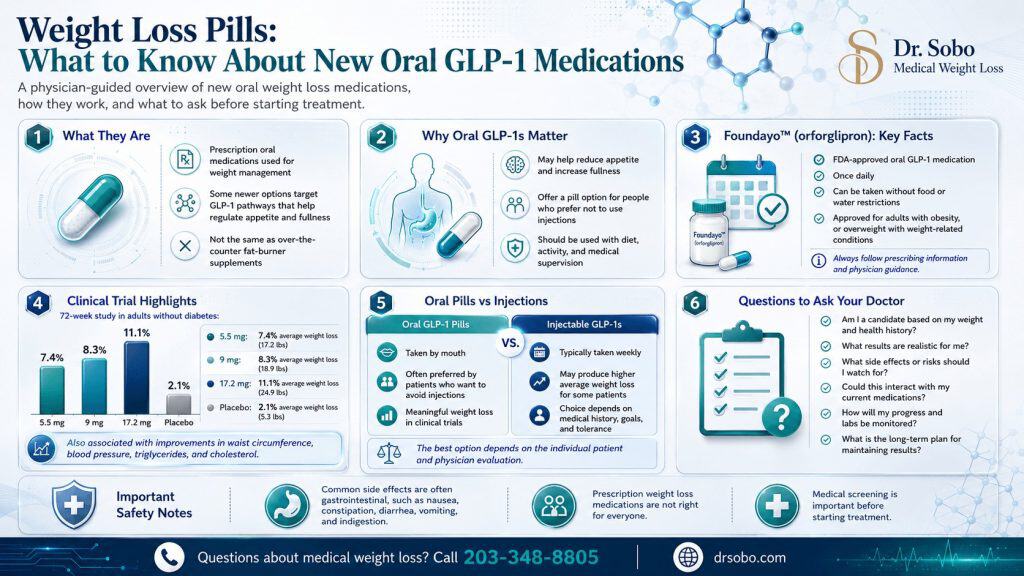
How GLP-1 Medications Affect Appetite and Fullness
GLP-1 medications work by activating receptors involved in appetite and satiety signaling. In practical terms, many people on GLP-1 therapy report that they feel full with less food, think about food less often, and have an easier time maintaining a calorie deficit.
This does not mean the medication “burns fat” by itself. Weight loss still depends on energy balance, nutrition quality, metabolic health, body composition, and adherence. GLP-1 medications may make the process easier by reducing the biological drive to overeat.
That difference is important for patients who have blamed themselves for years of failed diets. Obesity and weight regain are not simply willpower problems. Appetite hormones, insulin resistance, sleep quality, stress physiology, medications, thyroid function, menopause, testosterone levels, gut health, and body composition can all influence weight regulation.
A strong medical weight loss plan should evaluate those factors instead of relying only on a prescription.
Why Oral Options Matter for Patients Who Do Not Want Injections
Injectable GLP-1 medications have helped reshape obesity treatment, but injections are a barrier for some patients. Some people dislike needles. Others travel often, struggle with storage requirements, or prefer a daily medication routine that feels familiar.
Oral GLP-1 pills may help reduce that barrier.
According to Lilly, Foundayo is a once-daily oral small-molecule GLP-1 receptor agonist that can be taken at any time of day without food or water restrictions. That is a practical distinction from some oral peptide medications that may require fasting, limited water intake, and a waiting period before eating.
Convenience matters because a medication that fits into real life may be easier to follow consistently. Still, “easier to take” does not mean “safe for everyone.” Patients should discuss eligibility, side effects, contraindications, and monitoring with a qualified medical provider.
What Is the Eli Lilly Weight Loss Pill?
The Eli Lilly weight loss pill is Foundayo™, the brand name for orforglipron, an oral GLP-1 receptor agonist approved for adults with obesity or certain adults who are overweight with weight-related medical conditions.
In April 2026, Eli Lilly announced that the FDA approved Foundayo™ / orforglipron for adults with obesity, or some adults who are overweight and have weight-related medical problems, along with a reduced-calorie diet and increased physical activity.
The FDA also described Foundayo as approved under the Commissioner’s National Priority Voucher pilot program, with the agency noting the approval was issued 50 days after filing.
This approval is significant because it gives adults another prescription option in a treatment category that has been dominated by injections.
However, it is important to avoid oversimplifying the news. Foundayo is a prescription medication. It is not an over-the-counter diet pill, and it should not be combined with other GLP-1 receptor agonist medicines unless a qualified clinician determines otherwise. Lilly’s safety information states that use with other GLP-1 receptor agonist medicines is not recommended.
Who the Medication Is Approved For
Foundayo is approved for adults with obesity or some adults with overweight who also have weight-related medical problems. Lilly describes the medication as intended to reduce excess body weight and help maintain weight reduction long term when used with diet and physical activity.
In general, prescription weight loss medications may be considered for adults who meet body mass index criteria or have weight-related conditions such as high blood pressure, dyslipidemia, obstructive sleep apnea, cardiovascular disease, prediabetes, or type 2 diabetes. Exact eligibility depends on the specific medication, prescribing information, and a patient’s medical history.
Patients should not self-diagnose eligibility based only on weight or BMI. A careful medical review should include:
- Current weight, BMI, waist circumference, and body composition where available
- Blood pressure and cardiovascular risk factors
- Blood sugar, insulin resistance, A1C, and lipid markers
- Thyroid history and family history of certain thyroid cancers
- Gallbladder, pancreas, kidney, liver, and gastrointestinal history
- Current prescriptions, supplements, and possible drug interactions
- Pregnancy plans, breastfeeding status, or contraceptive considerations
- Prior weight loss medication experience
- Eating patterns, protein intake, alcohol intake, sleep, and stress
This broader evaluation helps determine whether an oral weight loss pill is reasonable, whether another therapy may be safer, or whether a non-medication strategy should come first.
What Clinical Trials Found
In Lilly’s ATTAIN-1 trial, Foundayo was studied in adults with obesity or overweight with weight-related complications who did not have diabetes. Lilly reported that participants taking the highest dose who stayed on treatment lost an average of 27.3 pounds, or 12.4%, compared with 2.2 pounds, or 0.9%, with placebo. Lilly also reported that participants taking Foundayo regardless of trial completion lost an average of 25 pounds, or 11.1%, compared with 5.3 pounds, or 2.1%, with placebo.
A New England Journal of Medicine publication reported that adverse events leading to treatment discontinuation occurred in 5.3% to 10.3% of patients in the orforglipron groups and 2.7% of patients in the placebo group. The most common adverse events were gastrointestinal and were generally mild to moderate.
Lilly also reported that Foundayo led to reductions in several cardiometabolic risk markers, including waist circumference, non-HDL cholesterol, triglycerides, and systolic blood pressure across doses.
These results are promising, but they should be interpreted carefully. Trial averages do not predict an individual person’s outcome. Weight loss response can vary based on dose, adherence, side effects, nutrition, activity, sleep, medical history, and whether the patient can remain on treatment long term.
How It Is Taken
Lilly’s prescribing summary states that Foundayo is taken by mouth once daily, with or without food, and tablets should be swallowed whole rather than broken, crushed, or chewed.
This matters because some patients are looking for an option that does not require injections or complicated fasting instructions. A once-daily pill may be easier to integrate into a consistent routine, but patients still need to follow prescribing instructions exactly.
Patients should also speak with their healthcare provider if they miss several doses, experience persistent nausea, vomiting, diarrhea, abdominal pain, or are scheduled for surgery or a procedure involving anesthesia or deep sedation.
How Do Weight Loss Pills Compare With Injectable GLP-1 Medications?
Oral GLP-1 pills and injectable GLP-1 medications share a similar treatment goal: helping appropriate patients reduce excess body weight by influencing appetite and metabolic signaling. The main differences involve delivery method, dosing routine, trial results, tolerability, availability, and individual response.
| Category | Oral GLP-1 Weight Loss Pills | Injectable GLP-1 / GIP Medications |
|---|---|---|
| How they are taken | By mouth, often daily | Injection, often weekly |
| Convenience | May appeal to people who dislike injections | May appeal to people who prefer weekly dosing |
| Weight loss expectations | Meaningful weight loss in trials, but varies by medication and dose | Some injectable medications have shown higher average weight loss in major trials |
| Side effects | Often gastrointestinal; medication-specific warnings apply | Often gastrointestinal; medication-specific warnings apply |
| Best fit | Patients who qualify medically and prefer oral therapy | Patients who qualify medically and are comfortable with injections |
| Need for supervision | Required | Required |
The most important point is that the “best” medication is not the same for everyone. Some patients may respond better to an injectable medication. Others may prefer an oral option because they are more likely to stay consistent with it. Some may not be good candidates for either.
Schedule a consultation with Dr. Sobo and he can help compare options such as oral GLP-1 medications, semaglutide, tirzepatide, nutrition therapy, peptide-based approaches, hormone evaluation, or other therapeutic services based on your health history and goals.
Are Weight Loss Pills Safe?
Prescription weight loss pills can be safe and effective for appropriate candidates, but they are not risk-free. Safety depends on the medication, dose, patient history, current medications, and quality of follow-up care.
For Foundayo specifically, Lilly lists common side effects including nausea, constipation, diarrhea, vomiting, indigestion, abdominal pain, headache, bloating, fatigue, belching, heartburn, gas, and hair loss.
Lilly also warns that Foundayo may cause tumors in the thyroid, including thyroid cancer, and should not be used by people with a personal or family history of medullary thyroid carcinoma or by people with Multiple Endocrine Neoplasia syndrome type 2.
Other serious potential issues listed in Lilly’s safety information include pancreatitis, severe stomach problems, dehydration that may lead to kidney problems, low blood sugar when used with certain diabetes medications, serious allergic reactions, vision changes in patients with type 2 diabetes, gallbladder problems, and concerns around anesthesia or deep sedation.
This is why medical screening is not optional. A safe plan should identify risks before treatment begins and monitor changes during treatment.
Common Side Effects
The most common side effects of GLP-1-based weight loss medications tend to involve the digestive system. Patients may experience nausea, constipation, diarrhea, vomiting, reflux, bloating, abdominal discomfort, or reduced appetite that becomes too strong.
Some side effects improve as the body adjusts. Others may require dose changes, nutrition adjustments, hydration support, or discontinuation. Patients should never ignore severe or persistent abdominal pain, repeated vomiting, dehydration symptoms, or signs of an allergic reaction.
Practical steps that may help some patients tolerate therapy include:
- Eating smaller meals
- Prioritizing protein
- Avoiding greasy or overly rich foods
- Drinking enough fluids
- Avoiding rapid dose escalation unless medically directed
- Monitoring bowel habits
- Reporting side effects early
These strategies should be personalized. What works for one patient may not work for another.
Serious Warnings and Medical Screening
Before starting any prescription weight loss pill, patients should discuss their full medical history with a clinician. This is especially important for anyone with:
- A personal or family history of medullary thyroid carcinoma
- MEN 2
- Pancreatitis history
- Gallbladder disease
- Kidney problems
- Severe gastrointestinal disease or gastroparesis
- Diabetes medications that may cause hypoglycemia
- Pregnancy plans or breastfeeding
- Upcoming surgery or procedures requiring anesthesia
- Multiple prescriptions or supplements
- Prior severe reactions to weight loss medications
Medical screening helps determine whether a medication is appropriate and how it should be monitored. It also helps identify other causes of weight gain or weight loss resistance, such as thyroid dysfunction, insulin resistance, menopause-related changes, low testosterone, chronic stress, sleep apnea, or medication-related weight gain.
Why Supervision Matters
A prescription weight loss pill may reduce appetite, but appetite control is only one piece of long-term weight management.
Without supervision, patients may lose muscle, undereat protein, become dehydrated, miss important lab changes, or regain weight after stopping treatment. They may also continue struggling with the underlying drivers that caused weight gain in the first place.
A medically supervised program should help patients protect lean muscle, improve metabolic markers, manage side effects, and build habits that support maintenance.
That is especially important for adults who have already tried diets, commercial programs, or short-term medication plans without lasting success.
Lorem ipsum dolor sit amet, consectetur adipiscing elit. Ut elit tellus, luctus nec ullamcorper mattis, pulvinar dapibus leo.
Who May Be a Candidate for Prescription Weight Loss Pills?
A person may be a candidate for prescription weight loss pills if they meet medical criteria and do not have contraindications. Candidates often include adults with obesity or adults with overweight who also have weight-related health risks.
However, medication candidacy should be individualized. A patient with a lower BMI but significant metabolic risk may need a different strategy than a patient with a higher BMI, severe cravings, insulin resistance, and prior medication intolerance.
Patients should consider a medical weight loss evaluation if they:
- Have repeatedly lost and regained weight
- Struggle with intense hunger or cravings
- Have prediabetes, type 2 diabetes, high blood pressure, high cholesterol, or fatty liver concerns
- Have gained weight after menopause or andropause
- Suspect thyroid, hormone, cortisol, or insulin issues
- Want to compare oral pills with injectable GLP-1 medications
- Have side effects or plateaus on their current plan
- Want a physician-supervised approach instead of an online-only prescription model
For patients in Stamford, Greenwich, Fairfield County, and throughout Connecticut, Dr. Sobo’s medical weight loss program can help evaluate whether prescription medication belongs in the plan or whether other metabolic, hormonal, nutritional, or functional medicine strategies should be prioritized first.
Why Medication Alone Is Usually Not Enough
Weight loss medication can be powerful, but medication alone is rarely the full answer. Many patients need a plan that addresses the biological and behavioral systems behind weight gain.
A comprehensive plan may include:
- Protein and nutrient intake targets
- Strength training or resistance exercise guidance
- Blood sugar and insulin resistance evaluation
- Thyroid and hormone review
- Sleep and stress assessment
- Digestive health evaluation
- Inflammation and cardiometabolic risk markers
- Strategies for plateaus
- Maintenance planning before goal weight is reached
The purpose of medical weight loss is not simply to make the scale move. It is to help improve body composition, metabolic health, energy, inflammation, and long-term risk factors where possible.
That is why patients should be cautious about any program that only asks for a short online form and ships medication without deeper evaluation or follow-up.
Metabolism, Hormones, Insulin Resistance, and Lifestyle
Many adults who struggle with weight loss are told to “eat less and move more.” While calorie balance matters, that advice often fails because it ignores the body’s regulatory systems.
Weight loss resistance may involve:
- Insulin resistance
- Thyroid dysfunction
- Low testosterone
- Menopause-related hormone shifts
- High stress and cortisol disruption
- Poor sleep or sleep apnea
- Chronic inflammation
- Nutrient deficiencies
- Medication-related weight gain
- Loss of muscle mass
- Gut health problems
- Emotional eating or reward-based eating patterns
A GLP-1 medication may help appetite, but it may not fully correct these other issues. For example, a patient with poor sleep, low muscle mass, and insulin resistance may need a different support plan than someone whose main challenge is appetite control.
Dr. Sobo’s approach integrates medical weight loss with broader metabolic and functional medicine considerations. Readers can learn more about his background and clinical focus on the About Dr. Sobo page.
What a Medically Supervised Weight Loss Plan Should Include
A strong medical weight loss plan should be more thorough than “take this pill and check back later.” Patients should expect a structured process that includes evaluation, personalization, monitoring, and maintenance planning.
An effective program may include:
| Program Element | Why It Matters |
|---|---|
| Medical history review | Identifies contraindications, medication conflicts, and risk factors |
| Lab evaluation | Helps assess blood sugar, lipids, hormones, thyroid, liver, kidney, and nutrient markers |
| Medication selection | Matches therapy to the patient instead of using a one-size-fits-all plan |
| Nutrition guidance | Supports fat loss while protecting muscle and metabolism |
| Side effect management | Helps patients stay safe and comfortable |
| Body composition focus | Helps avoid losing excessive muscle |
| Plateau strategy | Adjusts the plan when progress slows |
| Maintenance plan | Reduces the risk of rebound weight gain |
Patients often become most interested in treatment because of a new medication headline. But long-term success depends on the full system surrounding the medication.
Weight Loss Pills in Connecticut: When to Speak With a Medical Weight Loss Doctor
If you are in Connecticut and researching weight loss pills, the best next step is not to guess which medication is right for you. The best next step is to speak with a medical weight loss provider who can evaluate your health history, explain realistic options, and help you avoid unsafe shortcuts.
This is especially important if you have:
- Type 2 diabetes or prediabetes
- High blood pressure
- High cholesterol or triglycerides
- Sleep apnea
- A history of gallbladder problems
- Digestive issues
- Thyroid concerns
- Hormonal changes
- Prior side effects from GLP-1 therapy
- A history of weight regain after dieting
- Concerns about muscle loss or fatigue
Dr. Sobo provides medical weight loss care in Stamford, CT, with virtual consultation options available for appropriate patients. To schedule a consultation, call 203-348-8805 or visit the Medical Weight Loss page.
Questions to Ask Before Starting a Weight Loss Pill
Before starting any prescription weight loss pill, it is important to understand whether the medication fits your health history, goals, and long-term weight management plan. Bring these questions to your consultation:
- Am I a candidate for prescription weight loss pills based on my BMI, health history, and weight-related conditions?
- How does an oral GLP-1 medication compare with injectable options like semaglutide or tirzepatide?
- What results are realistic for this medication, and how will we measure progress beyond the number on the scale?
- What side effects should I watch for, and when should I contact the office?
- Are there any medical reasons I should avoid this medication?
- Could this medication interact with my current prescriptions, supplements, or diabetes medications?
- How will my labs, blood pressure, blood sugar, digestion, and metabolic health be monitored?
- What nutrition changes should I make while taking a weight loss pill?
- How will we protect muscle mass during weight loss?
- What is the plan if I stop losing weight or reach a plateau?
- How long might I need to stay on medication?
- What is the long-term plan to maintain weight loss after reducing or stopping medication?
This version connects better with the FAQs while still giving readers a consultation-ready checklist.
Final Thoughts: Weight Loss Pills Are Evolving, But Medical Guidance Still Matters
New oral GLP-1 weight loss pills are changing the future of obesity care. The approval of Foundayo / orforglipron gives appropriate adults another prescription option, especially those who prefer a pill over an injection. Clinical trial data show meaningful average weight loss for many participants, but results vary, and side effects or contraindications must be taken seriously.
The most important takeaway is this: weight loss pills are tools, not complete treatment plans.
The right plan should account for appetite, metabolism, hormones, insulin resistance, nutrition, movement, sleep, stress, medication safety, and long-term maintenance. For many adults, that requires a medically supervised approach rather than a quick online prescription.
If you are considering weight loss pills, oral GLP-1 therapy, semaglutide, tirzepatide, or a broader medical weight loss plan in Connecticut, Dr. Sobo can help you evaluate your options.
Call 203-348-8805 or visit Dr. Sobo’s Medical Weight Loss page to schedule a consultation.
FAQs About Weight Loss Pills and Oral GLP-1 Medications
Are weight loss pills effective?
Prescription weight loss pills can be effective for appropriate patients, especially when combined with medical supervision, nutrition, physical activity, and long-term behavior support. Effectiveness depends on the medication, dose, adherence, side effects, and the patient’s metabolic health.
What is the Eli Lilly weight loss pill?
The Eli Lilly weight loss pill is Foundayo™ / orforglipron, an oral GLP-1 receptor agonist approved for adults with obesity or certain adults who are overweight with weight-related medical problems. It is taken once daily and should be used with diet, physical activity, and medical supervision.
Is Foundayo the same as Ozempic or Wegovy?
No. Foundayo is orforglipron, an oral small-molecule GLP-1 receptor agonist. Ozempic and Wegovy are semaglutide-based medications. These medications are related in that they act on GLP-1 pathways, but they are not the same drug and should not be used interchangeably without medical guidance.
Do oral weight loss pills work as well as injections?
Some injectable GLP-1 and GLP-1/GIP medications have shown higher average weight loss in clinical trials than some oral options, but the right choice depends on the patient. Oral medications may be more convenient for people who do not want injections, while injectable options may be better for others.
Who qualifies for prescription weight loss pills?
Eligibility depends on BMI, weight-related health conditions, medical history, contraindications, current medications, and the specific medication being considered. Adults with obesity or adults who are overweight with certain weight-related health problems may qualify, but a medical evaluation is necessary.
Are GLP-1 weight loss pills safe?
GLP-1 weight loss pills may be safe for appropriate candidates, but they can cause side effects and are not right for everyone. Common side effects may include nausea, constipation, diarrhea, vomiting, indigestion, abdominal pain, headache, bloating, fatigue, reflux symptoms, gas, and other medication-specific effects.
Can I take a weight loss pill without changing my diet?
Prescription weight loss medications are generally intended to be used with nutrition changes and physical activity. Medication may reduce appetite, but diet quality, protein intake, hydration, muscle maintenance, and long-term lifestyle habits remain important.
Can I take oral GLP-1 medication with another GLP-1 injection?
Lilly’s safety information for Foundayo states that use with other GLP-1 receptor agonist medicines is not recommended. Patients should never combine GLP-1 medications unless specifically directed by a qualified healthcare provider.
What should I ask a doctor before starting a weight loss pill?
Ask whether you are medically eligible, what side effects to watch for, whether your current medications could interact, how your labs will be monitored, how to protect muscle mass, and what the long-term maintenance plan will be.
Where can I discuss weight loss pills in Connecticut?
Patients in Stamford, Fairfield County, Greenwich, and throughout Connecticut can schedule a medical weight loss consultation with Dr. Sobo. Call 203-348-8805 or visit the Medical Weight Loss page.
What should I ask a doctor before starting a weight loss pill?
Before starting a weight loss pill, ask your doctor whether the medication is appropriate for your health history, weight-related conditions, current prescriptions, and long-term goals. You should also ask about expected results, side effects, safety risks, lab monitoring, nutrition changes, muscle preservation, and what the plan will be if you plateau or stop the medication.
A strong consultation should cover:
- Whether you medically qualify based on BMI, metabolic health, and weight-related conditions
- Which medication options fit your history, including oral GLP-1 pills versus injectable medications
- What results are realistic and how progress will be measured beyond the scale
- What side effects or warning signs should prompt you to contact the office
- Whether the medication could interact with prescriptions, supplements, or diabetes medications
- How labs, blood pressure, blood sugar, digestion, and metabolic markers will be monitored
- What nutrition and exercise changes are needed to protect muscle and support long-term results
- How long you may need treatment and what the maintenance plan looks like
Sources
- Eli Lilly and Company — FDA Approves Lilly’s Foundayo™ / Orforglipron
- U.S. Food and Drug Administration — FDA Approves First New Molecular Entity Under National Priority Voucher Program
- New England Journal of Medicine — Orforglipron, an Oral Small-Molecule GLP-1 Receptor Agonist for Obesity Treatment
- KFF — GLP-1 Drug Use and Affordability Poll
