
Peptide Therapy for Men Over 40: Energy, Recovery, Body Composition, and Metabolic Health
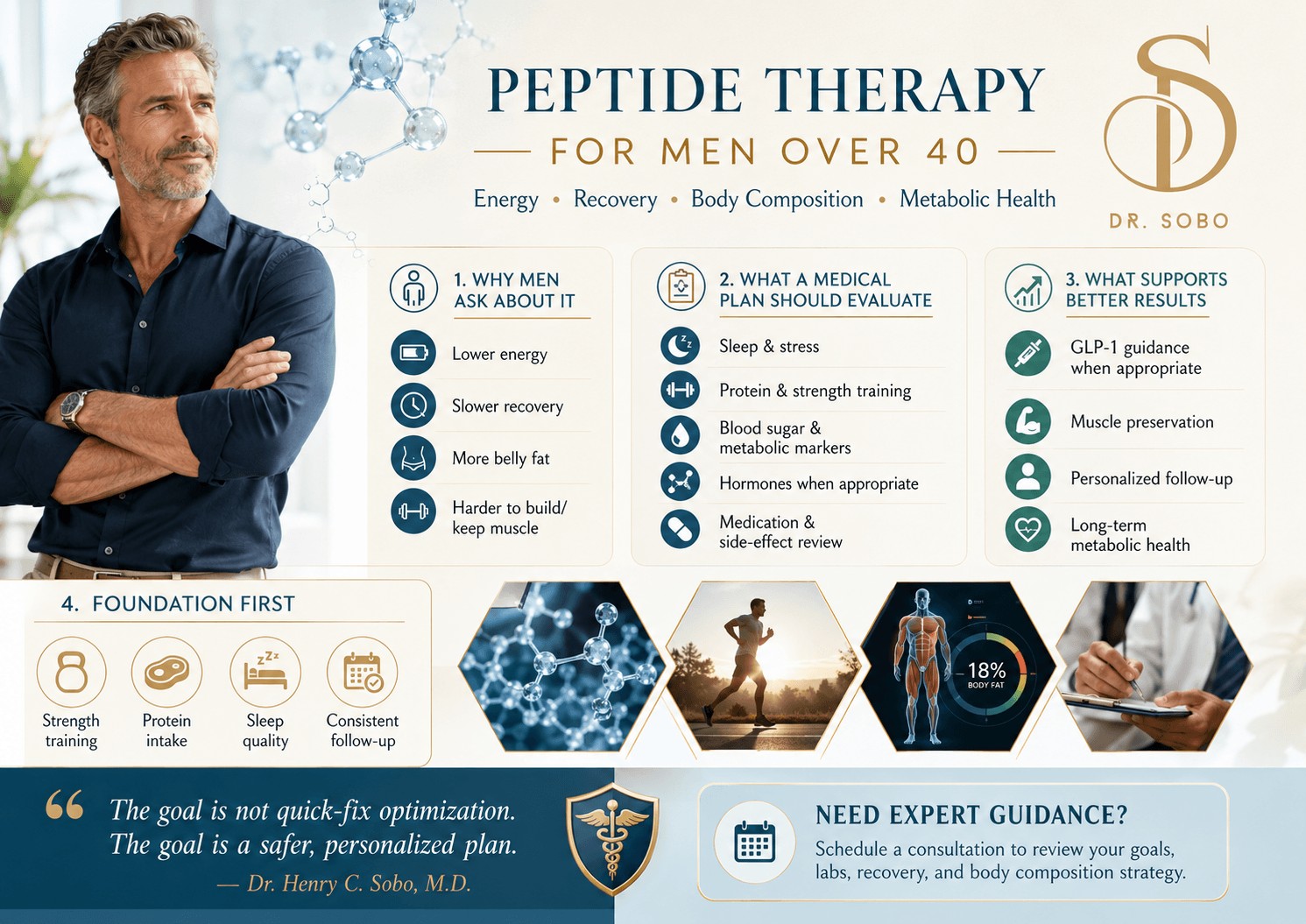
After 40, many men begin noticing changes that feel gradual at first: slower recovery, more abdominal weight gain, less muscle definition, lower energy, reduced stamina, worse sleep, more joint stiffness, and a harder time getting results from the same diet or exercise routine that used to work. These changes are common, but they should not automatically be dismissed as normal aging.
Peptide therapy is one area men are increasingly asking about because it is often discussed in connection with recovery, body composition, metabolism, healthy aging, appetite regulation, and performance. The challenge is that online information can make peptide therapy sound simple, universal, or risk-free. In reality, the best approach for men over 40 is not to chase a single peptide or copy a protocol from the internet. It is to evaluate the whole picture: symptoms, labs, nutrition, sleep, strength training, medications, hormone status, cardiovascular risk, and long-term goals.
At Optimal Health Medical, Dr. Sobo provides medically guided peptide and metabolic wellness consultations that focus on personalization, safety, lab-informed decisions when appropriate, dosing clarity, side-effect monitoring, and follow-up. The goal is not to make men feel younger through shortcuts. The goal is to help men understand what is changing, what can be improved, and whether peptide therapy belongs in a broader plan for energy, recovery, body composition, and metabolic health.
What Men Over 40 Are Usually Trying to Improve
Most men do not ask about peptide therapy because of one isolated symptom. They usually want help with a pattern: more fatigue, slower recovery, less strength, more belly fat, weaker workouts, worse sleep, or frustration that their old routine no longer produces the same results.
Those goals are valid, but they require a structured evaluation. Low energy can be connected to sleep apnea, stress, low caloric quality, poor protein intake, thyroid issues, testosterone deficiency, insulin resistance, depression, medications, alcohol, inflammation, or overtraining. Weight gain can be related to appetite, sleep, blood sugar, stress hormones, lower activity, reduced muscle mass, and age-related metabolic changes. Recovery problems can be influenced by training volume, nutrition, joint health, hormone status, inflammation, and inadequate rest.
Peptide therapy may be considered for certain men, but it should not be used to bypass the basics. The most successful plans usually combine medical evaluation with nutrition, resistance training, sleep, metabolic health support, and realistic follow-up.
Peptide Therapy for Men Over 40 at a Glance
| Men Over 40 Often Ask About | What a Medically Guided Plan Should Consider |
|---|---|
| Energy and stamina | Sleep, stress, blood sugar, nutrition, hormones, medications, and recovery |
| Body composition | Protein intake, resistance training, GLP-1 options when appropriate, muscle preservation, and metabolic markers |
| Recovery and joint support | Training load, inflammation, injury history, peptide candidacy, and realistic expectations |
| Metabolic health | A1c, fasting glucose, lipids, waist circumference, blood pressure, and cardiovascular risk |
| Hormone-related concerns | Symptoms, morning testosterone testing when appropriate, fertility goals, and contraindications |
| Healthy aging | Strength, mobility, bone health, sleep, cardiovascular prevention, and follow-up |
What Peptides Are and Why Men Are Interested
Peptides are short chains of amino acids that act as signaling molecules in the body. Different peptides have different biological roles, and the level of evidence varies widely depending on the peptide, dose, delivery method, patient population, and clinical use.
Some peptide-related therapies, such as GLP-1 medications, are already part of mainstream medical weight loss and metabolic care when used appropriately. Other peptides are discussed in functional, regenerative, or performance-oriented settings but may have more limited human evidence, emerging research, or off-label considerations. That distinction matters.
For men over 40, peptide conversations often include appetite regulation, muscle preservation during weight loss, recovery support, tissue repair research, mitochondrial function, sleep quality, or healthy aging. A medical consultation helps separate what is established, what is emerging, what is speculative, and what is appropriate for the individual patient.
Why Men Over 40 Need a Broader Evaluation Before Peptide Therapy
The biggest mistake is assuming that peptide therapy is a substitute for diagnosis. A man who is exhausted, gaining weight, losing strength, or struggling with libido should not immediately jump to a peptide protocol. Those symptoms deserve context.
A responsible evaluation may include medical history, medication review, blood pressure, body composition goals, sleep quality, nutrition habits, alcohol intake, training routine, injury history, metabolic markers, and hormone testing when appropriate. This is especially important because heart disease is the leading cause of death for men in the United States, and cardiometabolic risk should be part of any serious midlife wellness conversation.
The purpose of medical supervision is to choose the right next step. Sometimes that may include peptide therapy. Sometimes the better first move is improving protein intake, addressing sleep apnea, adjusting exercise, reviewing medications, testing testosterone correctly, treating insulin resistance, or creating a more sustainable weight-loss plan.
Energy: Why Men Feel Tired After 40
Low energy is one of the most common concerns men bring to a wellness or peptide consultation. But energy is not controlled by one pathway. It depends on sleep, blood sugar stability, cardiovascular fitness, muscle mass, hormones, stress load, nutrition, hydration, inflammation, and mental health.
Peptide therapy may be discussed in the context of metabolic health or recovery, but it should be evaluated alongside the fundamentals. Men who sleep poorly, under-eat protein, drink alcohol most nights, skip strength training, or have unmanaged blood sugar may not get the results they expect from any advanced therapy until the foundation is addressed.
A better approach is to ask: What is driving the fatigue? Is it poor sleep, insulin resistance, overtraining, low testosterone, nutrient deficiency, medication effects, chronic stress, or something else? Once the pattern is clearer, Dr. Sobo can help determine whether peptide therapy, GLP-1 treatment, nutrition changes, lab review, or another strategy makes sense.
Recovery: Why Workouts and Injuries Feel Different in Midlife
Many men over 40 notice that soreness lasts longer, old injuries flare more easily, and hard workouts require more recovery than they used to. This can happen because of changes in muscle mass, tendon resilience, sleep quality, inflammation, training recovery, and hormone environment.
Peptides are often marketed for recovery, but patients should be careful with exaggerated claims. Some peptides discussed online for injury or tissue support are supported mainly by animal, laboratory, or early-stage research rather than large human outcome trials. That does not make the topic irrelevant, but it does mean medical supervision and realistic expectations matter.
For recovery goals, a responsible plan should review the injury history, training load, pain pattern, mobility limitations, sleep, protein intake, inflammatory triggers, and whether imaging, physical therapy, or a specialist evaluation is needed. Peptide therapy should never be used to ignore a serious injury or delay appropriate medical care.
Body Composition: Fat Loss, Muscle Preservation, and the Male Metabolism
Men over 40 often want to lose fat while keeping muscle. That is the right goal. Scale weight alone can be misleading if weight loss comes with unnecessary loss of strength, muscle, or performance.
Muscle mass is metabolically important. It supports glucose disposal, mobility, joint protection, posture, strength, and long-term independence. The National Institute on Aging describes sarcopenia as a decline in muscle mass, strength, and function that is often associated with older adults but can also affect middle-aged people. That makes resistance training and protein intake essential for men who want healthier weight loss.
For some men, GLP-1 weight-loss medications may be appropriate. These therapies can reduce appetite and support significant weight loss, but appetite suppression can also make it easier to under-eat protein or reduce training intensity. A medically guided plan should include muscle-preservation strategies from the beginning.
GLP-1 Therapy for Men Over 40
GLP-1 and related medications are among the most evidence-based peptide-related therapies used in modern weight-loss and metabolic care. For men with obesity, overweight with weight-related conditions, insulin resistance, or type 2 diabetes concerns, GLP-1 therapy may be part of a larger medical plan when clinically appropriate.
The medication is only one part of the strategy. GLP-1 therapy should be paired with nutrition support, protein planning, resistance training, side-effect management, hydration, and follow-up. A joint clinical advisory on nutritional priorities during GLP-1 therapy emphasizes preserving muscle and bone mass through resistance training and appropriate diet, along with monitoring for nutritional adequacy and gastrointestinal side effects.
For men over 40, this matters because aggressive weight loss without strength training can leave the patient lighter but weaker. The goal should be improved body composition, better metabolic health, and long-term sustainability, not simply a lower number on the scale.
Hormones, Testosterone, and Peptide Therapy Are Not the Same Thing
Men often connect peptide therapy with testosterone, but these are different conversations. Peptide therapy is not testosterone therapy, and testosterone therapy is not a general anti-aging shortcut.
The Endocrine Society recommends diagnosing hypogonadism only in men who have symptoms and signs consistent with testosterone deficiency and consistently low testosterone concentrations. The American Urological Association also emphasizes proper evaluation because many men use testosterone without a clear indication. That means symptoms alone are not enough, and one casual lab result may not be enough either.
If a man has low libido, fatigue, loss of strength, mood changes, or body composition changes, Dr. Sobo may review whether testosterone testing is appropriate. But the plan should also examine sleep, alcohol, stress, weight, medications, thyroid function, blood sugar, depression, and training. Peptides may support certain goals in some men, but they should not be used as a shortcut around proper hormone evaluation.
Metabolic Health: The Midlife Priority Men Should Not Ignore
For men over 40, metabolic health is one of the most important parts of the conversation. Waist size, blood pressure, fasting glucose, A1c, triglycerides, HDL cholesterol, sleep quality, activity level, and visceral fat all help tell the story.
Men often think about weight loss cosmetically, but the deeper issue is cardiometabolic risk. The CDC identifies heart disease as the leading cause of death for men in the United States. That makes weight loss, blood pressure control, lipid management, blood sugar stability, exercise, sleep, and smoking/alcohol habits central to long-term health.
Peptide therapy may be discussed alongside medical weight loss, GLP-1 treatment, mitochondrial health, or recovery goals, but the larger objective should be better metabolic resilience. A plan that improves waist circumference, strength, sleep, blood sugar, blood pressure, and physical capacity is more meaningful than one that focuses only on a peptide name.
Peptides Men May Hear About Online
Men searching online may encounter many peptide names, including GLP-1 medications, BPC-157, TB-500, MOTS-c, CJC-related peptides, growth hormone secretagogues, KPV, and others. These are not interchangeable, and they do not have the same level of evidence, risk profile, regulatory status, or clinical role.
Some are medication classes with FDA-approved products for specific indications. Others are research peptides, compounded medications, off-label discussions, or investigational topics. Some may be promoted by online sellers in ways that exaggerate benefits or minimize risks.
The safest question is not, “Which peptide should I stack?” The safest question is, “What problem am I trying to solve, what does my health data show, and what medically appropriate options exist?”
Why More Is Not Always Better
Many men are drawn to peptide stacking because it sounds comprehensive. More recovery, more energy, more fat loss, more optimization. But more therapies can also mean more complexity, more side effects, more uncertainty, more expense, and harder follow-up.
When multiple therapies are started at the same time, it becomes difficult to know what is helping, what is causing side effects, and what should be adjusted. A stepwise plan is usually safer and more clinically useful. It allows the patient and clinician to observe response, tolerance, labs, and symptoms before adding complexity.
For men over 40, the best plan is usually not the most aggressive plan. It is the plan that can be followed consistently, monitored appropriately, and adjusted based on real results.
Online Peptide Sellers vs. Legitimate Medical Care
Men should be especially cautious with internet sellers, research-only products, no-prescription injection vendors, and online protocols that encourage self-dosing. A product advertised online is not automatically safe, legal, sterile, correctly labeled, or appropriate for personal use.
This is different from a legitimate compounding pharmacy. Compounding pharmacies are pharmacies and are regulated by their states. A legitimate prescription should include patient-specific labeling, prescribing clinician information, clear dosing directions, and appropriate pharmacy documentation. Internet sellers that are not pharmacies do not provide the same safeguards.
If a product says “for research only,” it is not intended for personal use outside a legitimate research setting. Men should not use research-only peptides as a substitute for medical care.
What a Peptide Consultation for Men Over 40 Should Include
A peptide consultation should be practical, individualized, and medically grounded. It should not feel like a product menu. The clinician should first understand the patient’s goals, symptoms, history, and risks.
For men over 40, the consultation may include review of weight history, sleep, energy, libido, exercise, injuries, medications, supplements, alcohol use, cardiovascular risk, metabolic labs, hormone concerns, and previous treatments. When appropriate, labs may include markers related to glucose, A1c, lipids, liver and kidney function, thyroid function, testosterone, inflammation, and nutrient status.
The outcome may be peptide therapy, GLP-1 therapy, medical weight loss, nutrition changes, strength training, sleep evaluation, hormone testing, or a staged plan that starts with the most important driver first.
The Foundation: Protein, Strength Training, Sleep, and Follow-Up
No peptide can replace the basics. Men who want energy, recovery, and better body composition need a foundation that supports muscle and metabolism.
The CDC recommends that adults get at least 150 minutes of moderate-intensity physical activity per week and at least two days of muscle-strengthening activity. For men over 40, resistance training is not optional if the goal is to protect strength, function, and metabolic health. Protein intake, hydration, mobility work, sleep quality, and stress management also matter.
Follow-up is where the plan becomes more precise. If energy improves, side effects appear, weight loss stalls, strength drops, or labs change, the plan should be adjusted. This is where medical care separates itself from guesswork.
How Dr. Sobo Helps Men Build a Safer Plan
Dr. Sobo provides men with a structured way to evaluate peptide therapy, GLP-1 options, medical weight loss, and metabolic health. The goal is to understand the patient first, then decide which therapies fit the situation.
A plan may include medical screening, lab-informed decisions when appropriate, nutrition support, dosing guidance, strength and muscle-preservation strategies, side-effect monitoring, and follow-up. For men who feel overwhelmed by online peptide information, this type of guidance can help separate useful options from unnecessary risk.
The best men’s wellness plan is not built around a single injection, pill, or trend. It is built around the patient’s health history, goals, risks, consistency, and long-term results.
Schedule a Peptide Therapy Consultation
If you are a man over 40 and you are interested in peptide therapy, GLP-1 weight loss, recovery support, body composition, or metabolic health, a consultation can help you understand what is appropriate for your situation.
Dr. Sobo can help you review your goals, medical history, medications, labs, lifestyle, and treatment options so you can make informed decisions with medical guidance instead of online guesswork.
Learn more about peptide therapy, GLP-1 weight loss, medical weight loss, and Optimal Health Medical.
FAQs About Peptide Therapy for Men Over 40
What is peptide therapy for men over 40?
Peptide therapy for men over 40 is a medically guided approach that may be discussed for goals such as recovery, body composition, metabolic health, appetite regulation, or healthy aging. The right plan depends on the patient’s symptoms, medical history, labs, medications, risk factors, and goals.
Men should not view peptide therapy as a one-size-fits-all anti-aging shortcut. A safer approach begins with understanding why energy, recovery, weight, strength, or metabolism has changed and whether peptide therapy belongs in a broader plan.
Can peptide therapy help men lose belly fat?
Peptide therapy is not a guaranteed belly-fat treatment. Some peptide-related therapies, including GLP-1 medications when appropriate, may support weight loss and appetite control. Belly fat is also influenced by insulin resistance, sleep, alcohol, stress, protein intake, resistance training, and overall metabolic health.
For men over 40, the goal should be improved body composition rather than simple scale weight loss. That means reducing excess fat while preserving or rebuilding muscle through nutrition, strength training, and medical follow-up.
Can peptides improve energy in men over 40?
Some men ask about peptides because of low energy, but fatigue has many possible causes. A medical evaluation should consider sleep, blood sugar, thyroid function, testosterone, stress, medications, nutrition, cardiovascular fitness, and other factors before deciding whether peptide therapy is appropriate.
Peptides may be part of a plan for certain men, but low energy should not be treated with guesswork. Identifying the driver of fatigue helps create a safer and more effective plan.
Are peptides the same as testosterone therapy?
No. Peptides and testosterone therapy are different. Testosterone therapy should only be considered when a man has symptoms consistent with testosterone deficiency and appropriately confirmed low testosterone levels. Peptide therapy does not replace proper hormone evaluation.
Men with fatigue, low libido, reduced strength, or body composition changes should be evaluated carefully. Symptoms may be related to testosterone, but they may also be connected to sleep, stress, alcohol use, medications, thyroid function, blood sugar, or other health factors.
What labs should men consider before peptide therapy?
Lab needs vary by patient, but a clinician may review markers related to blood sugar, A1c, lipids, liver and kidney function, thyroid function, testosterone, inflammation, nutrient status, and cardiovascular risk. Testing should be individualized.
The purpose of lab testing is not to order unnecessary panels. The purpose is to understand the patient’s health picture and decide which interventions are medically appropriate, safe, and measurable.
Can peptide therapy help with workout recovery?
Some peptides are discussed for recovery and tissue-support goals, but the evidence varies and many claims online are exaggerated. Recovery should also include proper training load, sleep, protein intake, mobility, injury evaluation, and follow-up.
If pain, weakness, swelling, or loss of function is present, men should not use peptides to delay proper medical care. Recovery support works best when the underlying problem is understood.
Is peptide stacking safe for men over 40?
Peptide stacking should not be done without medical supervision. Combining multiple therapies can make side effects, dosing, interactions, and results harder to track. A stepwise, monitored plan is usually safer than copying an online protocol.
More therapies do not automatically produce better outcomes. For many men, the most effective approach is to address the strongest driver first, monitor the response, and only add complexity when there is a clear reason.
Do men over 40 still need strength training if using peptides or GLP-1s?
Yes. Strength training remains essential for preserving muscle, improving insulin sensitivity, supporting metabolism, protecting joints, and maintaining function. No peptide replaces resistance training and adequate protein intake.
This is especially important during weight loss. Men using GLP-1 therapy or appetite-reducing medications should be intentional about protein intake and resistance training so weight loss does not come at the expense of strength and muscle.
Are online peptides safe to buy?
Patients should avoid internet sellers that are not pharmacies, no-prescription injection vendors, research-only products, and unclear sources. Legitimate medical care should include a patient-specific prescription, clear labeling, prescribing clinician information, dosing instructions, and follow-up.
Properly licensed compounding pharmacies are different from internet sellers. A legitimate prescription process includes medical oversight and pharmacy accountability. Research-only products should not be used for personal medical treatment outside a legitimate research setting.
How can Dr. Sobo help men decide if peptide therapy is appropriate?
Dr. Sobo can review health goals, symptoms, medications, labs, metabolic risk, hormone concerns, exercise, nutrition, and prior treatments to determine whether peptide therapy, GLP-1 care, medical weight loss, or another plan is appropriate.
The goal is to create a safer, more personalized plan based on the patient’s health history and long-term goals rather than copying online protocols or chasing trends.
Sources
- CDC: Adult Activity — Physical Activity Basics — https://www.cdc.gov/physical-activity-basics/guidelines/adults.html
- National Institute on Aging: How Can Strength Training Build Healthier Bodies as We Age? — https://www.nia.nih.gov/news/how-can-strength-training-build-healthier-bodies-we-age
- Endocrine Society: Testosterone Therapy for Hypogonadism Guideline Resources — https://www.endocrine.org/clinical-practice-guidelines/testosterone-therapy
- American Urological Association: Testosterone Deficiency Guideline — https://www.auanet.org/guidelines-and-quality/guidelines/testosterone-deficiency-guideline
- CDC: About Men and Heart Disease — https://www.cdc.gov/heart-disease/about/men-and-heart-disease.html
- NIAMS: Bone Health and Osteoporosis — https://www.niams.nih.gov/health-topics/bone-health-and-osteoporosis
- The American Journal of Clinical Nutrition: Nutritional Priorities to Support GLP-1 Therapy for Obesity — https://academic.oup.com/ajcn
- MedlinePlus: Talking With Your Doctor — https://medlineplus.gov/ency/patientinstructions/000860.htm
- FDA BeSafeRx: Your Source for Online Pharmacy Information — https://www.fda.gov/drugs/buying-using-medicine-safely/besaferx-your-source-online-pharmacy-information

Medically reviewed by
Dr. Henry C. Sobo is a physician focused on holistic, integrative, and patient-centered medical care at Optimal Health Medical.