
GLP-1 Weight Loss and Muscle Loss: How to Protect Strength, Metabolism, and Long-Term Results
GLP-1 and related weight-loss medications have changed the way many patients think about obesity, appetite control, insulin resistance, and long-term metabolic health. For many people, medications such as semaglutide and tirzepatide can help reduce hunger, improve satiety, and support meaningful weight loss when they are medically appropriate.
But there is an important question patients should ask before starting treatment: How do we protect muscle while losing weight?
The goal of medical weight loss should not be to make the scale drop as quickly as possible at any cost. A healthier goal is to reduce excess fat, preserve strength, maintain mobility, protect metabolic function, and build habits that support long-term results after the most active phase of weight loss.
At Optimal Health Medical, GLP-1 weight loss is approached through medical screening, individualized planning, nutrition guidance, strength-preservation support, side effect management, and follow-up. Dr. Sobo helps patients understand that the quality of weight loss matters as much as the number of pounds lost.
GLP-1 Weight Loss and Muscle Loss at a Glance
Some lean mass loss can happen during any major weight-loss effort, whether weight loss comes from diet, medication, surgery, or a combination of approaches. GLP-1 medications can reduce appetite significantly, which can make it easier to eat too little protein, skip resistance training, lose strength, or unintentionally reduce nutrient intake.
That does not mean GLP-1 medications are bad for muscle. It means the plan should be designed correctly. Protein intake, resistance training, hydration, adequate nutrition, side effect management, sleep, and follow-up all help protect healthier body composition during weight loss.
| Key Issue | Why It Matters | Protective Strategy |
|---|---|---|
| Rapid appetite reduction | Patients may eat less than they realize, including too little protein. | Set protein goals and build a simple meal structure. |
| Lean mass loss | Some lean mass loss often occurs with major weight reduction. | Combine medication with strength training and nutrition support. |
| Low energy or weakness | Under-fueling can reduce activity and make exercise harder. | Monitor symptoms, hydration, meal timing, and food tolerance. |
| Poor long-term maintenance | Weight regain risk can rise when muscle, habits, and follow-up are neglected. | Plan for maintenance from the beginning. |
| Scale-only thinking | The scale does not show fat loss versus lean mass loss. | Track strength, waist size, energy, labs, function, and body composition when appropriate. |
What Are GLP-1 Medications?
GLP-1 stands for glucagon-like peptide-1. It is a hormone involved in appetite regulation, digestion, insulin signaling, and blood sugar control. GLP-1 receptor agonist medications act on this pathway to increase satiety, reduce hunger, slow stomach emptying, and support metabolic control.
Some medications act primarily through the GLP-1 receptor pathway, while newer therapies may act through more than one hormone pathway. Tirzepatide, for example, acts on both GIP and GLP-1 receptors. These medications may be used for type 2 diabetes, chronic weight management, or other approved indications depending on the product, diagnosis, medical history, and prescribing guidance.
For patients, the most practical point is that GLP-1 medications can be powerful appetite-management tools. Because they can reduce hunger so effectively, patients need a thoughtful nutrition and strength plan to avoid losing weight in a way that leaves them weaker, undernourished, or less prepared for long-term maintenance.
Why Muscle Preservation Matters During Weight Loss
Muscle is not just about appearance. Skeletal muscle supports strength, balance, mobility, glucose handling, posture, metabolic rate, and healthy aging. Losing excess fat can improve health, but losing too much muscle can make patients feel weaker, less energetic, and less physically resilient.
Muscle also plays an important role in long-term weight maintenance. People with more functional lean mass generally have better strength capacity and may tolerate exercise more easily. When patients lose substantial weight but do not protect strength, they may reach a lower weight while feeling less capable and less metabolically supported.
This is especially important for adults over 40, people who already have low muscle mass, patients with chronic fatigue, people with prior inactivity, and those with medical conditions that affect mobility or nutrition. For these patients, a GLP-1 plan should include muscle-preservation strategies from the beginning, not after weakness appears.
Patients who want a broader discussion of both lean mass and skeletal health can also review Dr. Sobo’s related article on protecting muscle and bone during GLP-1 weight loss. This article focuses more specifically on strength, lean mass, protein, resistance training, and long-term metabolic maintenance.
Does GLP-1 Weight Loss Cause Muscle Loss?
Major weight loss often includes a combination of fat mass and lean mass loss. Lean mass includes muscle, but it also includes water, connective tissue, organs, and other non-fat tissues. This is why the phrase “muscle loss” can sometimes oversimplify the discussion. A drop in lean mass does not always mean the same thing as a drop in functional muscle strength.
Still, the concern is valid. Clinical and observational data have shown that lean mass can decrease during GLP-1 or GIP/GLP-1 weight-loss treatment. A body-composition analysis from the SURMOUNT-1 trial found that tirzepatide treatment reduced body weight, fat mass, and lean mass compared with placebo. The key point is not that GLP-1 therapy automatically causes harmful muscle loss. The key point is that body-composition quality should be actively managed during treatment.
The balanced takeaway is this: GLP-1 medications can be valuable tools, but the quality of weight loss needs medical attention. Patients should not assume that appetite reduction automatically equals healthier body composition.
Why Lean Mass Can Drop During GLP-1 Treatment
Lean mass can decrease during GLP-1 treatment for several reasons. Some are related to weight loss itself, while others are related to how the patient eats and moves during treatment.
Reduced Calorie Intake
GLP-1 medications often reduce hunger and cravings. That can support weight loss, but if appetite drops too far, patients may eat too little overall. Severe calorie restriction can increase the risk of lean mass loss, fatigue, constipation, low protein intake, poor exercise tolerance, and difficulty maintaining long-term results.
Low Protein Intake
When appetite is low, protein-rich foods may be harder to finish. Some patients unintentionally shift toward small snacks, low-protein meals, or skipping meals altogether. Without enough protein, the body has fewer building blocks to repair and preserve muscle tissue.
Less Resistance Training
Weight loss without strength training is more likely to include muscle loss. Resistance training gives the body a reason to keep muscle. Patients do not need to train like athletes, but they do need consistent muscle-stimulating activity that fits their current ability and medical status.
Side Effects That Limit Food Intake
Nausea, constipation, reflux, early fullness, and food aversions can reduce intake and make nutrition harder. Managing side effects is not just about comfort. It can also help patients eat enough protein, fluids, fiber, and micronutrients to support healthier weight loss.
Too Much Focus on the Scale
Patients often celebrate faster scale loss, but faster is not always better. A plan that preserves strength, energy, and metabolic health may be more valuable than a plan that produces rapid scale movement with poor nutrition and declining function.
Signs You May Be Losing Too Much Strength During Weight Loss
Patients should tell their clinician if they notice changes that suggest the plan may need adjustment. These symptoms do not always mean muscle loss is occurring, but they are worth discussing.
- New or worsening weakness
- Reduced exercise tolerance
- Difficulty climbing stairs or rising from a chair
- More fatigue than expected
- Dizziness, dehydration, or poor fluid intake
- Inability to meet protein goals
- Persistent nausea, vomiting, constipation, or reflux
- Rapid weight loss with very low food intake
- Loss of interest in movement because of low energy
- Feeling physically smaller but not stronger or healthier
These issues are one reason follow-up matters. A dose that suppresses appetite too much may not be the best dose for the patient. A nutrition plan that looks good on paper may need to be simplified if the patient cannot tolerate certain foods. A strength plan may need to start with very basic movements if the patient is deconditioned.
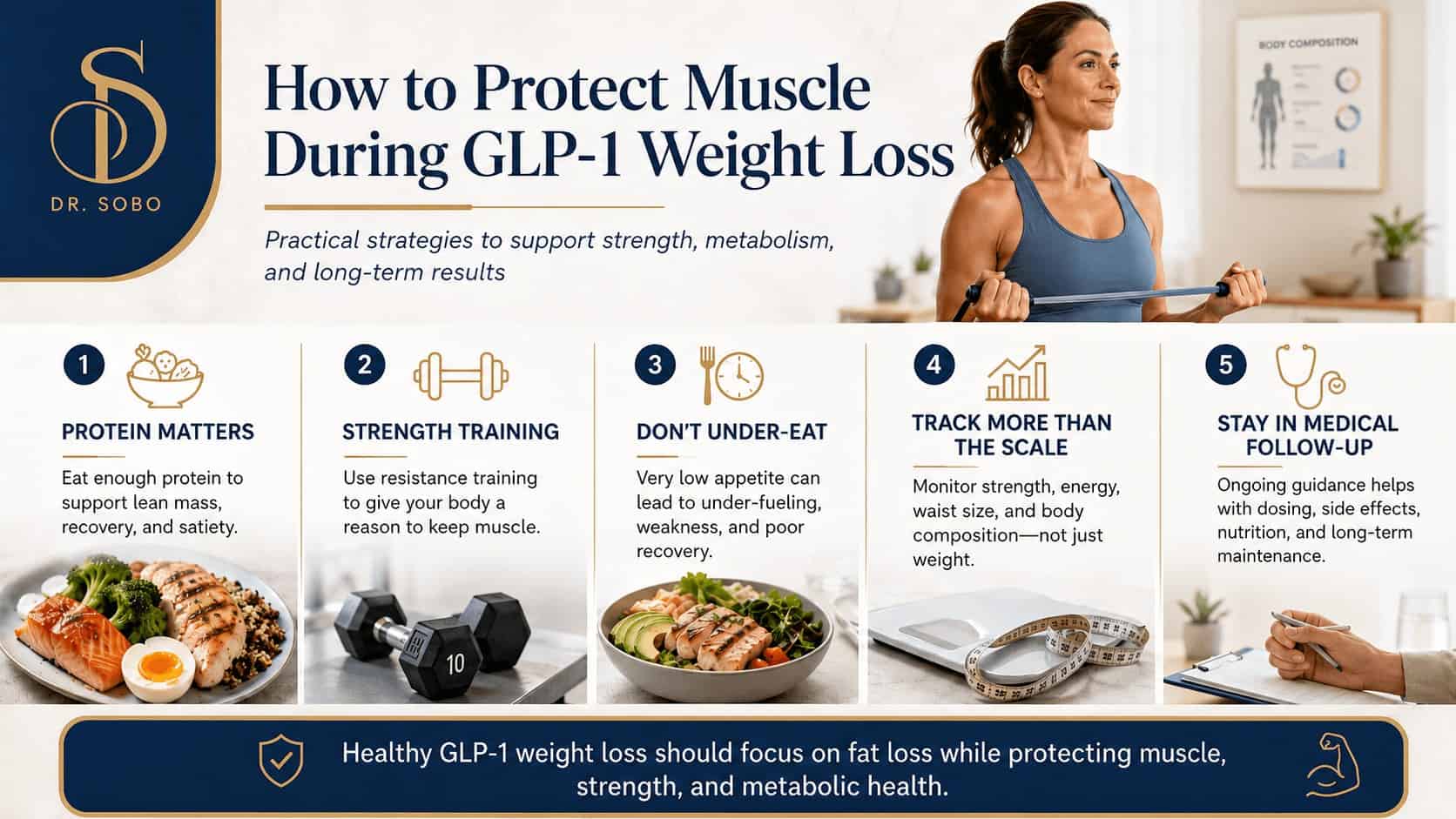
How to Protect Muscle During GLP-1 Weight Loss
Muscle preservation is not one step. It is a combination of nutrition, training, dosing, symptom management, and monitoring. The best plan is individualized, but most patients should discuss the following areas with their clinician.
1. Set a Protein Target
Protein is one of the most important nutrients during medical weight loss. It supports muscle repair, satiety, immune function, recovery, and healthy aging. The right protein target depends on body size, kidney function, age, activity level, medical history, and weight-loss goals.
Patients should not guess or copy a number from social media. Dr. Sobo can help patients identify an appropriate range and translate it into practical meals. For some people, the goal may be built around protein at each meal. For others, it may require shakes, smaller high-protein meals, or structured meal timing because appetite is very low.
2. Start Resistance Training Early
Resistance training is one of the strongest signals to preserve muscle during weight loss. This can include weights, machines, resistance bands, bodyweight exercises, Pilates-style strengthening, or supervised training depending on the patient.
The goal is not extreme exercise. The goal is progressive muscle stimulus. For many patients, two to three sessions per week may be a realistic starting point, but the right plan depends on baseline fitness, injuries, joint pain, age, and medical status.
3. Do Not Let Appetite Suppression Become Under-Fueling
Many patients are relieved when cravings decrease, but very low intake can create problems. Patients may need to plan meals even when they are not very hungry. This is especially true for protein, fluids, fiber, and nutrient-dense foods.
A practical approach may include a protein-forward breakfast, smaller meals, softer foods during nausea, fluids between meals, and a simple weekly nutrition structure. The plan should be realistic enough to follow during busy weeks, travel, stress, and dose changes.
4. Manage Side Effects Quickly
Gastrointestinal side effects can interfere with nutrition and hydration. Patients should not wait until symptoms become severe before asking for help. Constipation, nausea, reflux, vomiting, and food aversions can often be improved with dose timing, meal changes, hydration, fiber strategies, slower dose escalation, or clinical guidance.
Side effect management supports muscle preservation because patients need to tolerate enough nutrition to maintain strength. The goal is not just to stay on the medication; it is to stay on a plan that supports health.
5. Track More Than Body Weight
The scale is useful, but it is incomplete. Patients should also track strength, waist circumference, energy, sleep, digestion, hydration, appetite, cravings, and how clothes fit. When available, body composition measurements can help, but they should be interpreted carefully because different tools vary in accuracy.
Functional improvements matter. If a patient can walk farther, lift more, climb stairs more easily, sleep better, and maintain energy, that is meaningful progress even if the scale moves more slowly than expected.
6. Plan for Maintenance Before Reaching Goal Weight
The maintenance phase should not be an afterthought. Many patients regain weight when treatment stops or when the structure around nutrition, movement, and follow-up disappears. A strong plan should gradually shift from active weight loss to long-term metabolic support.
Maintenance planning may include dose strategy, nutrition targets, strength progression, ongoing monitoring, sleep and stress support, and realistic expectations for appetite changes over time.
What Should a Muscle-Preserving GLP-1 Plan Include?
A well-designed plan should connect medication, nutrition, movement, and monitoring. Patients should not be left to figure out the details alone.
| Plan Component | Purpose |
|---|---|
| Medical screening | Helps determine whether GLP-1 therapy is appropriate and what risks need to be reviewed. |
| Dose planning | Supports tolerability and reduces the risk of excessive appetite suppression. |
| Protein guidance | Helps preserve lean mass and supports recovery. |
| Resistance training plan | Creates a muscle-preserving stimulus during weight loss. |
| Side effect support | Helps maintain nutrition, hydration, and adherence. |
| Follow-up visits | Allows adjustments based on progress, symptoms, and goals. |
| Maintenance strategy | Helps reduce weight-regain risk and supports long-term outcomes. |
Why Strength Training Matters for Metabolism
Muscle is metabolically active tissue. It helps the body use glucose, supports movement, and contributes to daily energy expenditure. During weight loss, preserving muscle may help patients maintain a stronger metabolic foundation.
Strength training also improves more than muscle size. It can support balance, bone health, joint function, insulin sensitivity, confidence, and independence. These benefits are especially important as patients age.
Patients who have not exercised in years should not feel intimidated. A plan can start with simple bodyweight movements, chair-supported exercises, resistance bands, or brief supervised sessions. The key is consistency and gradual progression.
What About Cardio?
Cardio can support heart health, endurance, mood, insulin sensitivity, and weight maintenance. Walking, cycling, swimming, elliptical training, and low-impact movement can all be useful. However, cardio should not be the only exercise strategy if muscle preservation is a priority.
For many patients, the best combination is regular walking or aerobic movement plus two to three days per week of resistance training. The plan should be tailored to the patient’s joints, schedule, fitness level, recovery capacity, and medical history.
Why Older Adults Should Be Especially Careful
Adults naturally lose muscle and strength with age, especially if they are inactive. Significant weight loss without strength training and protein support may worsen frailty risk in vulnerable patients. This does not mean older adults cannot benefit from GLP-1 therapy. It means the plan should be more carefully supervised.
Older adults may need closer attention to protein intake, hydration, balance, fall risk, medication interactions, kidney function, appetite, and functional strength. A slower, more sustainable approach may be safer than aggressive weight loss without support.
Does Losing Lean Mass Mean the Treatment Is Unsafe?
Not necessarily. Some lean mass loss is expected with major weight reduction. The concern is excessive lean mass loss, loss of strength, poor nutrition, or functional decline. The goal is to improve health while protecting the body’s ability to move, recover, and maintain results.
This is why blanket statements can be misleading. GLP-1 medications do not automatically harm muscle, and they do not automatically preserve it. Outcomes depend on the medication, dose, nutrition plan, activity level, age, baseline muscle, side effects, and follow-up.
GLP-1 Weight Loss, Bone Health, and Body Composition
Muscle preservation is closely connected to bone health, balance, and mobility. A patient who loses weight but becomes weaker may have a harder time exercising, maintaining posture, protecting joints, and staying active long term. This is especially relevant for older adults, postmenopausal women, patients with low baseline strength, and patients who have a history of repeated weight cycling.
This article focuses on muscle loss and strength preservation. For patients who want the companion discussion on skeletal health, Dr. Sobo’s related article on GLP-1 weight loss, muscle, and bone preservation explains why body composition should include more than scale weight alone.
Questions to Ask Before Starting GLP-1 Therapy
Patients who are concerned about muscle loss should ask practical questions before starting treatment. A prepared conversation can help align the medication plan, nutrition plan, and follow-up schedule.
- What protein target is appropriate for me?
- How should I eat if my appetite becomes very low?
- How will we manage nausea, constipation, or reflux if they occur?
- What kind of strength training should I start with?
- Should we track body composition, waist circumference, or strength measures?
- How quickly should I expect to lose weight?
- What signs suggest I am losing strength or under-eating?
- How often will follow-up happen?
- What is the plan if I cannot tolerate dose increases?
- How will we transition into maintenance?
What Dr. Sobo Evaluates During GLP-1 Weight-Loss Planning
Dr. Sobo provides individualized medical weight loss care that considers the patient’s full health picture. Before recommending or adjusting a GLP-1-related plan, he may review:
- Weight history and prior weight-loss attempts
- Current medications and supplements
- Blood sugar, insulin resistance, or diabetes history
- Digestive symptoms and side effect risk
- Gallbladder, pancreatitis, thyroid, or endocrine history when relevant
- Protein intake and nutrition habits
- Exercise history and current strength level
- Sleep, stress, and recovery patterns
- Lab markers when appropriate
- Long-term goals beyond the scale
At Optimal Health Medical, the goal is not simply to prescribe a medication. The goal is to build a safer, more sustainable plan that supports fat loss, strength, metabolism, and long-term wellness. For some patients, this may also involve broader functional medicine evaluation, metabolic lab review, hormone discussion, or nutrition support based on the patient’s history and goals.
Common Mistakes That Increase Muscle-Loss Risk
Many patients start GLP-1 therapy with good intentions but accidentally make choices that increase the risk of poor body-composition outcomes.
Mistake 1: Eating Too Little Protein
Skipping protein because appetite is low can make it harder to preserve muscle. Protein needs should be discussed early and adjusted based on tolerance and medical history.
Mistake 2: Waiting Too Long to Start Strength Training
Patients often say they will start exercising after losing weight. A better approach is to begin with an appropriate strength plan at the start, even if it is very basic.
Mistake 3: Chasing the Fastest Dose Increase
More appetite suppression is not always better. If a dose makes it difficult to eat enough protein or causes persistent side effects, the plan may need to be adjusted.
Mistake 4: Ignoring Constipation or Nausea
Digestive symptoms can lead to lower food intake, dehydration, and poor adherence. Early side effect management supports better nutrition and consistency.
Mistake 5: Thinking Goal Weight Means the Plan Is Finished
Reaching a goal weight is not the end of care. Maintenance requires structure, follow-up, movement, nutrition, and a plan for appetite changes over time.
How This Article Fits With Dr. Sobo’s GLP-1 Muscle and Bone Preservation Guide
Dr. Sobo’s related article on GLP-1 weight loss, muscle, and bone preservation gives patients a broader body-composition overview, including why bone health and lean mass both matter during weight loss. This article is the more focused companion guide for patients specifically searching for information about GLP-1 weight loss and muscle loss.
Together, the two resources help patients understand that medical weight loss should be about more than appetite suppression. The best plan should support fat loss, protein intake, strength, mobility, bone health, side effect control, and long-term maintenance.
The Bottom Line: Healthy Weight Loss Means Protecting Muscle
GLP-1 medications can be powerful tools for patients who are appropriate candidates, but the quality of weight loss matters. Losing fat while protecting strength, energy, and metabolic function requires more than appetite suppression.
A medically guided GLP-1 plan should include protein strategy, resistance training, symptom management, hydration, follow-up, and maintenance planning. Patients should not be left with only a prescription and a scale.
If you are considering GLP-1 therapy or already using a weight-loss medication, Dr. Sobo can help you build a plan focused on safer, more sustainable progress: fat loss, muscle preservation, metabolic support, and long-term results. Contact Dr. Sobo for all your GLP-1 weight loss and muscle loss questions.
Schedule a GLP-1 Weight-Loss Consultation
If you are concerned about GLP-1 weight loss and muscle loss, a consultation can help you understand how to protect strength and metabolism while pursuing your goals. Learn more about GLP-1 weight loss, medical weight loss, peptide therapy, and functional medicine with Dr. Sobo and Optimal Health Medical.
FAQs About GLP-1 Weight Loss and Muscle Loss
Do GLP-1 medications cause muscle loss?
GLP-1 medications can be associated with some lean mass loss during weight loss, but this does not mean they directly damage muscle. Lean mass includes more than muscle, and some lean mass loss is common during major weight reduction. The goal is to reduce excessive muscle loss through protein intake, resistance training, medical monitoring, and appropriate dosing.
How much muscle can you lose on GLP-1 medications?
The amount varies by medication, dose, weight-loss speed, nutrition, exercise, age, baseline muscle mass, and medical history. Some research suggests lean mass can account for a meaningful portion of total weight loss, which is why body-composition quality should be part of the conversation before and during treatment.
How can I prevent muscle loss while taking a GLP-1?
The most important steps are eating enough protein, doing resistance training, staying hydrated, managing side effects, avoiding extreme under-eating, and keeping regular follow-up appointments. The plan should be individualized to your health status, weight-loss goals, kidney function, fitness level, and medication tolerance.
Should I lift weights while taking GLP-1 medication?
Resistance training is strongly recommended for many patients because it gives the body a reason to preserve muscle during weight loss. The right program depends on your starting fitness level, injuries, age, medical history, joint health, and mobility. Patients who are new to strength training can often begin with bands, machines, bodyweight exercises, or supervised instruction.
How much protein do I need during GLP-1 weight loss?
Protein needs vary. Factors include current body size, kidney function, activity level, age, health history, and weight-loss goals. Dr. Sobo can help patients set a realistic protein target and meal structure that fits their appetite, medication tolerance, and overall medical plan.
Can GLP-1 medications slow metabolism?
Weight loss can reduce energy expenditure, especially if lean mass decreases or activity drops. Protecting muscle, eating enough protein, staying active, and planning for maintenance can help support a healthier metabolic response during and after GLP-1 weight loss.
Is rapid weight loss bad for muscle?
Rapid weight loss may increase the risk of under-eating and lean mass loss in some patients. The best pace depends on the patient, but weight-loss quality, strength, symptoms, nutrition, and hydration should be monitored along with the scale.
What should I eat if I have no appetite on a GLP-1?
Patients with very low appetite may need smaller, protein-forward meals, softer foods, protein shakes when appropriate, hydration strategies, and side effect support. If appetite suppression prevents adequate intake, the treatment plan may need adjustment rather than simply pushing through symptoms.
Should older adults be more careful with GLP-1 weight loss?
Yes. Older adults are more vulnerable to age-related muscle and strength loss. They may need closer monitoring, protein guidance, resistance training, hydration support, fall-risk awareness, medication review, and a slower, more individualized plan.
How can Dr. Sobo help protect muscle during GLP-1 weight loss?
Dr. Sobo can help patients evaluate candidacy, set realistic goals, review labs when appropriate, personalize dosing, manage side effects, support nutrition, encourage strength preservation, and plan long-term follow-up. The goal is healthier fat loss while protecting strength, metabolism, and long-term function.
Sources
- The American Journal of Clinical Nutrition: Nutritional Priorities to Support GLP-1 Therapy for Obesity
- PubMed: Body Composition Changes During Weight Reduction With Tirzepatide in SURMOUNT-1
- National Library of Medicine: Body Composition Changes During Weight Reduction With Tirzepatide
- FDA Prescribing Information: Zepbound
- MedlinePlus: Talking With Your Doctor

Medically reviewed by