
GLP-1 Anti-Inflammation Benefits: What Research Suggests Beyond Weight Loss
GLP-1 medications are best known for helping some patients manage appetite, blood sugar, and body weight. But research is increasingly looking at whether these medications may also influence inflammation, immune signaling, vascular health, liver function, kidney outcomes, and other systems connected to chronic metabolic disease.
That does not mean GLP-1 medications are anti-inflammatory drugs in the same way as steroids, biologics, or immune-suppressing medications. It also does not mean they are appropriate for every person with inflammation, arthritis, gut symptoms, fatty liver disease, or cardiometabolic risk. The research is still developing, and many potential benefits need to be studied condition by condition.
Still, the topic matters because chronic low-grade inflammation is closely connected to obesity, insulin resistance, type 2 diabetes, cardiovascular disease, fatty liver disease, sleep apnea, joint pain, and other metabolic concerns. Research summaries and expert reviews increasingly describe GLP-1 medications as having possible body-wide effects beyond appetite and blood sugar control, including effects on inflammatory signaling.
For patients already considering GLP-1 weight loss or medical weight loss, the growing research raises an important question:
Could GLP-1 medications help improve health in ways that go beyond the number on the scale?
The current answer is careful but promising: research suggests GLP-1 medications may have anti-inflammatory effects in some tissues and disease contexts, but these effects should be interpreted as part of a broader medically supervised plan rather than as a standalone treatment for inflammatory disease.
To discuss whether GLP-1 therapy, semaglutide, or another medically supervised weight loss option may be appropriate for your health history, call 203-348-8805.
GLP-1 Medications May Do More Than Reduce Appetite
GLP-1 stands for glucagon-like peptide-1, a hormone involved in appetite, insulin response, digestion, and blood sugar regulation. GLP-1 receptor agonists are medications that mimic or activate this pathway.
Many patients know these medications by brand names such as Ozempic, Wegovy, Mounjaro, and Zepbound. These drugs have become widely recognized because they can help some patients lose weight, improve blood sugar control, and reduce cardiometabolic risk when used appropriately.
However, researchers are now studying broader effects. A review in The Journal of Clinical Investigation explains that GLP-1-based therapies have been associated with reduced rates of cardiovascular and chronic kidney disease in people with type 2 diabetes and/or obesity. The same review notes that GLP-1 receptor signaling may reduce systemic and tissue inflammation through both weight loss–dependent and weight loss–independent mechanisms.
This is one reason GLP-1 research has expanded beyond diabetes and obesity. Researchers are studying GLP-1 medicines in metabolic liver disease, arthritis, substance use disorders, neurodegenerative disorders, and other areas while emphasizing that many questions remain.
These expanded areas of investigation do not prove that inflammation is the only reason GLP-1 medications help. They do show that this class of medications is being studied in a broader metabolic-health context than weight loss alone.
What Is Inflammation, and Why Does It Matter for Metabolic Health?
Inflammation is part of the immune system’s normal defense process. When the body encounters infection, injury, or harmful stress, inflammation helps activate repair and protection. In short bursts, inflammation is helpful.
The problem is chronic low-grade inflammation. This type of inflammation can persist quietly in tissues and blood vessels. It is often associated with obesity, insulin resistance, high blood sugar, high triglycerides, fatty liver disease, cardiovascular disease, autoimmune activity, sleep apnea, and some chronic pain conditions.
In metabolic disease, inflammation can become part of a self-reinforcing cycle:
- Excess visceral fat can release inflammatory signals.
- Insulin resistance can worsen glucose and lipid stress.
- Blood vessels may become more inflamed and less flexible.
- Liver fat can drive immune activation and fibrosis risk.
- Chronic inflammation can make weight loss and metabolic recovery harder.
This is why a medical weight loss plan should not focus only on pounds lost. Weight reduction can be important, but body composition, blood sugar, lipid markers, blood pressure, liver enzymes, inflammatory markers, sleep quality, muscle mass, and overall metabolic function also matter.
At Dr. Sobo’s Medical Weight Loss program, GLP-1 therapy is best understood as one possible tool within a larger physician-guided strategy. The goal is to evaluate the patient’s health history, risk factors, lab markers, treatment tolerance, and long-term maintenance plan.
How GLP-1 Medications May Affect Inflammation
Researchers are investigating several ways GLP-1 medications may influence inflammation. Some effects may happen indirectly through weight loss, reduced visceral fat, improved blood sugar, lower insulin resistance, and improved lipid levels. Other effects may involve GLP-1 receptors and immune signaling in specific tissues.
The important distinction is this:
Some inflammation improvements may happen because patients lose weight. Other improvements may occur through weight-independent pathways that researchers are still studying.
That distinction matters because patients with complex metabolic health concerns may benefit from monitoring more than weight alone. For example, a person may have meaningful improvements in blood sugar, waist circumference, liver markers, blood pressure, or inflammatory markers even if weight loss is slower than expected.
Scientific discussion of GLP-1 medications increasingly recognizes that their broader benefits may be tied partly to weight loss while also involving direct effects on inflammatory and metabolic pathways.
Appetite, Blood Sugar, and Weight Loss Still Matter
Weight loss can reduce inflammatory burden. Losing excess visceral fat may decrease inflammatory signaling, improve insulin sensitivity, lower blood pressure, improve triglycerides, and reduce strain on joints and organs.
For many patients, GLP-1 medications support weight loss by helping them feel full sooner, reducing appetite, and decreasing “food noise.” These changes may make it easier to maintain a calorie deficit and improve dietary consistency.
But weight loss should not be treated as the only goal.
A stronger medical weight loss approach should also ask:
- Is the patient preserving lean muscle?
- Are blood sugar and insulin markers improving?
- Are triglycerides, cholesterol, and blood pressure improving?
- Are liver enzymes or fatty liver risk markers changing?
- Is sleep improving?
- Is inflammation decreasing?
- Is the patient tolerating the medication safely?
- Is there a realistic maintenance strategy?
This broader view is especially important for patients who have a history of inflammation-related symptoms, cardiovascular risk, fatty liver disease, prediabetes, type 2 diabetes, or weight regain after dieting.
Weight-Independent Anti-Inflammatory Pathways Are Being Studied
The most exciting area of GLP-1 inflammation research is the possibility that these medications may affect inflammatory pathways directly in certain tissues.
Scientific research has identified GLP-1 receptor signaling as relevant in multiple organ systems. The Journal of Clinical Investigation review describes broad anti-inflammatory effects in multiple peripheral organs, including the cardiovascular system, liver, intestine, kidneys, and joints, while also noting that some areas require further study.
This type of research is promising, but it should be interpreted carefully. Preclinical findings in mice do not automatically translate to the same clinical effect in humans. Human tissue studies and clinical trials are needed to clarify how much of the benefit is weight-related, how much is weight-independent, and which patients are most likely to benefit.
GLP-1 Medications and C-Reactive Protein
One of the most discussed markers in GLP-1 inflammation research is C-reactive protein, or CRP. CRP is a blood marker associated with systemic inflammation. It is not specific to one disease, but elevated CRP can reflect inflammatory activity in the body.
A study published in EClinicalMedicine found that once-weekly semaglutide 2.4 mg reduced CRP concentrations in adults with overweight or obesity compared with placebo. The authors concluded that the findings suggest a potential anti-inflammatory role of semaglutide in obesity.
For patients, the key takeaway is not that CRP alone determines whether treatment is working. Instead, CRP may be one useful marker among many. A physician may consider inflammation markers alongside weight, waist circumference, A1C, fasting glucose, insulin, triglycerides, cholesterol, liver markers, kidney function, blood pressure, symptoms, and medication tolerance..
How GLP-1 Medications May Support Health Beyond Weight Loss
Researchers are studying GLP-1 medications across multiple organ systems because obesity, insulin resistance, cardiovascular disease, fatty liver disease, kidney disease, and chronic inflammation often overlap.
Area of Research | What GLP-1 Medications May Influence | What Patients Should Understand |
Weight & Appetite | Appetite regulation, fullness, food intake, and reduced cravings | Weight loss can reduce inflammatory burden, but medication should be paired with nutrition, activity, and medical monitoring. |
Blood Sugar | Glucose control, insulin response, and type 2 diabetes management | Better blood sugar control may reduce metabolic stress and downstream inflammation. |
Inflammation | CRP and inflammatory signaling | Research suggests possible anti-inflammatory effects, but GLP-1 medications are not universal inflammation treatments. |
Heart & Blood Vessels | Cardiovascular risk markers, vascular inflammation, and endothelial function | Benefits may involve weight loss, blood pressure, lipids, glucose, and possible vascular anti-inflammatory effects. |
Liver Health | MASH, liver fat, inflammation, and fibrosis pathways | Wegovy has received FDA approval for certain adults with MASH and moderate-to-advanced fibrosis, but liver disease still requires medical management. |
Kidney Health | Chronic kidney disease outcomes in select patients | Kidney-related benefits depend on medication, indication, diabetes status, kidney function, and physician monitoring. |
Immune-Related Conditions | Areas under investigation, including arthritis, Crohn’s disease, and psoriasis | These areas are investigational and should not be treated as established uses without physician guidance. |
Suggested image caption:
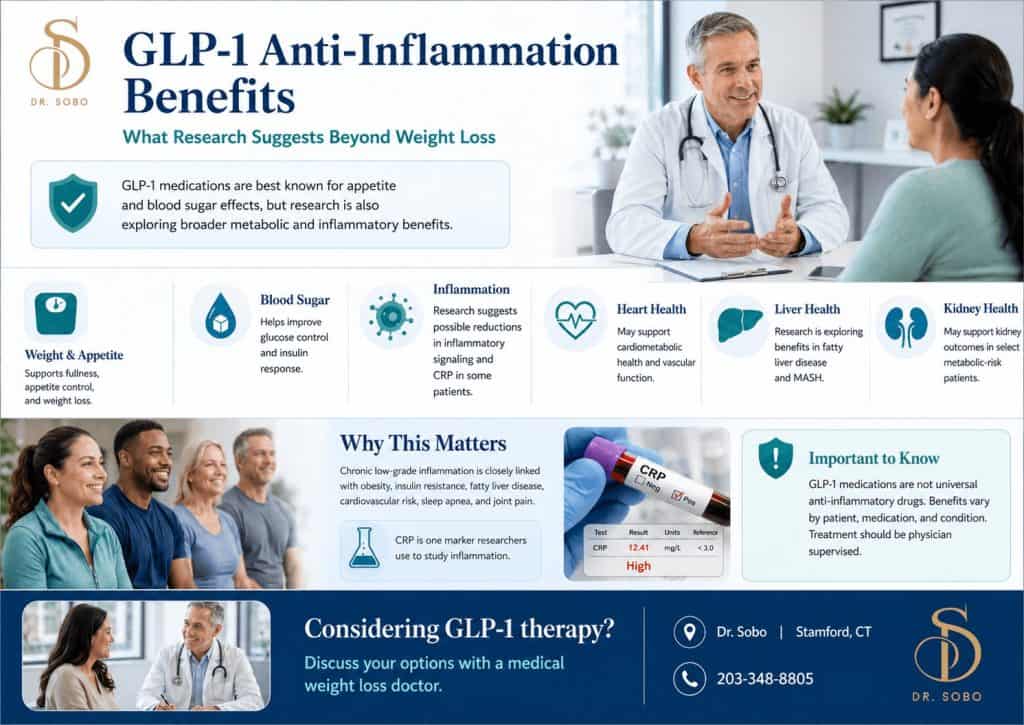
GLP-1 medications are best known for appetite and blood sugar effects, but research is also exploring their role in inflammation, cardiovascular health, liver disease, kidney outcomes, and immune-related conditions. These effects vary by medication, patient history, and disease context.
Why Researchers Are Studying GLP-1 Effects Across the Body
GLP-1 medications are being studied across multiple systems because metabolic disease rarely affects only one organ. Obesity, insulin resistance, fatty liver disease, cardiovascular disease, sleep apnea, joint pain, and chronic kidney disease often overlap.
That overlap is one reason the research is clinically interesting. A medication that improves appetite and weight may also reduce metabolic stress. If it also influences inflammation, immune signaling, and tissue-level pathways, it could help explain why GLP-1 medications are being studied for broader health effects.
The current evidence is not equally strong for every condition. Some areas have FDA-approved indications or large clinical trials. Others are early-stage or investigational.
Heart and Blood Vessel Inflammation
Cardiovascular disease is closely tied to inflammation. Blood vessel inflammation can contribute to plaque development, reduced vascular flexibility, clotting risk, and impaired blood flow.
GLP-1 medications have shown cardiovascular benefits in certain patient groups. In 2024, the FDA approved Wegovy to reduce the risk of major adverse cardiovascular events in adults with known heart disease and either obesity or overweight.
Researchers are studying whether some of those benefits may be related not only to weight loss but also to vascular inflammation, endothelial function, lipid changes, blood pressure changes, and immune signaling.
For patients, this means GLP-1 treatment should be considered in the context of overall cardiovascular risk. Blood pressure, cholesterol, triglycerides, A1C, family history, smoking status, sleep apnea, and existing heart disease all matter.
Liver Inflammation and MASH
MASH, formerly known as NASH, is a serious liver disease involving fat accumulation, inflammation, and fibrosis. Over time, fibrosis can progress to cirrhosis and liver failure in some patients.
Liver disease sits at the intersection of obesity, insulin resistance, inflammation, and metabolic dysfunction. Weight loss can help reduce liver fat, but researchers are also studying whether GLP-1 medications may directly influence liver inflammation and fibrosis pathways.
In 2025, the FDA approved Wegovy for adults with metabolic dysfunction-associated steatohepatitis, or MASH, with moderate-to-advanced fibrosis, excluding cirrhosis. This approval does not mean every patient with fatty liver disease should take semaglutide. It means certain patients with a specific diagnosis may have an additional FDA-approved treatment option when evaluated and managed by a clinician.
Patients should not interpret this as a reason to self-treat liver disease with GLP-1 medications. MASH requires careful evaluation, labs, imaging when appropriate, and physician-guided treatment. But the research reinforces a broader principle: metabolic health and inflammation are deeply connected.
Kidney and Cardiometabolic Health
Chronic kidney disease is another area where GLP-1 research and clinical use have expanded. Kidney disease is often tied to diabetes, high blood pressure, vascular disease, and chronic inflammation.
GLP-1 medications may help some patients by improving blood sugar, weight, blood pressure, vascular function, and broader cardiometabolic markers. For patients considering GLP-1 therapy, kidney function matters for safety and monitoring.
A physician may need to review hydration status, nausea or vomiting risk, current medications, diabetes therapy, kidney labs, and cardiovascular risk before and during treatment. This is especially important for patients with existing type 2 diabetes, chronic kidney disease, multiple prescriptions, or a history of dehydration-related complications.
Joint, Gut, Skin, and Immune-Related Conditions
A major reason GLP-1 inflammation research is gaining attention is that patients and researchers are reporting interest in inflammatory conditions beyond classic metabolic disease.
Scientific discussion has included arthritis, Crohn’s disease, psoriasis, and other inflammatory conditions. However, these uses remain highly condition-specific and should not be treated as established indications unless supported by appropriate clinical evidence and regulatory approval.
That disease-by-disease approach is important. A medication may improve inflammation in one organ system but have limited effect in another. It may help one subgroup of patients and not another. It may reduce one inflammatory marker while not improving symptoms.
Patients should be cautious about headlines that make GLP-1 medications sound like universal anti-inflammatory treatments. The science is promising, but not simple.
What This Means for Patients Considering GLP-1 Therapy
For patients, the most practical takeaway is this:
GLP-1 medications should be evaluated as metabolic health tools, not just weight loss tools.
That broader view changes the conversation. Instead of asking only, “How much weight will I lose?” patients should also ask:
- How will this affect my blood sugar?
- How will we monitor cardiovascular risk?
- Should we track inflammation markers?
- Do I have signs of fatty liver disease?
- What labs should be checked before and during treatment?
- How do we protect muscle mass?
- What happens if side effects occur?
- What is the maintenance plan?
- Am I a safe candidate for this medication?
This is where physician supervision becomes important. GLP-1 medications can cause side effects, may not be appropriate for certain medical histories, and should be integrated with nutrition, activity, lab monitoring, and long-term planning.
Dr. Sobo provides semaglutide and medical weight loss consultation options for appropriate patients. Treatment decisions should be based on a personalized medical evaluation rather than general online information.
Why Doctor-Supervised GLP-1 Treatment Matters
GLP-1 medications affect appetite, digestion, blood sugar, hydration, body composition, and medication tolerance. Some patients experience nausea, constipation, diarrhea, vomiting, reflux, fatigue, or reduced appetite that becomes too strong. Others may need closer monitoring because of diabetes medications, gallbladder history, kidney concerns, thyroid history, gastrointestinal issues, or upcoming procedures.
A doctor-supervised program helps answer critical questions:
- Is a GLP-1 medication appropriate?
- Which medication and dose strategy is safest?
- What baseline labs should be checked?
- What symptoms should prompt a call?
- How will we preserve muscle?
- Is the patient eating enough protein and nutrients?
- Are metabolic markers improving?
- Is the patient tolerating the medication?
- How will maintenance be handled?
Without follow-up, patients may lose weight but also lose muscle, become dehydrated, undereat, ignore side effects, or stop treatment without a plan.
A stronger program looks at weight loss, inflammation, metabolic health, and sustainability together.
When to Talk With a Medical Weight Loss Doctor
Consider speaking with a medical weight loss doctor if you are researching GLP-1 medications and have any of the following concerns:
- Obesity or weight-related health conditions
- Prediabetes or type 2 diabetes
- High blood pressure
- High cholesterol or triglycerides
- Fatty liver disease or elevated liver enzymes
- Chronic inflammation markers
- Sleep apnea
- Joint pain affected by weight
- Strong appetite, cravings, or food noise
- Prior weight regain after dieting
- Medication-related weight gain
- Hormonal changes affecting weight
- Concerns about side effects or medication safety
Patients in Stamford, Greenwich, Fairfield County, and across Connecticut can call 203-348-8805 to discuss whether medical weight loss or GLP-1 weight loss may be appropriate.
Final Thoughts: GLP-1 Inflammation Research Is Promising, but Medical Guidance Matters
GLP-1 medications are changing how physicians think about obesity, diabetes, metabolic health, and chronic disease risk. Their best-known benefits involve appetite, blood sugar, and weight reduction. But emerging research suggests that GLP-1 medications may also influence inflammation in ways that help explain broader benefits in the heart, liver, kidney, blood vessels, and other tissues.
The key word is may. This is an active area of research, and not every inflammatory condition will respond the same way. Patients should not treat GLP-1 medications as a cure for inflammation or a substitute for condition-specific care.
The most responsible approach is a physician-guided evaluation that looks at the whole person: weight, waist circumference, blood sugar, insulin resistance, lipids, liver markers, kidney function, inflammation, muscle mass, symptoms, medication tolerance, and long-term maintenance.
To discuss GLP-1 therapy, semaglutide, and medically supervised weight loss options in Connecticut, call 203-348-8805 or visit Dr. Sobo’s Medical Weight Loss page.
Patients who want a broader overview of the science can also read Dr. Sobo’s guide to GLP-1 medications and inflammation.
FAQs About GLP-1 Medications and Inflammation
Can GLP-1 medications reduce inflammation?
Research suggests GLP-1 medications may reduce inflammation in some patients and disease contexts. Some benefits may come from weight loss, improved blood sugar, reduced visceral fat, and better metabolic control, while other effects may involve more direct anti-inflammatory pathways in tissues such as blood vessels, the liver, kidneys, and immune-related cells. However, GLP-1 medications should not be viewed as a universal treatment for inflammatory disease. Patients should speak with a physician to determine whether GLP-1 therapy is appropriate for their health history, symptoms, lab markers, and treatment goals.
What is the connection between GLP-1 and inflammation?
GLP-1 is a hormone pathway involved in appetite regulation, insulin response, digestion, and metabolic signaling. Researchers are studying how GLP-1 receptor activation may also affect inflammatory pathways, immune signaling, vascular function, and tissue-level repair. The connection is complex because inflammation may improve indirectly through weight loss, reduced visceral fat, and better blood sugar control, while some studies suggest certain effects may occur independently of weight loss. This is why GLP-1 medications are increasingly being studied as metabolic health tools, not simply appetite-control medications.
Does semaglutide lower C-reactive protein?
Studies have shown that semaglutide can reduce C-reactive protein, or CRP, in people with overweight or obesity. CRP is a blood marker associated with systemic inflammation, although it is not specific to one condition. Research published in EClinicalMedicine reported that once-weekly semaglutide reduced CRP compared with placebo in adults with overweight or obesity. CRP should not be used as the only marker of treatment response. A physician may interpret CRP alongside weight, waist circumference, A1C, fasting glucose, insulin, triglycerides, cholesterol, liver markers, kidney function, blood pressure, symptoms, and medication tolerance.
Are GLP-1 medications anti-inflammatory drugs?
GLP-1 medications are not classified simply as traditional anti-inflammatory drugs. They work through GLP-1 pathways and are used for conditions such as type 2 diabetes, obesity, cardiovascular risk reduction in certain patients, and select expanded indications depending on the medication. However, research suggests they may have anti-inflammatory effects in some tissues and disease contexts. These effects are still being studied, and patients should not treat GLP-1 medications as replacements for condition-specific care for autoimmune disease, arthritis, inflammatory bowel disease, or other inflammatory conditions.
Can GLP-1 medications help with fatty liver disease?
GLP-1 medications are being studied in fatty liver disease and metabolic dysfunction-associated steatohepatitis, or MASH. Wegovy has received FDA approval for certain adults with MASH and moderate-to-advanced fibrosis, but liver disease should always be evaluated and managed by a qualified clinician. Patients should not self-treat suspected liver disease with weight loss medication. A proper medical evaluation may include lab testing, imaging when appropriate, metabolic risk assessment, medication review, and a supervised plan for weight, nutrition, blood sugar, and liver health.
Can GLP-1 medications help with arthritis or joint inflammation?
Researchers are investigating GLP-1 medications in several inflammatory and immune-related conditions, including arthritis-related areas of interest. However, GLP-1 medications are not established as a general arthritis treatment. Any improvement in joint symptoms may depend on weight loss, reduced mechanical stress on joints, improved metabolic health, changes in inflammatory signaling, or other factors. Patients with arthritis, autoimmune disease, or chronic joint pain should continue working with their appropriate medical providers and should not replace established treatment with GLP-1 therapy unless advised by a physician.
Do GLP-1 medications help heart health because of inflammation?
Some cardiovascular benefits of GLP-1 medications may be related to weight loss, blood sugar improvement, blood pressure changes, lipid improvements, and possible anti-inflammatory or vascular effects. The exact contribution of inflammation likely varies by patient and disease context. Cardiovascular risk is influenced by many factors, including cholesterol, triglycerides, blood pressure, A1C, insulin resistance, smoking history, family history, sleep apnea, kidney function, and existing heart disease. Patients with cardiovascular risk should be evaluated by a physician before starting GLP-1 treatment.
Are GLP-1 medications safe for everyone?
No. GLP-1 medications are not appropriate for everyone. Safety depends on the medication, medical history, current prescriptions, kidney and liver status, gastrointestinal history, diabetes medications, pregnancy considerations, thyroid history, gallbladder history, hydration risk, and other individual factors. Some patients may experience nausea, constipation, diarrhea, vomiting, reflux, fatigue, or appetite reduction that becomes too strong. A medical evaluation is necessary before starting treatment, and ongoing monitoring is important to help reduce risks and support long-term success.
What should I ask a doctor before starting GLP-1 therapy?
Before starting GLP-1 therapy, ask whether you are a medically appropriate candidate, which medication options fit your health history, what side effects to watch for, and how your labs and metabolic markers will be monitored. It is also important to ask whether inflammation markers should be tracked, how to protect muscle mass during weight loss, how much protein and nutrition support you may need, and what the long-term maintenance plan will be. A strong medical weight loss plan should look beyond the scale and consider blood sugar, liver health, kidney function, cardiovascular risk, body composition, symptoms, and medication tolerance.
Where can I discuss GLP-1 inflammation and weight loss in Connecticut?
Patients in Stamford, Greenwich, Fairfield County, and throughout Connecticut can schedule a medical weight loss consultation with Dr. Sobo to discuss GLP-1 therapy, semaglutide, metabolic health, inflammation-related concerns, and physician-supervised weight loss options. Treatment decisions should be based on a personalized medical evaluation rather than general online information. To discuss whether GLP-1 therapy or another medically supervised weight loss option may be appropriate, call 203-348-8805 or visit the Medical Weight Loss page.
Sources
- Antiinflammatory Actions of Glucagon-Like Peptide-1–Based Therapies — The Journal of Clinical Investigation
- Effects of Once-Weekly Semaglutide 2.4 mg on C-Reactive Protein in Adults With Overweight or Obesity — EClinicalMedicine
- FDA Approves First Treatment to Reduce Risk of Serious Heart Problems Specifically in Adults With Obesity or Overweight
- FDA Approves Treatment for Serious Liver Disease Known as MASH
- Medical Weight Loss — Dr. Sobo
- GLP-1 Weight Loss — Dr. Sobo
- Semaglutide — Dr. Sobo
