
PCOS Will Now Be Called PMOS: Why the Name Change Matters for Women’s Health
Polycystic Ovary Syndrome, widely known as PCOS, has officially been renamed Polyendocrine Metabolic Ovarian Syndrome, or PMOS. The change is more than a new medical label. It reflects a major shift in how physicians, researchers, and patients understand one of the most common hormone-related conditions affecting women worldwide.
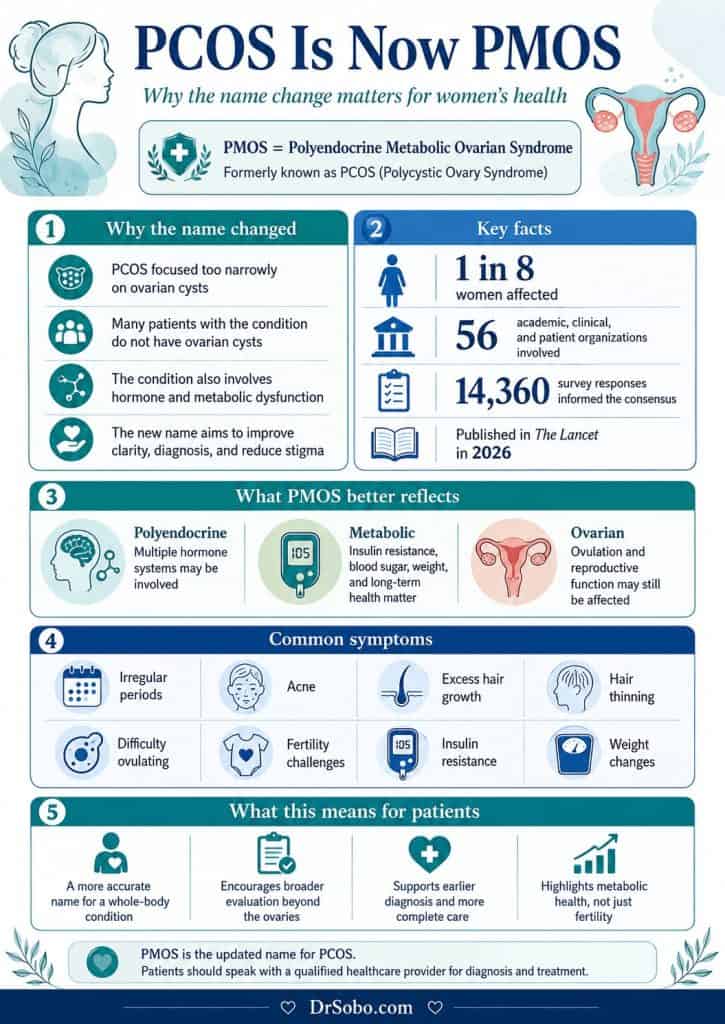
For decades, the name PCOS created confusion. Many women were told they had a “cyst problem,” even though ovarian cysts are not required for diagnosis and do not fully explain the condition. The new name, PMOS, better reflects what the condition truly involves: hormone disruption, metabolic dysfunction, ovarian effects, insulin resistance, weight challenges, skin changes, fertility concerns, and long-term health risks.
The name change was formally announced through a major international consensus process published in The Lancet in May 2026. The researchers explained that the term PCOS was inaccurate because it implied pathological ovarian cysts, obscured the condition’s broader endocrine and metabolic features, contributed to delayed diagnosis, increased stigma, fragmented care, and limited research and policy attention. The new PMOS name was selected after a rigorous global process involving leading academic, clinical, and patient organizations, international surveys, expert workshops, and implementation analysis.
The Endocrine Society has also announced that Polyendocrine Metabolic Ovarian Syndrome is the new name for PCOS, noting that the condition affects approximately 1 in 8 women, or more than 170 million women worldwide. The name change is intended to correct a long-standing misunderstanding that reduced a complex endocrine and metabolic condition to an issue focused mainly on ovarian cysts.
For patients in Connecticut and beyond, this name change may help women get diagnosed earlier, ask better questions, and receive care that looks beyond the ovaries alone.
What Is PMOS?
PMOS stands for Polyendocrine Metabolic Ovarian Syndrome. It is the new name for the condition previously called Polycystic Ovary Syndrome, or PCOS.
PMOS describes a chronic hormone and metabolic condition that may affect menstrual cycles, ovulation, androgen levels, insulin response, weight, skin, hair growth, fertility, and long-term metabolic health. The word polyendocrine recognizes that multiple hormone systems may be involved. The word metabolic recognizes that blood sugar, insulin resistance, body composition, cardiovascular risk, and weight regulation are often central to the condition. The word ovarian preserves the reality that ovulation and reproductive function may still be affected, while no longer making “cysts” the defining feature.
This is a major improvement over the term PCOS. The older name placed attention on ovarian cysts, even though many women with the condition do not have cysts and cysts are not required for diagnosis. The new PMOS name helps shift the conversation from “Do I have cysts?” to a more useful question: How are my hormones, metabolism, menstrual cycle, and long-term health connected?
Why Was PCOS Renamed PMOS?
PCOS was renamed PMOS because the old name was incomplete and often misleading. The condition is not simply an ovarian cyst disorder. It is a broader endocrine and metabolic condition that can affect multiple systems in the body.
According to the international consensus published in The Lancet, the term PCOS implied pathological ovarian cysts, obscured the condition’s diverse endocrine and metabolic features, and contributed to delayed diagnosis, fragmented care, stigma, and limited research framing. In other words, the old name did not match what many women actually experience.
The updated name was not chosen casually. The global consensus process included engagement from 56 leading academic, clinical, and patient organizations and survey responses from 14,360 people with PCOS and multidisciplinary health professionals from all world regions. The process used international surveys, modified Delphi methods, nominal group workshops, marketing analysis, and implementation planning. The goal was to select a name that was scientifically accurate, clear, less stigmatizing, culturally appropriate, and feasible to implement across health systems.
The result was Polyendocrine Metabolic Ovarian Syndrome, or PMOS.
In practical terms, the new name helps patients and doctors understand that this condition may require more than gynecologic care alone. It may also involve metabolic testing, endocrine evaluation, nutrition support, insulin resistance management, fertility planning, cardiovascular risk assessment, and long-term health monitoring.
PCOS vs. PMOS: What Changed?
| Old Term | New Term | Why It Matters |
|---|---|---|
| PCOS | PMOS | Reflects the condition as hormonal, metabolic, and ovarian |
| Polycystic Ovary Syndrome | Polyendocrine Metabolic Ovarian Syndrome | Moves beyond the inaccurate focus on ovarian cysts |
| Often viewed as a reproductive issue | Recognized as a whole-body endocrine-metabolic condition | Encourages broader evaluation and long-term care |
| Commonly associated with cysts | Associated with hormones, insulin, metabolism, ovulation, skin, and weight | Helps patients understand the full health picture |
| May contribute to delayed diagnosis | May improve awareness and recognition | Creates clearer language for physicians and patients |
| Can reinforce stigma or confusion | Designed to be clearer and less stigmatizing | Helps validate symptoms beyond fertility and cysts |
The diagnosis itself does not suddenly disappear or become a different disease. PMOS is the updated name for the condition many patients and clinicians have known as PCOS. During the transition, patients will likely see both terms used together: PMOS, formerly PCOS.
Why the PMOS Name Change Is Important for Patients
The PMOS name change matters because words influence diagnosis, treatment, research, insurance conversations, patient education, and self-advocacy.
For many women, the term PCOS never fully described their experience. Some were told they could not have PCOS because they did not have cysts. Others received gynecologic treatment for irregular periods but were never evaluated for insulin resistance, metabolic risk, inflammation, weight changes, or long-term cardiovascular concerns. Some women were told their acne, hair growth, weight gain, fertility struggles, and fatigue were separate problems rather than connected signs of a broader endocrine-metabolic condition.
PMOS helps correct that misunderstanding.
The new name makes it clearer that this condition can involve:
- Multiple hormone systems
- Insulin resistance and blood sugar regulation
- Weight and body composition challenges
- Ovulation and menstrual cycle disruption
- Skin and hair changes related to androgens
- Fertility concerns
- Mental health and quality-of-life effects
- Long-term metabolic and cardiovascular risk
This broader framing may help patients seek care earlier and help clinicians evaluate the full pattern of symptoms rather than focusing too narrowly on ovarian cysts.
What Are the Symptoms of PMOS?
PMOS symptoms can vary widely. Some women have obvious menstrual changes. Others first notice weight gain, acne, hair growth, hair thinning, fertility struggles, fatigue, abnormal blood sugar markers, or difficulty losing weight despite lifestyle changes.
Common PMOS symptoms may include:
- Irregular, unpredictable, infrequent, heavy, or absent menstrual periods
- Difficulty ovulating
- Difficulty becoming pregnant
- Acne or oily skin
- Excess facial or body hair growth
- Hair thinning or female-pattern hair loss
- Weight gain or difficulty losing weight
- Insulin resistance
- Prediabetes or elevated blood sugar markers
- Higher risk of type 2 diabetes
- Elevated cholesterol or cardiovascular risk markers
- Sleep apnea or poor sleep quality
- Anxiety, depression, body image distress, or reduced quality of life
The World Health Organization has described PCOS as a hormonal disorder associated with higher androgen levels, irregular menstrual periods, abnormal ovulation, infertility, excess facial or body hair, and acne. WHO also notes that PCOS affects an estimated 10% to 13% of reproductive-aged women and that many affected women remain undiagnosed.
This is why the name PMOS is important. Many women do not experience the condition as one isolated reproductive issue. They experience it as a pattern of hormonal, metabolic, skin, weight, menstrual, and fertility concerns that can change over time.
Why the New Name May Help Women Get Diagnosed Earlier
One of the biggest problems with PCOS has been underdiagnosis. Many women live for years with irregular cycles, acne, unexplained weight changes, insulin resistance, or fertility concerns before receiving a clear explanation. Others are told that if they do not have ovarian cysts, they do not have PCOS, even though cysts are not required for diagnosis.
A misleading name can contribute to that problem. If a woman does not have visible ovarian cysts, she may assume PCOS does not apply to her. If a clinician focuses only on reproductive symptoms, the metabolic side may be missed. If the main conversation is about fertility, women who are not trying to conceive may not receive adequate evaluation.
PMOS may help correct that by emphasizing three core realities:
- Polyendocrine: Multiple hormone systems may be involved.
- Metabolic: Insulin resistance, blood sugar, cholesterol, weight, inflammation, and cardiovascular risk matter.
- Ovarian: Ovulation and reproductive function may still be affected, but they are not the whole story.
This broader terminology may help patients seek care earlier and help clinicians evaluate the full pattern of symptoms instead of looking for ovarian cysts alone.
PMOS and Insulin Resistance
One of the most important reasons PMOS matters is its connection to insulin resistance.
Insulin is the hormone that helps move glucose from the bloodstream into cells. When the body becomes resistant to insulin, the pancreas may produce more insulin to compensate. Higher insulin levels can interact with ovarian hormone production and may contribute to higher androgen levels, irregular ovulation, acne, hair growth, and weight challenges.
For patients, this means PMOS care often needs to include a metabolic evaluation, not just a reproductive evaluation. Important markers may include:
- Fasting glucose
- Fasting insulin
- Hemoglobin A1c
- Lipid panel
- Waist circumference and body composition
- Blood pressure
- Liver health markers when appropriate
- Family history of diabetes or metabolic disease
Dr. Sobo’s existing educational resources on insulin resistance, medical weight loss, semaglutide, and tirzepatide are highly relevant for patients trying to understand how PMOS connects with weight, blood sugar, and long-term metabolic health.
PMOS, Weight, and Metabolic Health
Weight is not the only issue in PMOS, and patients should never be reduced to weight alone. However, metabolic health is a major part of the condition for many women.
PMOS may make weight management more difficult because hormone fluctuations, insulin resistance, inflammation, sleep disruption, appetite signaling, and body composition can all affect how the body responds to food, exercise, and medical therapy. At the same time, improving metabolic health may help reduce risk factors associated with PMOS.
This is where the new name is valuable. Polyendocrine Metabolic Ovarian Syndrome makes it clearer that care should not stop at cycle regulation or fertility support. Patients may also benefit from a structured plan that evaluates nutrition, physical activity, sleep, stress, glucose regulation, body composition, and medical therapy when appropriate.
These topics matter because many women with PMOS are not just asking, “Why are my periods irregular?” They are asking, “Why is my body not responding normally to food, exercise, insulin, and weight-loss efforts?”
A more complete PMOS evaluation can help identify whether symptoms are connected to insulin resistance, androgen excess, thyroid issues, nutrient deficiencies, sleep disruption, inflammation, medication effects, or other metabolic factors that may require individualized care.
PMOS and Fertility
PMOS can affect fertility because it may interfere with ovulation. If ovulation does not occur regularly, it can become more difficult to conceive.
For women trying to become pregnant, PMOS care may involve:
- Confirming whether ovulation is occurring
- Evaluating androgen levels
- Reviewing menstrual cycle patterns
- Checking metabolic markers
- Addressing insulin resistance
- Coordinating with gynecology or fertility specialists when needed
- Supporting healthy body composition and nutrition
- Monitoring pregnancy-related risks if conception occurs
Not every woman with PMOS has infertility, and many women with the condition can become pregnant. However, the metabolic and hormonal aspects of PMOS should be evaluated early because they can influence both fertility planning and pregnancy health.
The new name also helps women who are not currently trying to conceive. PMOS is not only a fertility issue. A patient may still need metabolic testing, hormone evaluation, menstrual cycle support, and long-term risk reduction even if pregnancy is not her immediate goal.
PMOS and Skin, Hair, and Androgen Symptoms
Many women first seek help for PMOS because of skin or hair symptoms. These may include persistent acne, oily skin, excess facial hair, hair growth on the chest or abdomen, or thinning hair on the scalp.
These symptoms are often related to elevated androgens or increased sensitivity to androgens. Androgens are sometimes called “male-type” hormones, but women naturally produce them too. When androgen activity is elevated or unbalanced, it may affect the skin, hair follicles, ovulation, and menstrual patterns.
A major advantage of the PMOS name is that it validates these symptoms as part of a broader endocrine-metabolic condition. Acne, hair growth, and hair thinning are not merely cosmetic concerns. They may be clues that a patient needs hormone testing, insulin resistance evaluation, and a more complete care plan.
PMOS and Mental Health
PMOS can also affect mental and emotional well-being. Women may experience frustration, stigma, delayed diagnosis, body image stress, anxiety, depression, or years of being told that symptoms are unrelated.
Women with PMOS may feel dismissed when symptoms are treated as separate problems rather than part of a broader pattern. Acne may be treated as a skin issue. Irregular periods may be treated as a menstrual issue. Weight gain may be treated as a discipline issue. Fertility struggles may be treated as a reproductive issue. The new name helps bring these concerns into a more complete medical framework.
This is another reason the name change matters. A more accurate name validates the fact that PMOS is not cosmetic, superficial, or limited to reproduction. It is a long-term health condition that deserves serious, informed, whole-person care.
Does the PMOS Name Change Affect Treatment?
The name change does not mean every patient needs a completely different treatment plan overnight. It does mean that the treatment conversation should become more complete.
PMOS care may include:
- Lifestyle and nutrition support
- Exercise and strength training guidance
- Sleep optimization
- Stress management
- Hormone evaluation
- Menstrual cycle support
- Androgen-related symptom management
- Insulin resistance assessment
- Weight-loss support when appropriate
- Metabolic medications when clinically appropriate
- Fertility planning when desired
- Cardiovascular risk monitoring
- Long-term prevention strategy
The PMOS name encourages a broader and more accurate approach. It helps patients understand that treatment is not only about cysts, birth control, or fertility. It is about the full endocrine-metabolic pattern.
Patients should not stop or change medication because of the name change alone. Anyone previously diagnosed with PCOS should continue working with a qualified healthcare provider and ask whether their current care plan addresses the broader PMOS picture.
Why Connecticut Patients Should Pay Attention Now
For women in Connecticut, the PMOS name change creates an opportunity to revisit symptoms that may have been dismissed, undertreated, or misunderstood.
You may want to ask about PMOS if you have:
- Irregular periods
- Acne that persists beyond adolescence
- Excess facial or body hair
- Hair thinning
- Weight gain or difficulty losing weight
- A history of insulin resistance or prediabetes
- Difficulty becoming pregnant
- A family history of type 2 diabetes
- Unexplained fatigue or metabolic changes
- A prior PCOS diagnosis that was never fully evaluated
At Dr. Sobo, the conversation around PMOS fits into a broader approach to metabolic, endocrine, weight, and hormone-related health. Patients may benefit from a plan that connects symptoms with lab testing, body composition, insulin sensitivity, lifestyle factors, and appropriate medical options.
Patients can also review Dr. Sobo’s conditions treated section to learn more about endocrine, glandular, metabolic, and hormone-related concerns that may overlap with PMOS.
What to Ask Your Doctor About PMOS
If you were previously diagnosed with PCOS, ask whether your current care plan addresses the broader PMOS picture. If you suspect PMOS but have not been diagnosed, bring a symptom timeline and ask for a full evaluation.
Helpful questions include:
- Could my symptoms fit PMOS, formerly PCOS?
- Should I be tested for insulin resistance?
- Are my androgen levels elevated?
- Am I ovulating regularly?
- Should my blood sugar, A1c, cholesterol, and blood pressure be monitored?
- How does PMOS affect my long-term metabolic health?
- Could weight-loss medication or metabolic therapy be appropriate for me?
- What lifestyle changes are most important for my specific lab results?
- Should I coordinate care with gynecology, endocrinology, or a metabolic health provider?
- If I do not have ovarian cysts, could PMOS still explain my symptoms?
- Should my care plan include long-term cardiovascular and diabetes risk monitoring?
The goal is not to chase a label. The goal is to understand the underlying pattern and create a plan that protects health now and in the future.
PMOS Is a Better Name, But Better Care Is the Real Goal
he shift from PCOS to PMOS is a landmark moment in women’s health. The new name recognizes what many patients have experienced for years: this condition is not simply about ovarian cysts.
PMOS is a hormone and metabolic condition that can affect menstrual cycles, fertility, skin, hair, weight, insulin resistance, blood sugar, cardiovascular risk, mental health, and quality of life. The new terminology may help patients get better answers, better testing, and better long-term care.
For patients who have been told they have PCOS, the message is simple: the name has changed, but your symptoms are real, your metabolic health matters, and a more complete approach is now becoming the standard.
If you have symptoms of PMOS or were previously diagnosed with PCOS, Dr. Sobo can help evaluate the metabolic and hormonal factors that may be affecting your health and develop a personalized plan.
Frequently Asked Questions About PMOS
What does PMOS stand for?
PMOS stands for Polyendocrine Metabolic Ovarian Syndrome. It is the new name for the condition previously known as Polycystic Ovary Syndrome, or PCOS. The new name better reflects the fact that this condition involves multiple hormone systems, metabolic health, and ovarian function rather than ovarian cysts alone.
Is PMOS the same as PCOS?
Yes. PMOS is the updated name for PCOS. The condition itself has not disappeared or become a different diagnosis. The new name is intended to more accurately describe the broader endocrine and metabolic nature of the condition. During the transition, many doctors and health organizations may use both terms together as “PMOS, formerly PCOS.”
Why was PCOS renamed PMOS?
PCOS was renamed PMOS because the old name focused too heavily on ovarian cysts, even though cysts are not required for diagnosis and do not explain the full condition. PMOS better reflects the role of hormones, metabolism, insulin resistance, weight changes, skin symptoms, reproductive function, and long-term health risks.
Who decided to rename PCOS as PMOS?
The name change came from an international consensus process involving leading academic, clinical, and patient organizations, multidisciplinary health professionals, researchers, and people living with PCOS. The process included global surveys, expert consensus methods, workshops, and implementation analysis. The goal was to choose a name that was scientifically accurate, easier to understand, less stigmatizing, culturally appropriate, and practical for healthcare systems to adopt.
Are ovarian cysts required for a PMOS diagnosis?
No. Ovarian cysts are not required for a diagnosis. This is one of the major reasons the name PCOS was considered misleading. Some women with the condition do not have polycystic ovaries, and the condition may still involve irregular cycles, high androgen levels, insulin resistance, fertility challenges, acne, hair changes, and metabolic risk.
What are the most common PMOS symptoms?
Common PMOS symptoms may include irregular periods, absent periods, acne, oily skin, excess facial or body hair, hair thinning, difficulty ovulating, infertility, weight gain, insulin resistance, and increased risk of type 2 diabetes or cardiovascular problems. Symptoms vary widely, which is why a thorough medical evaluation is important.
Does PMOS affect insulin resistance?
Yes. Insulin resistance is common in many women with PMOS and may contribute to higher androgen levels, weight difficulty, irregular ovulation, blood sugar problems, and long-term metabolic risk. Patients with PMOS may benefit from testing that evaluates glucose, insulin, A1c, cholesterol, blood pressure, body composition, and other metabolic markers.
Can PMOS affect fertility?
Yes. PMOS can affect fertility because it may interfere with regular ovulation. When ovulation is irregular or absent, becoming pregnant may be more difficult. Many women with PMOS can still become pregnant, but they may need evaluation, metabolic support, ovulation tracking, lifestyle changes, medication, or fertility-focused care depending on their individual situation.
Is PMOS only a reproductive condition?
No. PMOS is not only a reproductive condition. The new name was chosen specifically because the condition often involves multiple hormone systems and metabolic health. PMOS may affect menstrual cycles and fertility, but it may also involve insulin resistance, weight regulation, cardiovascular risk, skin, hair, sleep, mental health, and long-term wellness.
How is PMOS treated?
PMOS treatment depends on symptoms, lab results, fertility goals, metabolic health, and long-term risk factors. Care may include nutrition changes, exercise, sleep improvement, weight management, hormone-related treatment, insulin resistance support, metabolic medications when appropriate, fertility care, and cardiovascular risk monitoring. Because PMOS can affect several body systems, patients often benefit from an individualized plan rather than a one-size-fits-all approach.
Should I ask my doctor about PMOS if I was diagnosed with PCOS?
Yes. If you were previously diagnosed with PCOS, it is reasonable to ask your doctor how the new PMOS terminology applies to your care. You may want to review whether your treatment plan includes metabolic testing, insulin resistance evaluation, cardiovascular risk monitoring, menstrual cycle support, fertility goals, and long-term prevention.
Could I have PMOS even if an ultrasound did not show ovarian cysts?
Yes. A normal ultrasound does not automatically rule out PMOS. The older PCOS name created confusion because it made cysts sound like the defining feature. PMOS may still be considered when a patient has irregular ovulation, androgen-related symptoms, insulin resistance, metabolic changes, or other findings consistent with the condition. Diagnosis should be based on a qualified medical evaluation, not on ultrasound findings alone.
Why does the PMOS name include “metabolic”?
Yes. A normal ultrasound does not automatically rule out PMOS. The older PCOS name created confusion because it made cysts sound like the defining feature. PMOS may still be considered when a patient has irregular ovulation, androgen-related symptoms, insulin resistance, metabolic changes, or other findings consistent with the condition. Diagnosis should be based on a qualified medical evaluation, not on ultrasound findings alone.
Does the name change mean my current PCOS treatment is wrong?
Not necessarily. The name change does not mean every existing treatment plan is wrong or outdated. It does mean patients and clinicians should make sure the care plan is complete. A patient who has only received treatment for cycle regulation may also need metabolic testing, insulin resistance evaluation, androgen assessment, fertility planning, cardiovascular risk monitoring, or weight-related support depending on her symptoms and goals.
Sources
The Lancet — Polyendocrine metabolic ovarian syndrome, the new name for polycystic ovary syndrome
ScienceDirect — Polyendocrine metabolic ovarian syndrome, the new name for polycystic ovary syndrome
Endocrine Society — Polyendocrine Metabolic Ovarian Syndrome: New name to improve diagnosis and care
World Health Organization — Polycystic ovary syndrome
The New York Times — P.C.O.S. Has a New Name. Doctors Hope It Will Improve Care for Millions.
NewYork-Presbyterian — PCOS Is Now Polyendocrine Metabolic Ovarian Syndrome
