

Retatrutide vs. Tirzepatide: The Next Generation of GLP-1 Treatments & What It Means for You
The landscape of obesity medicine is moving at lightning speed. It feels like just yesterday we were getting used to the life-changing results of Semaglutide (Ozempic/Wegovy) and Tirzepatide (Mounjaro/Zepbound). But now, there’s a new name making headlines: Retatrutide.
In my practice here in Connecticut, I hear the same questions every day: “Is there something stronger?” or “What comes next?”
It’s easy to get lost in the hype. My goal as a functional medicine physician is to help you look past the headlines and understand what is actually happening in your body. Let’s break down the real differences between the current heavyweight champion, Tirzepatide, and the upcoming challenger, Retatrutide.
The Evolution: From “Double” to “Triple” Power
To understand why these drugs work, you have to look at the receptors they target. Think of these receptors as switches in your body that control hunger and metabolism.
- First Gen (Semaglutide): Hit one switch (GLP-1). This helped with fullness.
- Second Gen (Tirzepatide): Hit two switches (GLP-1 + GIP). This was a massive leap forward for fat burning.
- Next Gen (Retatrutide): Hits three switches.
“This is why Retatrutide is being called the “Triple G” agonist. It’s adding a third layer to the foundation Tirzepatide built..” – Dr. Henry Sobo notes.
How They Work: The Science Simplified
Tirzepatide: The Current Standard
Tirzepatide is a “dual agonist.” It mimics two hormones—GLP-1 and GIP.
- GLP-1 quiets the “food noise” in your brain and slows down digestion.
- GIP (Glucose-dependent insulinotropic polypeptide) seems to work with GLP-1 to improve how your body handles sugar and fat, often with less nausea than using GLP-1 alone.
This combination is why patients on Tirzepatide generally see better results than those on older medications.
Retatrutide: the “triple g” innovation
Retatrutide takes the GLP-1 and GIP mechanisms and adds a third player: Glucagon.
Now, you might remember Glucagon as the hormone that raises blood sugar. But in this specific context, hitting the Glucagon receptor does something fascinating: it increases energy expenditure.
In simple terms? It helps your body burn more calories while at rest. By engaging all three receptors, Retatrutide isn’t just suppressing appetite—it’s actively revving up the metabolic engine in a way we haven’t seen before.
Sobo’s Insight: “In simple terms? It helps your body burn more calories while at rest. By engaging all three receptors, Retatrutide isn’t just suppressing appetite—it’s actively revving up the metabolic engine in a way we haven’t seen before.”
The Results: Comparison of Weight Loss & Health Benefits
Note: The numbers below come from clinical trials (SURMOUNT for Tirzepatide and TRIUMPH for Retatrutide). Remember, Retatrutide is still investigational.
Weight Loss Numbers
When we look at the data, the jump in efficacy is clear.
- Tirzepatide: In major trials, we saw weight loss hover around 20–22% over 72 weeks. That is an incredible result that has changed thousands of lives.
- Retatrutide: Mid-stage trials are showing numbers that push the envelope even further—up to 24% weight loss in just 48 weeks. Some experts believe that once the long-term data is finalized, we could see results approaching 30%. That is territory previously reserved for bariatric surgery.
Liver Health (The Hidden Benefit)
This is the part that excites me most as a doctor. Retatrutide’s “Glucagon effect” appears to be highly effective at clearing fat from the liver. Preliminary data suggests it could help resolve fatty liver disease (MASLD) in a huge portion of patients. Since metabolic health starts in the liver, this is a major win for longevity.
Safety Check: What About Side Effects?
You might worry that a “stronger” drug means harsher side effects.
- Gut Health: Both drugs have similar profiles—nausea, diarrhea, or constipation are the most common complaints. We manage this by starting low and going slow.
- Heart Rate: One specific thing we noticed in Retatrutide trials is a slight increase in heart rate for some people. This is likely due to the Glucagon component.
It’s a reminder that stronger isn’t always better for everyone. We have to weigh the metabolic benefits against your specific cardiovascular history.
Whether you are using Tirzepatide now or waiting for Retatrutide, the drug does the heavy lifting, but it doesn’t build the house. In my functional medicine practice, we focus on what happens alongside the prescription.
Dr. Sobo’s Insight: “Here is the reality: Medication is a tool, not a lifestyle.”
- Muscle Protection: Rapid weight loss eats muscle. If you lose weight but lose your strength, you aren’t getting healthier—you’re just getting smaller. We use specific protocols to protect your lean mass.
- Root Cause: Why was the weight gain happening? Was it stress? Hormones? Toxin exposure? The drug doesn’t fix those; we do.
- The Exit Strategy: Most patients don’t want to be on high doses forever. We plan for metabolic flexibility so you can maintain your health long-term.
Final Thoughts
The “Next Generation” of weight loss is exciting, but you don’t need to wait for the future to change your health. Therapies available right now are already revolutionary when paired with the right medical guidance.
If you are tired of guessing and want a comprehensive, medically supervised approach to weight loss in Connecticut, let’s talk.
Ready to Start a Plan That Works?
If you’re exploring care in the Stamford, Greenwich, or Norwalk area, start with our GLP‑1 Weight Loss Services.
We focus on combining safe, effective medication with a realistic lifestyle plan. For broader options, see our Holistic Medicine Programs.
Frequently Asked Questions
When can I get Retatrutide?
It is not FDA-approved yet. We expect it to potentially hit the market in late 2025 or 2026, pending final safety reviews.
Is it safe to switch from Ozempic or Mounjaro to Retatrutide?
Once approved, switching will likely be common. However, because the mechanisms are different, this must be done under strict medical supervision to avoid severe side effects.
Which one is right for me?
If you have significant weight to lose or fatty liver issues, Retatrutide might eventually be the superior choice. For most patients right now, Tirzepatide remains the gold standard for safety and results.
With such rapid weight loss, is muscle loss a concern?
Yes, and this is something we monitor closely. Whenever you lose weight quickly—whether through bariatric surgery or high-potency medications like Retatrutide—there is a higher risk of losing lean muscle mass along with the fat. Because Retatrutide appears to work faster than current options, prioritizing high-quality protein intake and resistance training is not optional; it is essential to keeping your metabolism healthy.
Will I have to take Retatrutide forever to keep the weight off?
This is the most common question I hear. While obesity is often treated as a chronic condition requiring long-term care, “forever” does not always mean staying on the highest dose indefinitely. Our goal is to use the medication to restore metabolic health and then find a “maintenance strategy.” This might mean lowering the dose, spacing out injections, or, for some patients, transitioning to natural metabolic support once they have reached a healthy baseline.
Ready to Start with a Safer, Smarter Weight Loss Plan in Connecticut?
- GLP‑1 Weight Loss Program → See how our program works, eligibility, and our service area.
- Medical Weight Loss → Explore broader options if GLP‑1s aren’t the right fit for you.
👉 Call us or Schedule consultation online. Our office is at 111 High Ridge Rd., Stamford, CT 06905
Read more our posts...
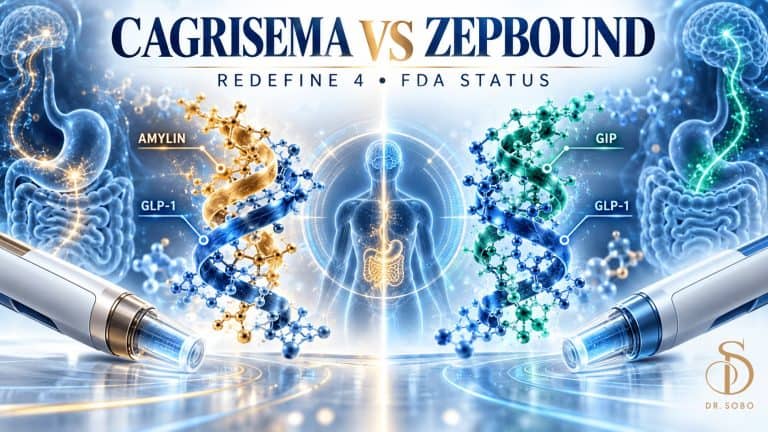
REDEFINE 4 Results: CagriSema vs. Tirzepatide, Weight Loss, and FDA Status
Phase 3 head-to-head results and an anticipated late-2026 FDA decision create strong news and comparison intent. This article was evidence-checked on September 6, 2026. Regulatory status, labels, and trial publications

GLP-1 Medications and Vision Changes: NAION, Retinopathy, and Warning Signs
Regulatory safety updates and new observational research are driving urgent patient questions about vision loss. This article was evidence-checked on September 6, 2026. Regulatory status, labels, and trial publications can
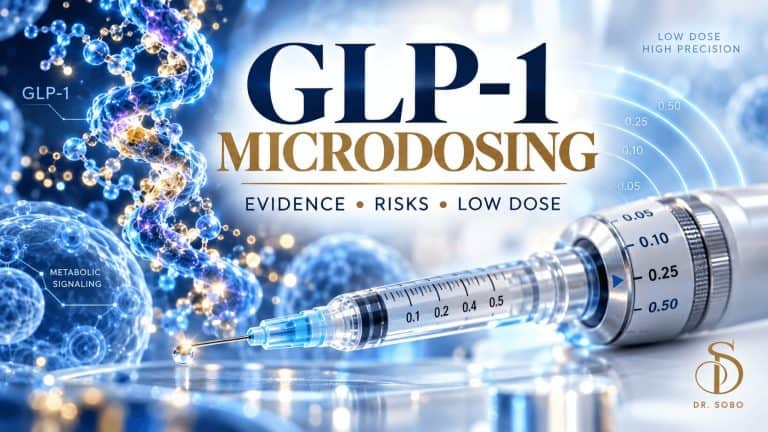
GLP-1 Microdosing: Evidence, Risks, and What “Low Dose” Really Means
Evidence review date: September 6, 2026. GLP-1 microdosing has attracted substantial consumer and telehealth interest, but direct clinical-trial evidence remains limited. Medication approvals, prescribing information, safety communications, and clinical evidence