
TB500 (Thymosin Beta 4)
Advanced Healing with TB-500 (Thymosin Beta-4) Peptide Therapy
Medical Reviewer: Dr. Henry Sobo, M.D.
Last Medical Review: April 4, 2026
Topic Expertise: Integrative Medicine, Peptide Therapy, Regenerative Internal Medicine
Thymosin Beta-4 (Tβ4) , commonly referred to as TB-500, is a 43-amino acid peptide hormone naturally secreted by the thymus gland. It plays a critical role in systemic tissue repair, angiogenesis (new blood vessel formation), cell migration, and inflammation modulation. Clinically, Tβ4 is a foundational regenerative agent used to accelerate healing from injury, support post-surgical recovery, and enhance outcomes of procedures like PRP and stem cell therapy.
→ Learn about our full peptide therapy offerings in Connecticut
Understanding the Difference: Thymosin Beta-4 (TB-4) vs. TB-500
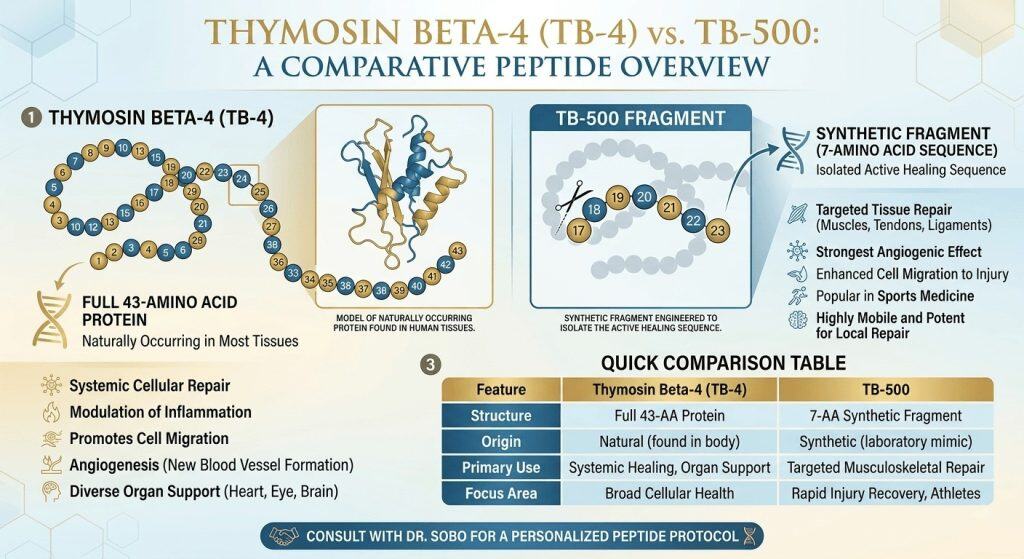
As seen in the comparison above, while TB-4 is the natural parent molecule, Dr. Sobo frequently utilizes the TB-500 fragment for its targeted healing properties. Read below to see how this benefits active adults.
The Physiology and Clinical Power of Thymosin Beta-4
Unlike targeted local agents like BPC-157, Tβ4 exerts a broad, systemic influence on the body’s repair mechanisms. Its structure allows it to perform multiple key functions: amino acids 1-4 are responsible for anti-inflammatory and antifibrotic effects; the first fifteen amino acids inhibit apoptosis (programmed cell death); and amino acids 17–23 are critical for angiogenesis and hair follicle growth.
This makes Tβ4 a potent natural weapon against a wide range of conditions, from chronic soft tissue injuries to cardiovascular and gastrointestinal pathologies.
Angiogenesis and Tissue Remodeling
Tβ4 is a powerful promoter of angiogenesis—the formation of new capillaries from existing blood vessels. It enhances this process by mobilizing immature progenitor cells and triggering the proliferation and migration of endothelial cells, the building blocks of blood vessel walls.
- VEGF Pathway: Tβ4 promotes the secretion of Vascular Endothelial Growth Factor (VEGF), a master regulator of blood vessel growth. This increases vascular permeability and blood flow directly into injured or ischemic tissues.
- Clinical Implication: For musculoskeletal injuries (tendons, ligaments, muscles) which naturally have poor blood supply, this improved vascularization is essential for delivering oxygen and nutrients to support durable healing.
Cell Proliferation, Protection, and the Cell Cycle
Tβ4 directly influences cellular regeneration and survival.
- Mesenchymal Stem Cells (MSCs): Tβ4 treatment enhances the proliferation of MSCs, which are the body’s natural repair cells. This is the primary reason Tβ4 is used as a powerful adjunct to PRP (Platelet Rich Plasma) and stem cell therapies, creating a more receptive environment for those cells to engraft and differentiate.
- Nervous System Repair: It enhances the proliferation of oligodendrocyte progenitor cells (OPCs) and their maturation into myelinating oligodendrocytes, which are crucial for nerve function and repair.
- Cardioprotection: In laboratory models, Tβ4 has been shown to accelerate vascular endothelial cell proliferation, thereby protecting cardiac function following a myocardial infarction (heart attack) or ischemia.
- Inhibiting Cell Death: By inhibiting apoptosis, Tβ4 reduces toxicity-induced cell damage, protecting tissues like the liver and kidneys from injury.
Ameliorating Inflammation and Fibrosis
Chronic inflammation is a primary driver of pain and impaired healing. Tβ4 exhibits potent anti-inflammatory activities across multiple organ systems.
- Cytokine Regulation: In models of liver injury, Tβ4 prevents the production of key pro-inflammatory cytokines, including tumor necrosis factor-alpha (TNF-α), interleukin-1β (IL-1β), and interleukin-6 (IL-6).
- Organ-Specific Effects: Research demonstrates Tβ4 reduces pathological inflammation in the brain, liver, eye, heart, and kidneys, making it a candidate for managing chronic inflammatory diseases.
- Antifibrotic Action: Tβ4 has been shown to have an antifibrotic effect on the liver and kidneys, helping to prevent the scarring and hardening of tissue that leads to organ dysfunction.
Protective Effects on the Liver and Kidneys
- Liver: Tβ4 prevents ethanol-mediated oxidative stress by decreasing harmful reactive oxygen species (ROS) and lipid peroxidation, while increasing antioxidant levels. This protective effect extends to damage from medications and alcohol.
- Kidneys (Renal Fibrosis): While naturally secreted Tβ4 is dispensable in healthy kidneys, a lack of it exacerbates kidney disease in lab models. Administration of exogenous Tβ4 has shown benefit in models of glomerulonephritis, diabetic nephropathy, and hypertensive nephropathy.
Ulcerative Colitis and Colon Health
Tβ4 is expressed in the human intestine, where it modulates the intestinal immune system. In animal models of Crohn’s disease, treatment with Tβ4 led to distinctly attenuated colon injuries, reduced apoptosis (cell death) in the colonic mucosa, significantly reduced inflammatory cell infiltration, and alleviated oxidative stress.
Tβ4 Promotes Hair Growth
The activity of Tβ4 is closely related to hair follicle development and growth. Research shows Tβ4 accelerates hair growth by increasing the proliferation of outer hair follicle root sheath cells. This known mechanism is why TB-500 is a common companion treatment for hair restoration protocols using PRP and/or stem cell procedures.
Clinical Evidence for Wound Healing
Tβ4’s ability to accelerate wound closure is well-documented:
- In a study of 143 patients with chronic cutaneous pressure ulcers and venous stasis ulcers, Tβ4 accelerated healing by nearly a month.
- A double-blind, placebo-controlled study across eight European locations with 73 patients confirmed that Tβ4 accelerated wound healing, with 25% of patients healing completely within 3 months.
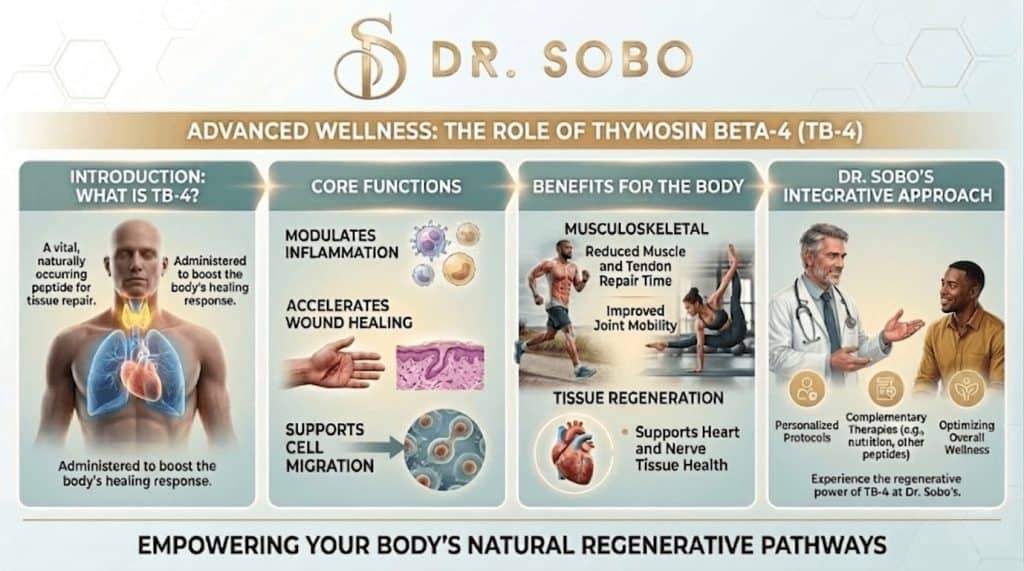
The Wolverine Peptide Stack: Synergistic Healing with BPC-157
While Thymosin Beta-4 is powerful on its own, it is frequently combined with BPC-157 in a protocol known as the Wolverine Peptide Stack . This combination leverages the complementary mechanisms of both peptides for accelerated robust recovery.
- The Synergy: BPC-157 acts as a focused, local healing agent, enhancing fibroblast activity, collagen synthesis, and stabilizing the gut lining. TB-500 provides a systemic effect, improving cell migration, cytoskeletal organization, and whole-body blood vessel formation.
- Clinical Application: Together, they are used to shorten recovery times from injuries and surgeries, reduce joint stiffness and muscle soreness, improve functional mobility, and support long-term tissue resilience, particularly in active individuals or those with chronic, nagging injuries.
- Candidate Profile: This stack is ideal for patients with training-related wear and tear, post-orthopedic surgical recovery, or chronic joint discomfort that has not fully responded to rest, physical therapy, or anti-inflammatory medications.
From the Clinic: “In my Stamford practice, we have used BPC‑157 and Thymosin Beta‑4 individually for years. The Wolverine Stack simply brings these two healing peptides together in a coordinated way, under medical supervision, to better support your body’s built‑in repair mechanisms.”
— Dr. Sobo
→ Read the full Wolverine Peptide Stack blog post for case studies and deeper protocol details
Clinical Applications and Use Cases
Based on its physiological actions, Thymosin Beta-4 (TB-500) is clinically used for:
- Musculoskeletal Recovery: Chronic tendonitis, ligament sprains, muscle tears, and post-surgical tissue repair. Particularly valuable for areas with poor blood flow.
- Adjunct to Regenerative Procedures: Used alongside PRP and stem cell therapies to enhance cell proliferation, migration, and engraftment.
- Cardiovascular Health: Research supports its role in protecting against damage from myocardial infarction and ischemia.
- Neurological Support: Promoting the maturation of oligodendrocytes for potential nerve health.
- Gastrointestinal Disorders: Used for conditions like ulcerative colitis due to modulation of the intestinal immune system.
- Wound Care: Accelerating healing of chronic skin ulcers and other soft tissue wounds.
- Hair Restoration: As a complementary treatment to PRP and stem cell procedures for hair growth.
Integrating TB-500 into a Regenerative Plan
Peptides are adjunctive tools that work best as part of a comprehensive strategy. At our Stamford clinic, a typical TB-500 or Wolverine Stack plan includes:
- Assessment and Diagnosis: A thorough review of your medical history, imaging (X-ray, MRI), surgical reports, and functional limitations. Schedule a consultation →
- Core Regenerative Strategy: This includes appropriate orthopedic care, personalized physical therapy, anti-inflammatory nutrition, and weight management to reduce joint load.
- Peptide Integration: Introduction of TB-500 (and BPC-157 if using the stack) based on body weight, specific goals, and stage of healing.
- Monitoring and Follow-Up: Regular check-ins to track pain levels, function, and mobility, with modifications as needed.
Key Benefits of TB-500 for Athletes and Active Adults
For those who push their bodies to the limit, recovery is often the bottleneck to progress. TB-500 (a synthetic fraction of Thymosin Beta-4) offers a revolutionary edge by tapping into the body’s innate regenerative signals. Unlike traditional anti-inflammatories that simply mask pain, TB-500 facilitates the actual repair of overworked tissues.
Increased Flexibility and Range of Motion: By reducing the formation of restrictive adhesions and “scarred” connective tissue, TB-500 helps maintain joint fluidity and muscular elasticity.
Reduced Down-Time: Athletes can return to training faster after high-intensity cycles or minor strains, as the peptide promotes a more efficient cellular cleanup and repair phase.
Protection Against Overuse Injuries: Regular activity causes micro-tears in the muscles and tendons. TB-500 supports the immediate repair of these small injuries before they escalate into chronic conditions.
Enhanced Endurance through Angiogenesis: By stimulating the growth of new micro-vessels, TB-500 improves the delivery of oxygen and nutrients to recovering muscle fibers.
How TB-500 Accelerates Muscle and Tendon Healing
The healing of tendons and ligaments is notoriously slow because these tissues receive significantly less blood flow than muscles. TB-500 bypasses this limitation through several sophisticated biological mechanisms:
Upregulating Actin: TB-500 promotes the production of Actin, a vital protein that allows cells to migrate to the site of an injury. This “recruitment” of repair cells is essential for rebuilding structural integrity in damaged fibers.
Angiogenesis (New Blood Vessel Formation): One of the most powerful features of TB-500 is its ability to grow new capillaries. This brings life-sustaining circulation to “white zones” (like tendons and cartilage) that usually struggle to heal.
Modulating Inflammation: While some inflammation is necessary for healing, chronic inflammation prevents tissue from knitting back together. TB-500 helps transition the body from the “inflammatory” phase to the “rebuilding” phase more quickly.
Differentiating Stem Cells: It aids in the differentiation of progenitor cells, ensuring that the body creates functional, flexible tissue rather than stiff, non-functional scar tissue.
Dr. Sobo’s Personalized TB-500 Protocols
At our clinic, we recognize that no two injuries—and no two bodies—are the same. Dr. Sobo does not offer “one-size-fits-all” solutions; instead, he crafts precise, medically supervised protocols designed to achieve your specific health goals.
Comprehensive Assessment: Every protocol begins with an in-depth evaluation of your injury history, inflammatory markers, and lifestyle demands.
Synergistic Peptide Stacking: Dr. Sobo often pairs TB-500 with other regenerative agents, such as BPC-157. While TB-500 excels at systemic cell migration and vessel growth, BPC-157 provides localized support for the gut and connective tissues, creating a powerful “dual-action” healing environment.
Precision Dosing: We determine the optimal dosage and frequency (loading phases vs. maintenance phases) to ensure maximum efficacy while prioritizing patient safety.
Integrative Support: Recovery is supported by Dr. Sobo’s expertise in nutrition and functional medicine, ensuring your body has the raw materials (amino acids and vitamins) necessary to complete the repairs signaled by the peptides.
Safety, Supervision, and Quality Control
Thymosin Beta-4 is a biologically active agent and must be used under strict medical supervision.
- Sourcing: All peptide prescriptions are sourced from reputable, 503B-compliant compounding pharmacies with rigorous quality testing.
- Contraindications: Patients with a history of active cancer, uncontrolled autoimmune disease, pregnancy, or certain cardiovascular conditions may not be suitable candidates.
- Medical Guidance: We do not recommend purchasing peptides from unregulated online vendors or self-injecting without professional guidance. Contact our office for a consultation.
Results and Realistic Expectations
Patients often report that TB-500, particularly within the Wolverine Stack, is transformative for nagging injuries or stalled post-surgical recovery.
- Common Benefits: Reduced day-to-day joint and tendon pain, faster rebound after physical activity, greater confidence in movement, and the ability to return to preferred activities.
- Realistic Outlook: Peptides do not replace surgery for completely torn structures nor reverse end-stage arthritis. They are not a substitute for foundational health practices like sleep, nutrition, and stress management.
Thymosin Beta-4 (TB-500) Frequently Asked Questions (FAQ)
What is the difference between TB-500 and Thymosin Beta-4?
They are the same compound. TB-500 is the common name used clinically, referring to the synthetic version of the naturally occurring 43-amino acid peptide Thymosin Beta-4 (Tβ4).
How does Thymosin Beta-4 compare to BPC-157?
TB-500 works systemically, promoting whole-body cell migration, angiogenesis, and reducing fibrosis. BPC-157 is more locally focused, enhancing collagen synthesis and fibroblast activity at a specific injury site or within the gut. They are highly synergistic and often used together in the Wolverine Stack.
Can Thymosin Beta-4 help with hair loss?
Yes. Research shows Tβ4 promotes hair growth by increasing the proliferation of outer hair follicle root sheath cells. It is clinically used as a companion treatment to enhance the results of PRP and stem cell procedures for hair restoration.
Is TB-500 legal and safe for competitive athletes?
Its status varies by governing body (e.g., WADA, NCAA). While not always explicitly banned, a Therapeutic Use Exemption (TUE) is often required. We provide documentation for TUE applications. It is banned by the World Anti-Doping Agency for Olympic and World Championship events.
What is the typical dosing protocol for Thymosin Beta-4?
Dosing is weight-based and condition-specific. A common clinical protocol involves subcutaneous injections, often 2.5-5mg, 2-3 times per week. For the Wolverine Stack, this is combined with BPC-157 (typically 250-500mcg). All protocols are determined during a medical consultation. Schedule an appointment →
Can I take Thymosin Beta-4 orally?
No. Unlike BPC-157, which is enzymatically stable in the gut, Thymosin Beta-4 is a larger peptide that would be broken down in the digestive tract. It must be administered via subcutaneous injection.
How do I start TB-500 or Wolverine Stack therapy at Dr. Sobo's practice in Stamford, CT?
Step 1: Schedule a peptide consultation (in-office or telehealth). Step 2: We review your MRI/history/symptoms. Step 3: Receive a custom protocol and pharmacy order. Step 4: Begin treatment with weekly check-ins.
What are the potential side effects of TB-500?
Under medical supervision, Tβ4 is considered very safe. The most common side effect is mild, temporary injection site irritation in a small percentage of users (<10%). No liver or kidney toxicity has been reported with proper use. Contraindications include active cancer, uncontrolled autoimmunity, and pregnancy.
Is TB-500 the same as Thymosin Beta-4?
While the terms are often used interchangeably in wellness circles, they are technically different. Thymosin Beta-4 (TB-4) is the full-length, naturally occurring protein consisting of 43 amino acids found in nearly all human tissues. TB-500 is a synthetic peptide fragment that mimics the most active part of the TB-4 molecule (specifically the section responsible for tissue repair and cell migration).
Which one is more effective for injury recovery TB-500 or Thymosin Beta-4?
Both are highly effective, but they serve slightly different roles:
TB-500 is a smaller molecule, which may allow it to travel through tissues more easily. It is the preferred choice for targeted musculoskeletal repair (muscles, tendons, and ligaments).
Thymosin Beta-4 is the “parent” molecule and offers a more comprehensive, systemic approach to healing, supporting everything from skin and corneal repair to heart and nerve health.
Why does Dr. Sobo use TB-500 in his protocols?
Dr. Sobo selects TB-500 for its potent ability to trigger “angiogenesis” (the growth of new blood vessels) and its role in modulating inflammation. Because it is a concentrated version of the healing “active site,” it is an excellent tool for patients looking to accelerate recovery from sports injuries or post-surgical trauma.
Are these peptides safe?
When administered under the supervision of a medical professional like Dr. Sobo, TB-500 and TB-4 have a high safety profile. Because they mimic natural signaling molecules already present in your body, they are generally well-tolerated. During your consultation, we will review your medical history to ensure this therapy is the right fit for you.
Ready to explore whether Thymosin Beta-4 (TB-500) or the Wolverine Peptide Stack can support your recovery and mobility?
Call our Stamford office today or schedule your consultation online to discuss Thymosin Beta-4, BPC‑157, and the Wolverine Stack in the context of your unique health needs.
Related Resources:
Sources
- Goldstein, A. L., et al. “Thymosin β4: a multi-functional regenerative peptide.” Expert Opinion on Biological Therapy. PubMed
- Philp, D., et al. “Thymosin β4 induces hair growth via stem cell migration.” The FASEB Journal. PubMed
- Smart, N., et al. “Thymosin β4 induces adult epicardial progenitor mobilization and neovascularization.” Nature. PubMed
- Sosne, G., et al. “Thymosin β4 promotes corneal wound healing and decreases inflammation.” Expert Opinion on Biological Therapy. PubMed
- Santra, M., et al. “Thymosin β4 up-regulates miR-200a expression and induces differentiation of oligodendrocyte progenitor cells.” ASN Neuro. PubMed
- Bock-Marquette, I., et al. “Thymosin β4 activates integrin-linked kinase and promotes cardiac cell migration, survival and cardiac repair.” Nature. PubMed
- Kim, N. S., et al. “Thymosin β4 suppresses pro-inflammatory cytokine production in LPS-stimulated macrophages.” International Immunopharmacology. PubMed
- Conte, E., et al. “Thymosin β4 reduces liver fibrosis in experimental models.” Journal of Cellular Physiology. PubMed
- Shah, R., et al. “Thymosin β4 protects against ethanol-induced liver injury.” Alcoholism: Clinical and Experimental Research. PubMed
- Vasilopoulou, E., et al. “Thymosin β4 and kidney disease.” Nephrology Dialysis Transplantation. PubMed
- Lee, C., et al. “Thymosin β4 attenuates experimental colitis in mice.” Gut. PubMed
- Guarnera, G., et al. “Thymosin β4 in chronic venous ulcers: a phase II clinical trial.” International Wound Journal. PubMed
- Morimoto, N., et al. “Thymosin β4 and wound healing: a double-blind study.” Wound Repair and Regeneration. PubMed
- “BPC-157 and TB-500 Synergy in Soft Tissue Repair.” Journal of Regenerative Medicine. PubMed
- WADA Prohibited List 2024. World Anti-Doping Agency. External Link